Quiz · Medium
Short school, shopping and invitation texts in Devanagari plus two station signs, each with comprehension questions.
Passage 3
सीमा हर सुबह स्कूल जाती है। उसका स्कूल घर से दूर है, इसलिए वह बस से जाती है। बस में उसकी सहेली प्रिया भी होती है। दोनों बातें करती हैं और हँसती हैं। स्कूल में सीमा को हिंदी की कक्षा सबसे अच्छी लगती है।
How does Seema get to school?
On foot
By rickshaw
By bus
By bicycle
बस से जाती है = she goes by bus. से marks the means of travel.
Passage 3
सीमा हर सुबह स्कूल जाती है। उसका स्कूल घर से दूर है, इसलिए वह बस से जाती है। बस में उसकी सहेली प्रिया भी होती है। दोनों बातें करती हैं और हँसती हैं। स्कूल में सीमा को हिंदी की कक्षा सबसे अच्छी लगती है।
Why does she take the bus?
It rains every day
Her friend asked her to
She is late
Her school is far from home
इसलिए means 'therefore': स्कूल घर से दूर है, इसलिए वह बस से जाती है.
Passage 3
सीमा हर सुबह स्कूल जाती है। उसका स्कूल घर से दूर है, इसलिए वह बस से जाती है। बस में उसकी सहेली प्रिया भी होती है। दोनों बातें करती हैं और हँसती हैं। स्कूल में सीमा को हिंदी की कक्षा सबसे अच्छी लगती है।
Who is Priya?
Seema's friend
Seema's teacher
Seema's sister
The bus driver
सहेली is a female friend (a girl's close friend). दोस्त is the general word.
Passage 3
सीमा हर सुबह स्कूल जाती है। उसका स्कूल घर से दूर है, इसलिए वह बस से जाती है। बस में उसकी सहेली प्रिया भी होती है। दोनों बातें करती हैं और हँसती हैं। स्कूल में सीमा को हिंदी की कक्षा सबसे अच्छी लगती है।
Which class does Seema like best?
Maths
Hindi
English
Science
हिंदी की कक्षा सबसे अच्छी लगती है = she likes the Hindi class best. सबसे = most of all.
Passage 4
कल मैं अपनी माँ के साथ बाज़ार गया। हमने आम, केले और सेब ख़रीदे। आम बहुत महँगे थे, लेकिन बहुत मीठे थे। माँ ने दुकानदार से थोड़े पैसे कम करवाए। फिर हम रिक्शे से घर वापस आए।
When did the speaker go to the market?
Tomorrow
Today
Next week
Yesterday
कल means both yesterday and tomorrow in Hindi. Here the verb गया (went) is in the past tense, so it is yesterday.
Passage 4
कल मैं अपनी माँ के साथ बाज़ार गया। हमने आम, केले और सेब ख़रीदे। आम बहुत महँगे थे, लेकिन बहुत मीठे थे। माँ ने दुकानदार से थोड़े पैसे कम करवाए। फिर हम रिक्शे से घर वापस आए।
What do we learn about the mangoes?
They were expensive but very sweet
They were cheap and sour
They were not available
They were rotten
महँगे = expensive, मीठे = sweet, लेकिन = but.
Passage 4
कल मैं अपनी माँ के साथ बाज़ार गया। हमने आम, केले और सेब ख़रीदे। आम बहुत महँगे थे, लेकिन बहुत मीठे थे। माँ ने दुकानदार से थोड़े पैसे कम करवाए। फिर हम रिक्शे से घर वापस आए।
What did the mother do at the shop?
She argued with the shopkeeper and left
She bargained for a lower price
She paid in full
She bought only apples
थोड़े पैसे कम करवाए = got a little money taken off the price.
Passage 4
कल मैं अपनी माँ के साथ बाज़ार गया। हमने आम, केले और सेब ख़रीदे। आम बहुत महँगे थे, लेकिन बहुत मीठे थे। माँ ने दुकानदार से थोड़े पैसे कम करवाए। फिर हम रिक्शे से घर वापस आए।
How did they come back home?
By bus
On foot
By rickshaw
By car
रिक्शे से = by rickshaw. वापस आए = came back.
Passage 5
प्रिय अमित,
इस शनिवार को मेरा जन्मदिन है। शाम छह बजे मेरे घर पर पार्टी है। तुम ज़रूर आना। सब दोस्त आएँगे।
तुम्हारा दोस्त,
राहुल
What is the occasion?
Rahul's birthday
Amit's birthday
A school function
A wedding
मेरा जन्मदिन है = it is MY birthday. The writer signs off as राहुल.
Passage 5
प्रिय अमित,
इस शनिवार को मेरा जन्मदिन है। शाम छह बजे मेरे घर पर पार्टी है। तुम ज़रूर आना। सब दोस्त आएँगे।
तुम्हारा दोस्त,
राहुल
When and at what time is the party?
On Sunday at six in the morning
On Saturday at six in the evening
On Saturday at six in the morning
On Friday at six in the evening
शनिवार = Saturday, शाम छह बजे = six in the evening.
Passage 5
प्रिय अमित,
इस शनिवार को मेरा जन्मदिन है। शाम छह बजे मेरे घर पर पार्टी है। तुम ज़रूर आना। सब दोस्त आएँगे।
तुम्हारा दोस्त,
राहुल
Who wrote the message and who is it to?
Amit wrote it to Rahul
The teacher wrote it to Rahul
Rahul wrote it to Amit
Rahul wrote it to his mother
प्रिय अमित means 'Dear Amit'. तुम्हारा दोस्त, राहुल means 'Your friend, Rahul'.
This railway sign has Hindi, English and Urdu. Which city does the large Hindi line नई दिल्ली name?
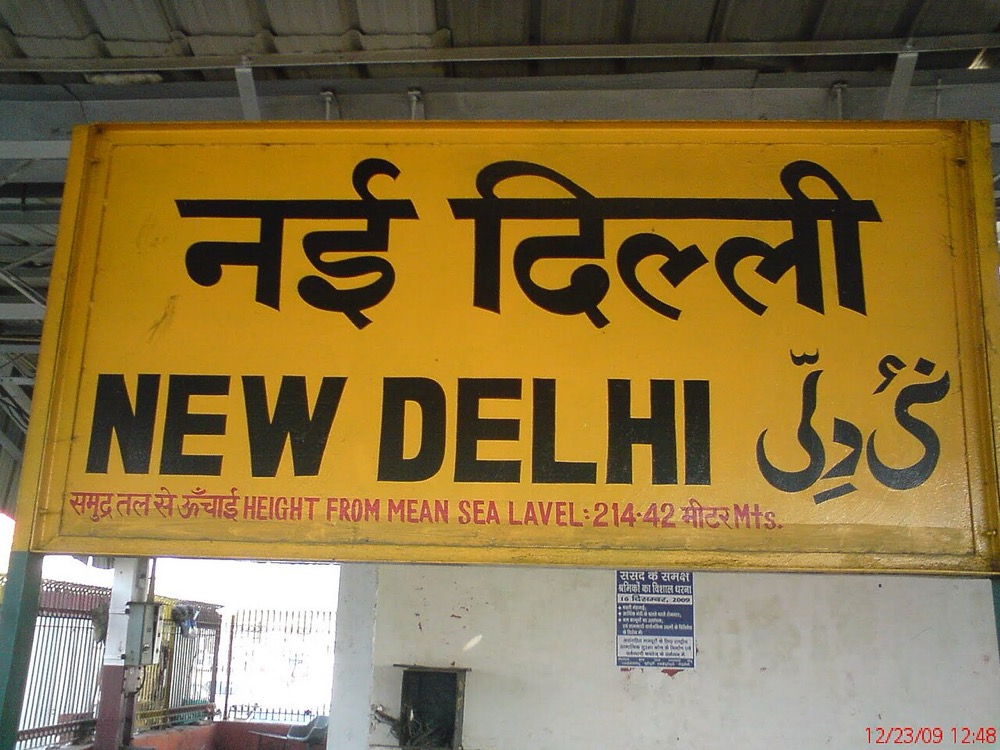
Old Delhi
New Delhi
Mumbai
Lucknow
नई = new (feminine, to agree with दिल्ली), दिल्ली = Delhi.
Image: MikeLynch, CC BY-SA 3.0, via Wikimedia Commons.
The abbreviation जं॰ on this sign stands for which word?
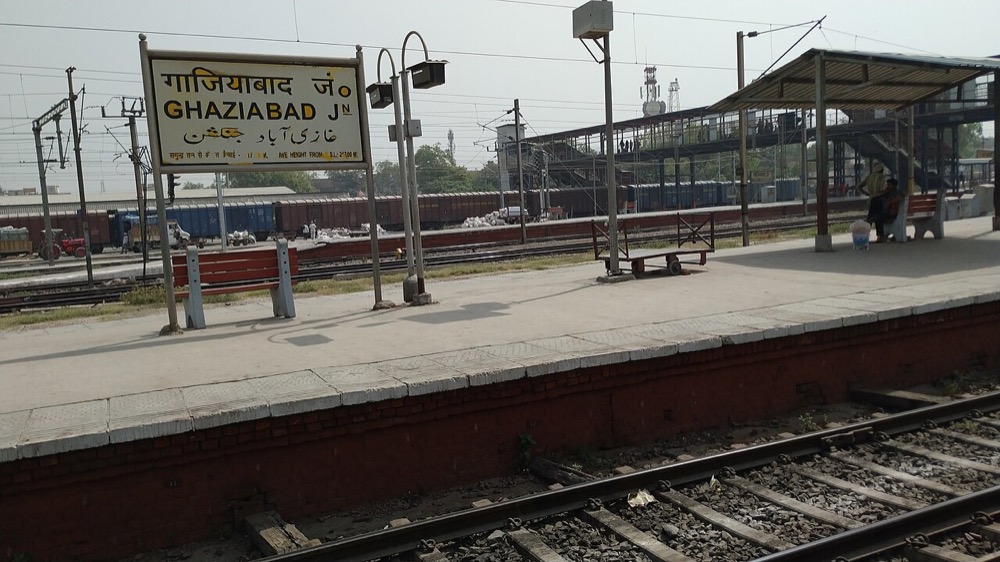
Jammu
Journey
Jungle
Junction
जं॰ is short for जंक्शन (junction); the English line shows GHAZIABAD JN. The small circle ॰ marks an abbreviation.
Image: Ravi Dwivedi, CC BY-SA 4.0, via Wikimedia Commons.
