Quiz · Medium
Parliamentary vs presidential, unitary vs federal, monarchy, authoritarianism and regime types, with diagrams and images.
In the diagram, which system is parliamentary?
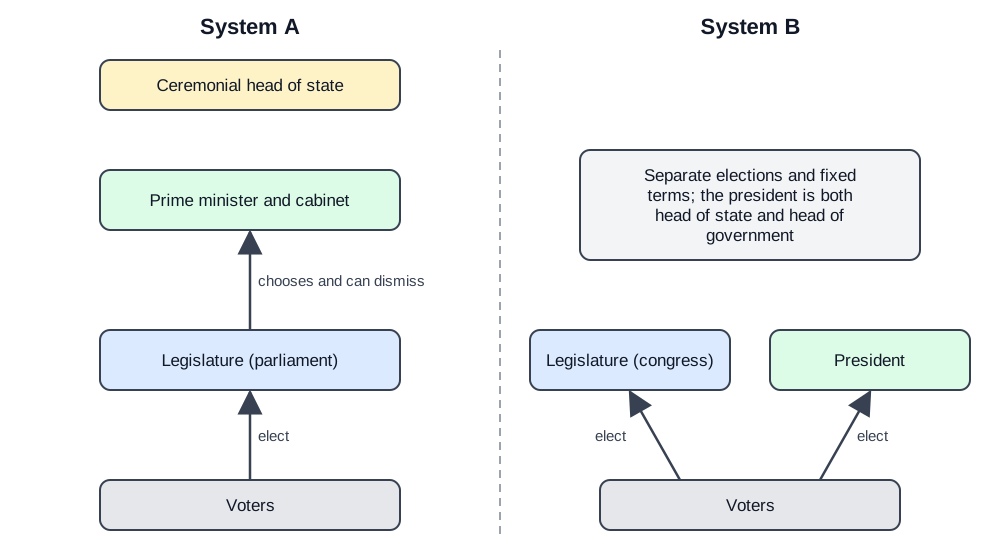
System B: voters elect the legislature and president separately
System A: the legislature chooses and can dismiss the prime minister
Both: they only differ in the size of the legislature
Neither: both have ceremonial presidents
In a parliamentary system the executive derives from the legislature and depends on its confidence. System B shows separate elections: presidential.
Which feature is characteristic of a presidential system?
The head of government can be removed by a vote of no confidence
The head of state is a monarch
The executive is drawn from the legislature
The head of government is separately elected and has a fixed term
Presidents have fixed terms and are removed through impeachment, not no-confidence votes. Parliamentary systems are described by the other options.
A prime minister loses a vote of no confidence in the legislature. What usually happens next?
The government resigns or an election is called
The monarch or president overrules the vote
The prime minister remains until the next scheduled election
The courts decide whether the vote was valid
Governments in parliamentary systems stay in office only while they command the confidence of the legislature.
Which pair of countries are both federal systems?
France and Japan
China and the UK
Germany and India
Sweden and Norway
Germany (16 Länder) and India (states) are federal. France, Japan, China, the UK (with devolution) and the Nordic states are unitary.
Switzerland's seven-member Federal Council is best described as:
A single powerful president
A parliament that can be dissolved
A collective executive with a rotating, largely ceremonial presidency
A monarchy's advisory body
Each year one councillor is president, but all seven share executive power.
Which regime fits 'a single party, an official ideology, secret police and control of nearly all aspects of life'?
Totalitarian
Liberal democracy
Constitutional monarchy
Federal republic
Totalitarianism aims at total control. Authoritarian regimes limit politics but do not try to remake private life to the same degree.
Which statement about a constitutional monarchy is correct?
The monarch makes all laws
It cannot be a democracy
The monarch is elected every four years
The monarch's powers are limited by a constitution and are often ceremonial
The UK, Japan, Spain and Sweden are democracies with constitutional monarchs. Absolute monarchies such as Saudi Arabia concentrate power in the monarch.
Max Weber says a leader who rules because of personal qualities that inspire followers has which kind of authority?
Traditional authority
Charismatic authority
Legal-rational authority
Coercive authority
Traditional rests on custom and heredity; legal-rational rests on laws and offices; charismatic rests on the leader's personal appeal.
Which of these is an example of devolution?
Texas ratifying a constitutional amendment
Scotland having its own Parliament within the United Kingdom
The EU Commission regulating member states
A state seceding from a confederation
Devolution is the delegation of power by a central government in a unitary state. The central parliament can in theory take it back, unlike federalism.
France's Fifth Republic is called semi-presidential because it has:
A president chosen by parliament
A monarch and a president
A directly elected president and a prime minister responsible to the legislature
Only a ceremonial president
Cohabitation can happen if parliament and president are from different parties. Russia also has a semi-presidential structure.
What distinguishes a republic from a monarchy?
The head of state is not a hereditary monarch
Republics always have free elections
Republics have no legislature
Monarchies cannot have constitutions
Many republics (e.g. China) are not democratic, and many monarchies are democracies. The term concerns the head of state.
Which regime classification is correct for Saudi Arabia?
A constitutional monarchy
A federal republic
A parliamentary democracy
An absolute monarchy
Power rests with the king and the royal family; the Consultative Council is appointed and advisory.
Which institution of the UK shows parliamentary sovereignty?
The Supreme Court can strike down laws as unconstitutional
The House of Lords can veto any law
No court can strike down an Act of Parliament
The monarch must approve every law personally
In the UK, courts can interpret and declare incompatibilities but not overturn Acts. That sets it apart from the US.
Why is Germany's constructive vote of no confidence considered stabilizing?
It requires a referendum
The Bundestag can remove a chancellor only by electing a successor at the same time
It allows the president to dissolve the Bundestag at will
It bans coalitions
It prevents the destructive majorities that helped bring down the Weimar Republic.
Which flag belongs to a country whose Federal Council shares executive power among seven members?
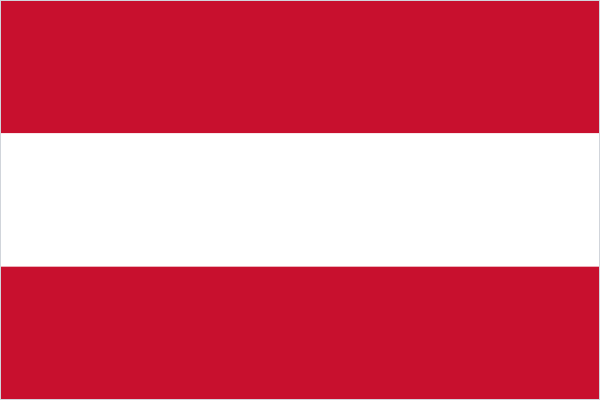
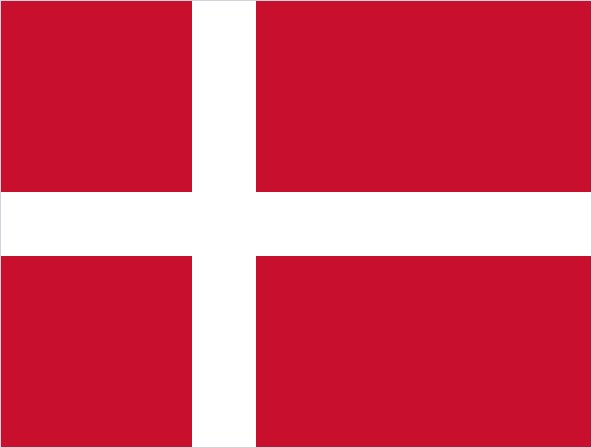

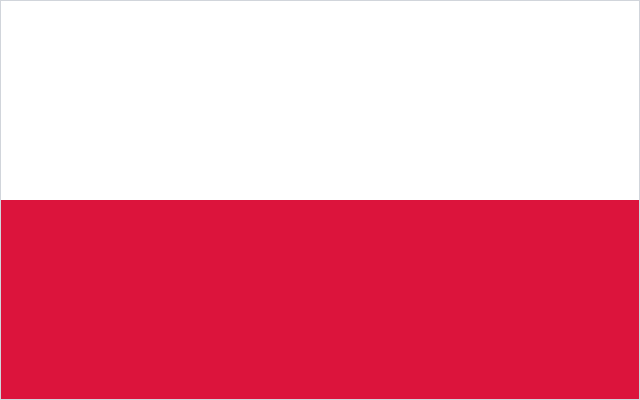
Switzerland's flag is a white cross on red. Austria has red-white-red stripes, Denmark a Nordic cross, Poland white-red stripes.
Which situation best illustrates the idea of a 'hybrid regime'?
Elections are held, but the ruling party controls the media and courts so it almost never loses
A monarch with no power
A military takeover with no elections
A federation with a strong court
Hybrid regimes keep the form of competitive elections without the fairness.
Which of the following is an example of direct democracy?
A national referendum on a constitutional amendment
Voters electing a senator
A president nominating judges
A legislature voting on a bill
Direct democracy has citizens decide issues themselves; the others are representative actions.
The Freedom House categories 'Free,' 'Partly Free' and 'Not Free' measure mainly:
Economic output
Military strength
Political rights and civil liberties
Population size
Freedom House scores political rights and civil liberties. The EIU Democracy Index uses different categories (full, flawed, hybrid, authoritarian).
A confederation differs from a federation because in a confederation:
The central government is stronger than the states
The central government is weaker than the member states
There are no member states
The constitution forbids a legislature
The Articles of Confederation gave the states most of the power. In a federation, power is constitutionally divided.
This chamber has opposing green benches for government and opposition. Which legislature is it?
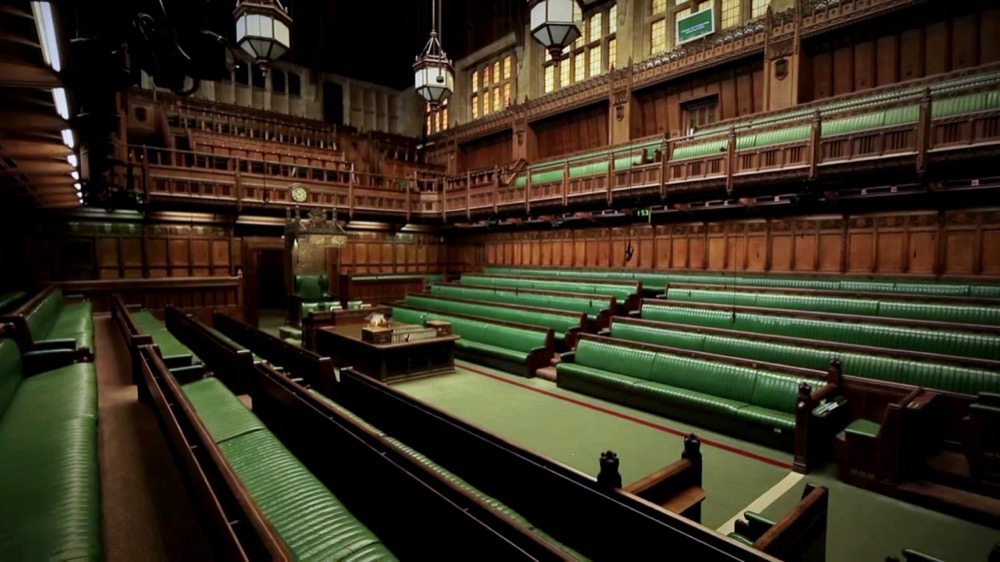
The US House of Representatives
The French National Assembly
The Indian Lok Sabha
The UK House of Commons
The benches face each other, which shapes the confrontational Westminster style. The US House has a semicircular layout.
