Quiz · Medium
Find areas, surface areas and volumes straight from labeled diagrams: parallelograms, trapezoids, sectors, prisms, cones, pyramids and spheres.
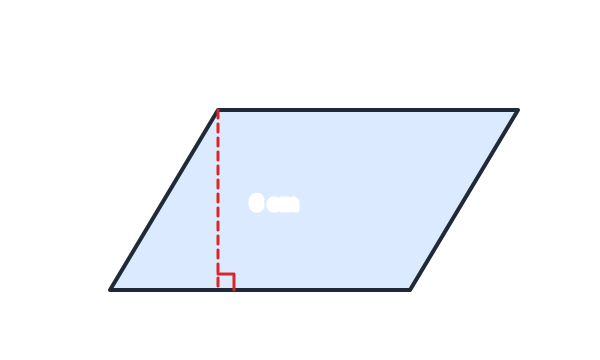
What is the area of the parallelogram?
70 cm²
42 cm²
60 cm²
30 cm²
Area = base × perpendicular height = 10 × 6 = 60 cm². 70 cm² uses the slanted 7 cm side, which is not perpendicular to the base.
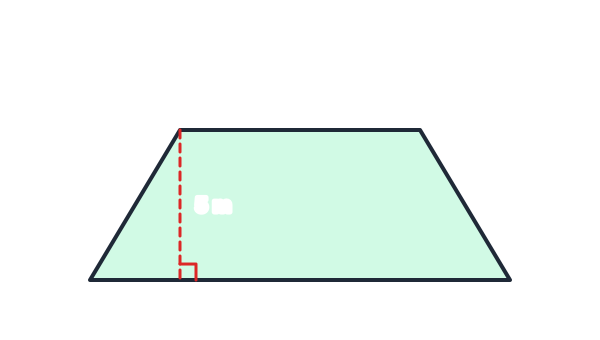
What is the area of the trapezoid?
70 m²
110 m²
40 m²
55 m²
. 110 m² forgets the ½; 70 m² uses only the longer base.
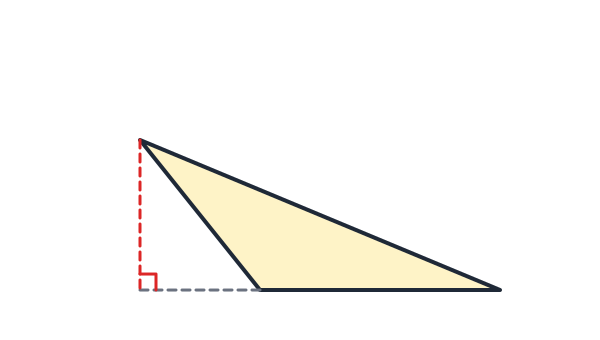
What is the area of the triangle?
It cannot be found because the height is outside the triangle
26 cm²
20 cm²
40 cm²
. In an obtuse triangle the height can fall outside the triangle; it is still the perpendicular distance to the base line. 40 cm² forgets the ½.
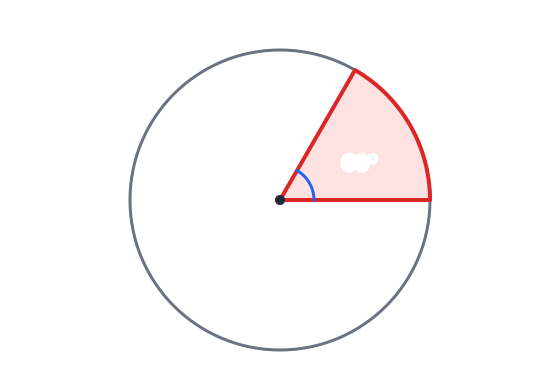
What is the area of the shaded sector?
12π cm²
2π cm²
36π cm²
6π cm²
60° is of the circle: . 2π is the arc length, not the area; 36π is the whole circle.
What is the length of the arc of the shaded sector?
2π cm
π cm
12π cm
6π cm
of the circumference is . 6π is the sector's area; 12π is the full circumference.
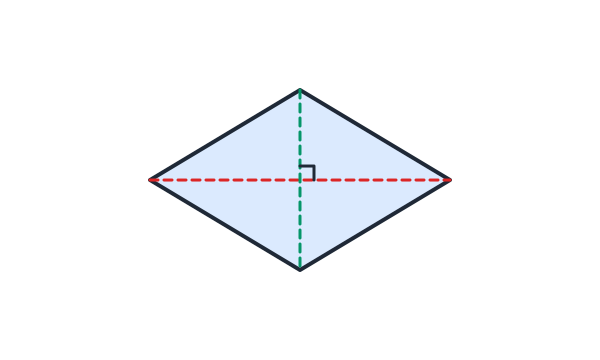
The diagonals of the rhombus are 10 and 6. What is its area?
30
16
60
15
. 60 is the rectangle that surrounds the rhombus.
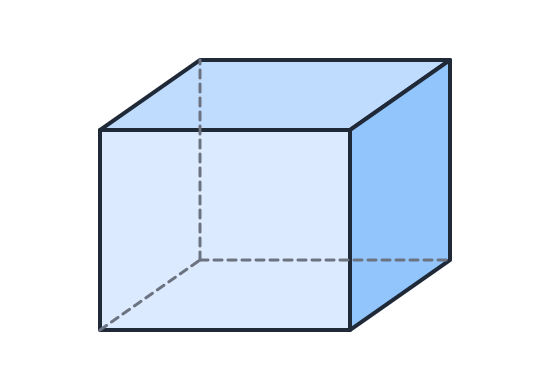
What is the volume of the rectangular prism?
94 cm³
47 cm³
60 cm³
12 cm³
. 94 is the surface area (in cm²), not the volume.
What is the total surface area of the rectangular prism?
47 cm²
94 cm²
60 cm²
120 cm²
. 47 counts each pair of faces only once.
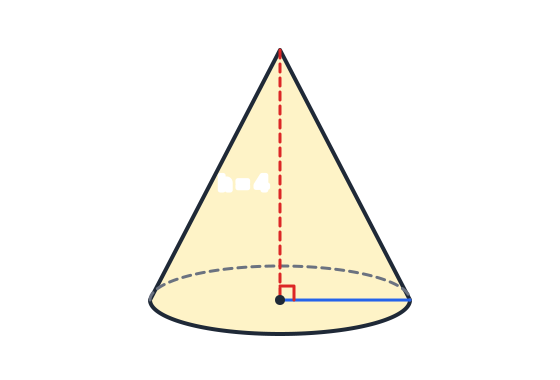
What is the volume of the cone?
36π
15π
12π
24π
. 36π forgets the ⅓. 15π comes from using the slant height 5 instead of the height 4. 24π is the total surface area.
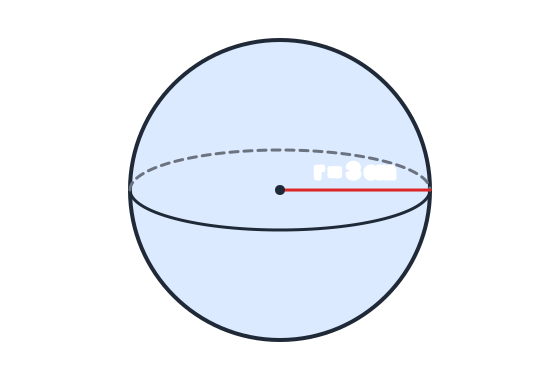
What is the volume of the sphere?
12π cm³
36π cm³
27π cm³
108π cm³
. 108π forgets to divide by 3.
What is the area of the L-shaped figure?
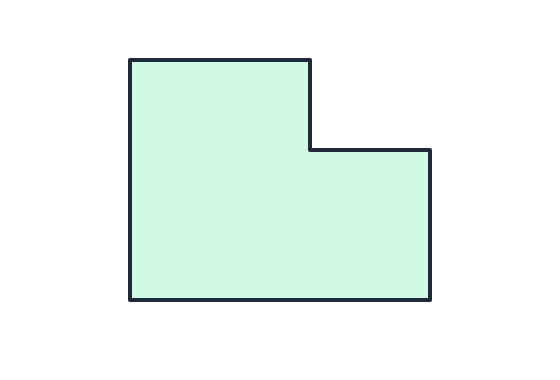
56 m²
80 m²
36 m²
68 m²
Split it: , or subtract the notch: . 80 ignores the missing corner; 36 is the perimeter.
What is the area of the shaded ring?
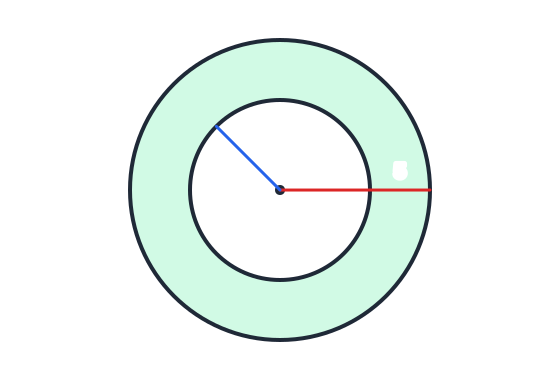
34π
2π
16π
4π
. 4π comes from , which subtracts before squaring; 34π adds the circles.
The regular hexagon has side 6 cm. What is its area?
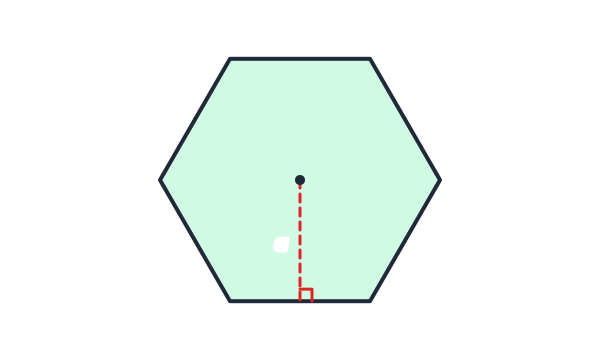
54√3 cm²
108√3 cm²
18√3 cm²
36√3 cm²
Six equilateral triangles of side 6: . Or . 108√3 forgets the ½.
What is the volume of the cylinder?
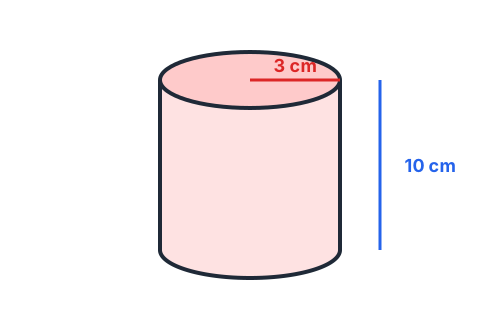
30π cm³
360π cm³
90π cm³
60π cm³
. 60π is the lateral area; 360π uses the diameter 6 as the radius; 30π would be a cone.
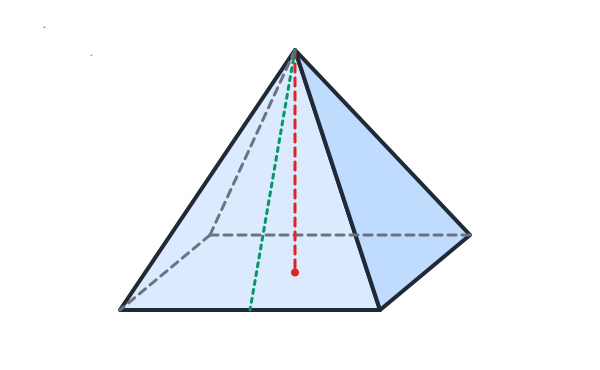
What is the volume of the square pyramid?
60 cm³
96 cm³
48 cm³
144 cm³
. 144 forgets the ⅓; 60 uses the slant height 5; 96 is the surface area.
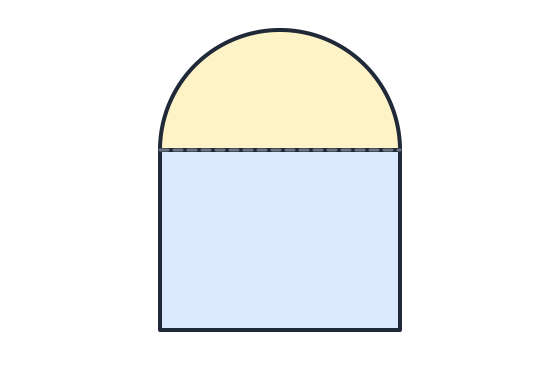
What is the area of the window (rectangle plus semicircle)?
48 + 8π ≈ 73.1 ft²
48 + 16π ≈ 98.3 ft²
48 + 32π ≈ 148.5 ft²
48 + 4π ≈ 60.6 ft²
The semicircle has radius 4: . 16π is a whole circle; 32π uses the diameter 8 as the radius.
How many cm² are in 1 m²?
1,000,000
1,000
100
10,000
1 m = 100 cm, and area squares the factor: . 100 converts lengths only; 1,000,000 is the cm³ in 1 m³.
What is the surface area of a sphere with radius r?
(4/3)πr³
2πr²
4πr²
πr²
: four times the area of a great circle. is the volume; 2πr² is only the curved part of a hemisphere.
True or false: doubling every edge of a cube doubles its volume.
True
False
False. Volume scales with the cube of the length factor: , so the volume becomes 8 times as large.
True or false: a cone has one third the volume of a cylinder with the same base and height.
True
False
True. vs . The same ⅓ links any pyramid to its prism.
Which unit is correct for a volume?
cm
cm³
cm²
cm⁴
Volume counts unit cubes, so it is in cubic units. cm² is for area, cm for length.
