Quiz · Medium
A mixed foundation quiz on trophic levels, the 10 percent rule, nutrient cycles, biomes, aquatic zones and succession, with photos and diagrams.
Which statement about energy in an ecosystem is correct?
Energy is recycled between producers and decomposers just like nutrients.
Energy increases at higher trophic levels because predators are larger.
Energy flows in one direction and is lost as heat at each trophic transfer.
Decomposers create new energy from dead organisms.
Energy enters as sunlight, passes through food chains and leaves as heat; it cannot be recycled. Nutrients (matter) cycle between organisms and the environment. Predators are larger but hold far less total energy than the level below.
Producers in a grassland capture 80,000 kcal of energy. Using the 10 percent rule, about how much reaches the tertiary consumers?
80 kcal
800 kcal
8,000 kcal
8 kcal
Producers 80,000 -> primary 8,000 -> secondary 800 -> tertiary 80 kcal. Three transfers means multiplying by 0.1 three times. 800 would be the secondary consumers; 8 would be quaternary.
Which organism is a decomposer?
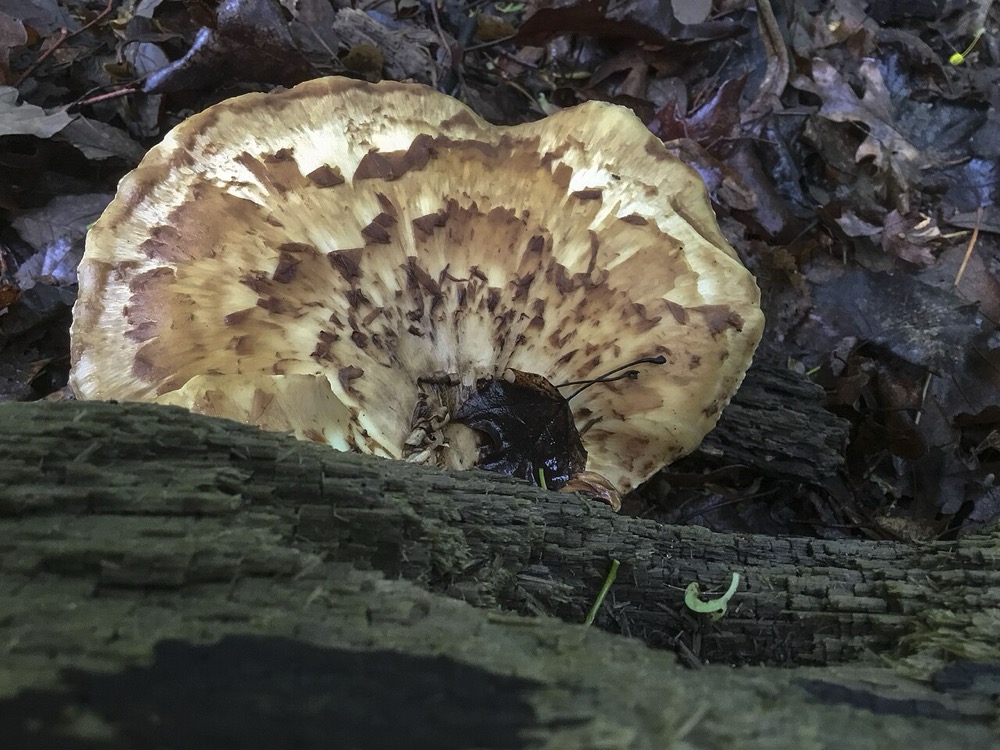
An earthworm eating leaf litter
A vulture eating a carcass
A mushroom-eating slug
A bracket fungus growing on a dead log
Fungi and bacteria digest dead matter externally with enzymes: that is decomposition. Earthworms and similar animals are detritivores (they ingest the matter). Vultures are scavengers, a type of consumer.
Image: The Other 95%, CC BY-SA 4.0, via Wikimedia Commons.
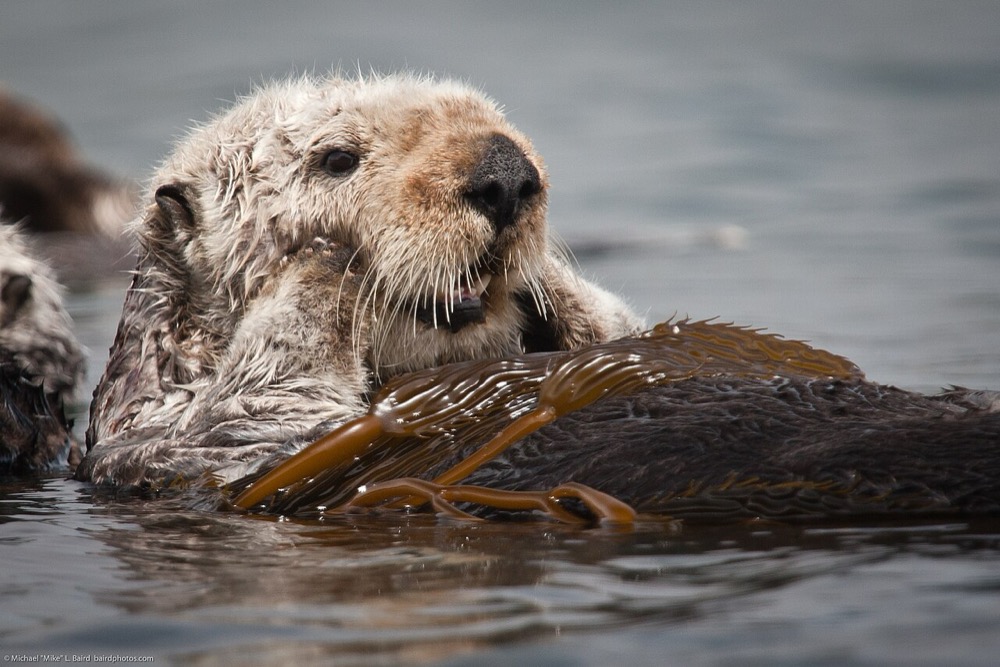
Why does a sea otter qualify as a keystone species?
It is the most abundant animal in kelp forests.
By eating sea urchins it protects kelp forests that shelter many other species.
It is the only producer in the kelp ecosystem.
It builds the kelp forest from its own waste.
A keystone species has a disproportionately large effect compared with its abundance. Otters are not the most abundant, and they are consumers, not producers. Their effect is a trophic cascade: fewer urchins, more kelp.
Image: Mike Baird, CC BY 2.0, via Wikimedia Commons.
A persistent, fat-soluble pesticide is sprayed on farmland and washes into a lake. Which organism is most likely to have the highest concentration of it?
Phytoplankton
An osprey that eats large fish
Zooplankton
Small minnows
Biomagnification: persistent fat-soluble toxins are stored in tissues and become more concentrated at each higher trophic level, so top predators like ospreys carry the most. Phytoplankton at the bottom have the lowest concentration.
Which pair correctly matches a symbiotic relationship to its effects (+ benefits, - harmed, 0 no effect)?
Barnacles on a whale: parasitism (+/-)
Bees and flowers: commensalism (+/0)
Mycorrhizal fungi and roots: predation (+/-)
Tick on a deer: parasitism (+/-)
A tick benefits and harms its host: parasitism. Barnacles on a whale are usually commensalism (+/0). Bees and flowers both benefit (mutualism), and mycorrhizae are mutualistic.
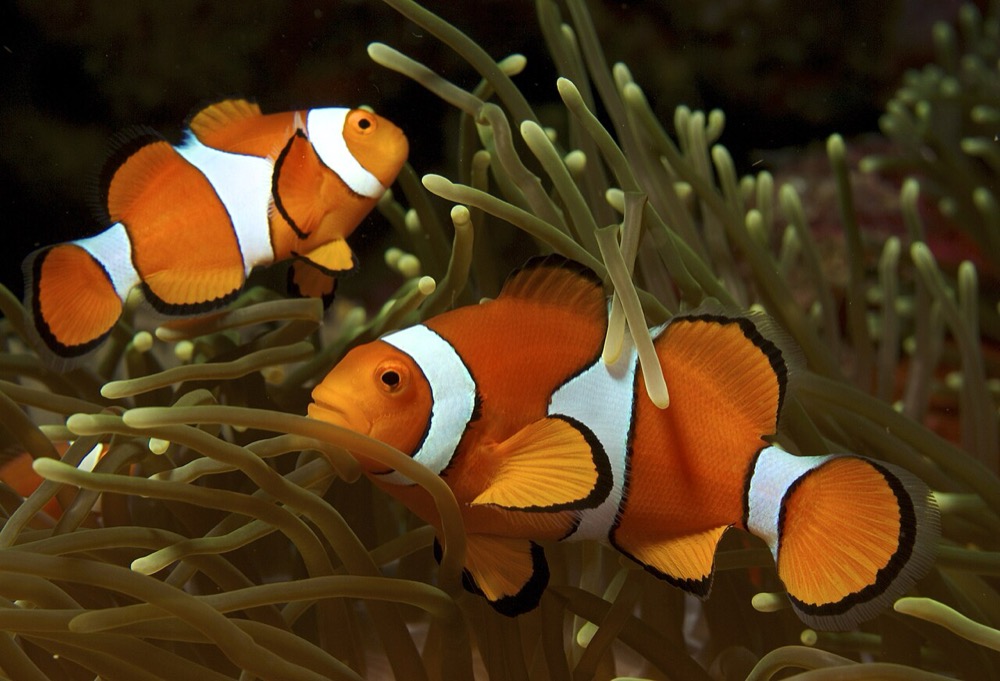
The anemone's tentacles protect the clownfish, and the clownfish defends the anemone from some grazers. This relationship is
mutualism
commensalism
parasitism
competition
Both species benefit, which defines mutualism (+/+). In commensalism only one benefits; in parasitism one is harmed.
Image: Nick Hobgood, CC BY-SA 3.0, via Wikimedia Commons.
Which process converts nitrate in waterlogged soil back to nitrogen gas?
Nitrification
Ammonification
Denitrification
Nitrogen fixation
Denitrification is done by anaerobic bacteria and returns N2 to the atmosphere. Nitrification makes nitrate, ammonification makes ammonium from organic nitrogen, and fixation converts N2 to ammonia.
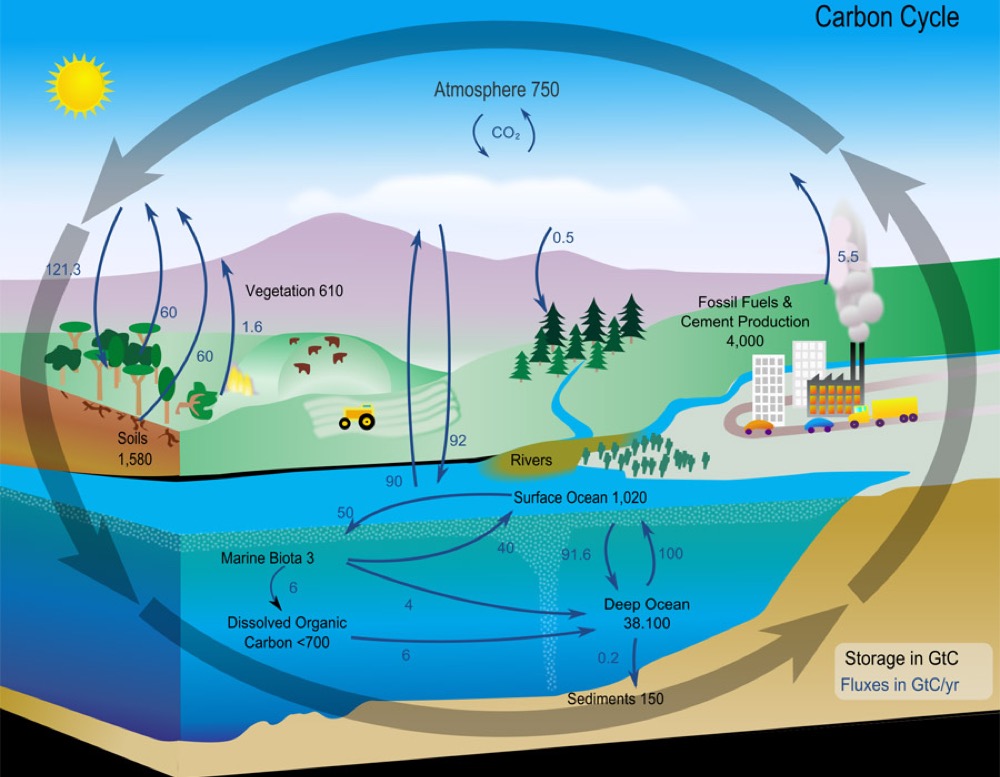
In the NASA carbon-cycle diagram, which of these is the largest carbon reservoir?
The atmosphere
The deep ocean
Vegetation
Soils
The deep ocean holds tens of thousands of gigatons of carbon, many times more than the atmosphere, vegetation or soils. The atmosphere is small but has large climate effects.
Which statement about phosphorus cycling is correct?
Bacteria fix phosphorus from the atmosphere into soil.
Phosphorus cycles faster than carbon because it is a gas.
Weathering of rock is the main natural source, and there is no significant gas phase.
Lightning is the main natural source of usable phosphorus.
Phosphorus enters ecosystems mainly through rock weathering and is lost mostly by erosion and runoff; it has no major atmospheric reservoir. Atmospheric fixation applies to nitrogen.
In freshwater lakes, which nutrient most often limits algal growth, so that adding it causes blooms?
Phosphorus
Oxygen
Carbon
Sodium
Phosphorus is usually the limiting nutrient in freshwater, so phosphate runoff from fertilizer and detergents triggers algal blooms and eutrophication. Oxygen is consumed (not limiting) during decay.
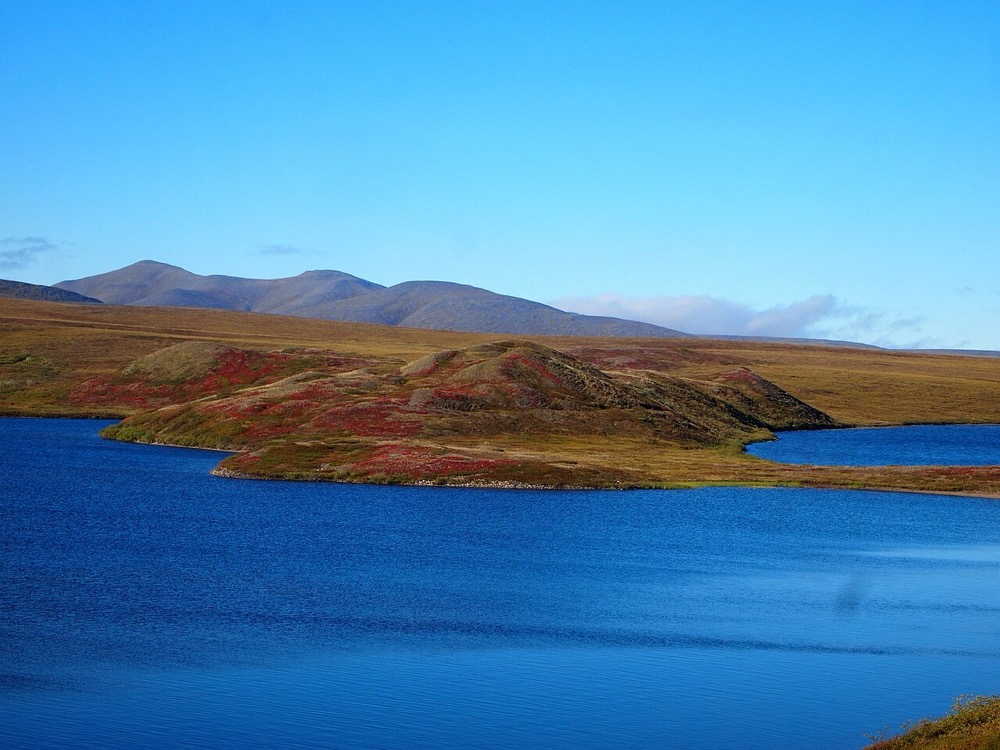
Which biome is shown: permanently frozen ground, low vegetation and under about 25 cm of precipitation per year?
Taiga
Temperate grassland
Chaparral
Tundra
Tundra has permafrost, a very short growing season and low precipitation. Taiga has coniferous trees, grassland has deep fertile soil and chaparral has hot dry summers.
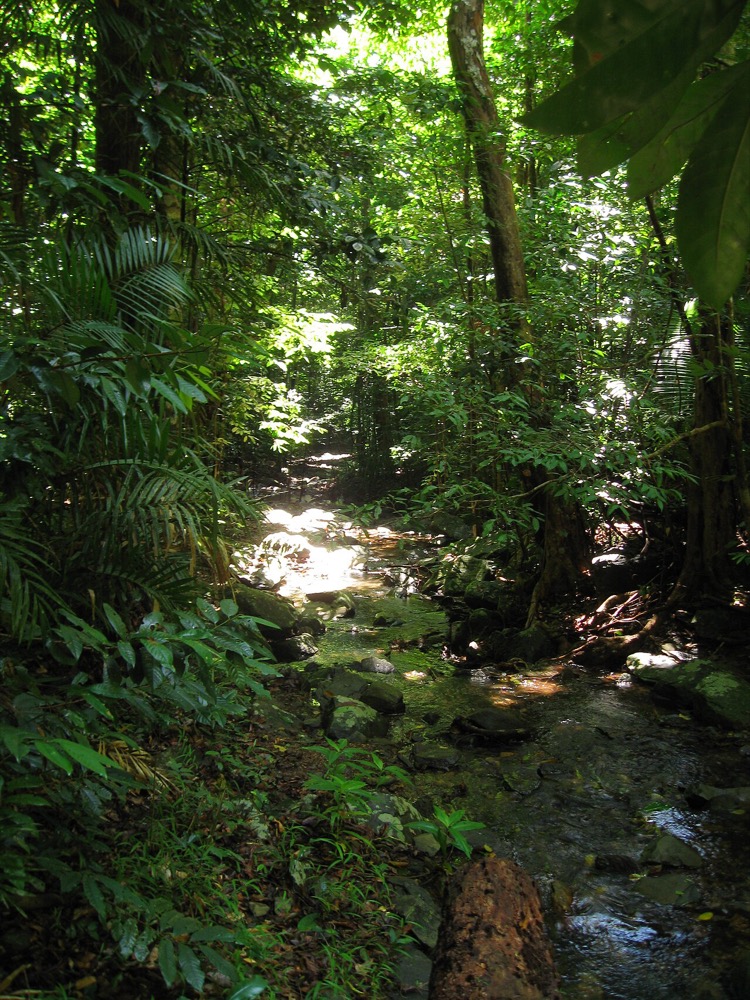
Which biome has the greatest species diversity on land and nutrient-poor soils?
Temperate deciduous forest
Tropical rainforest
Savanna
Boreal forest
Rainforests have the highest diversity, but heavy rain leaches nutrients and decomposition is fast, so nutrients are stored in living biomass instead of soil.
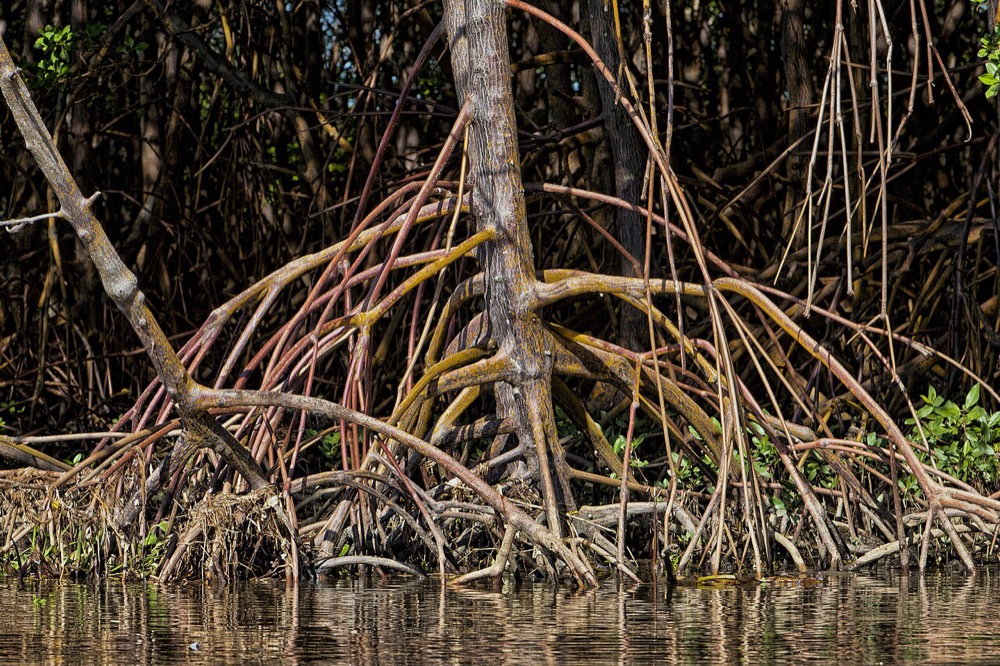
Mangrove forests help coastal areas mainly because they
produce most of the Earth's atmospheric nitrogen
stabilize shorelines, buffer storms and serve as fish nurseries
prevent any salt from entering the soil
remove all phosphorus from seawater
The dense roots trap sediment and break wave energy, and the sheltered roots hide juvenile fish and crustaceans. The other statements are false.
Image: Jonathan Wilkins, CC BY-SA 3.0, via Wikimedia Commons.
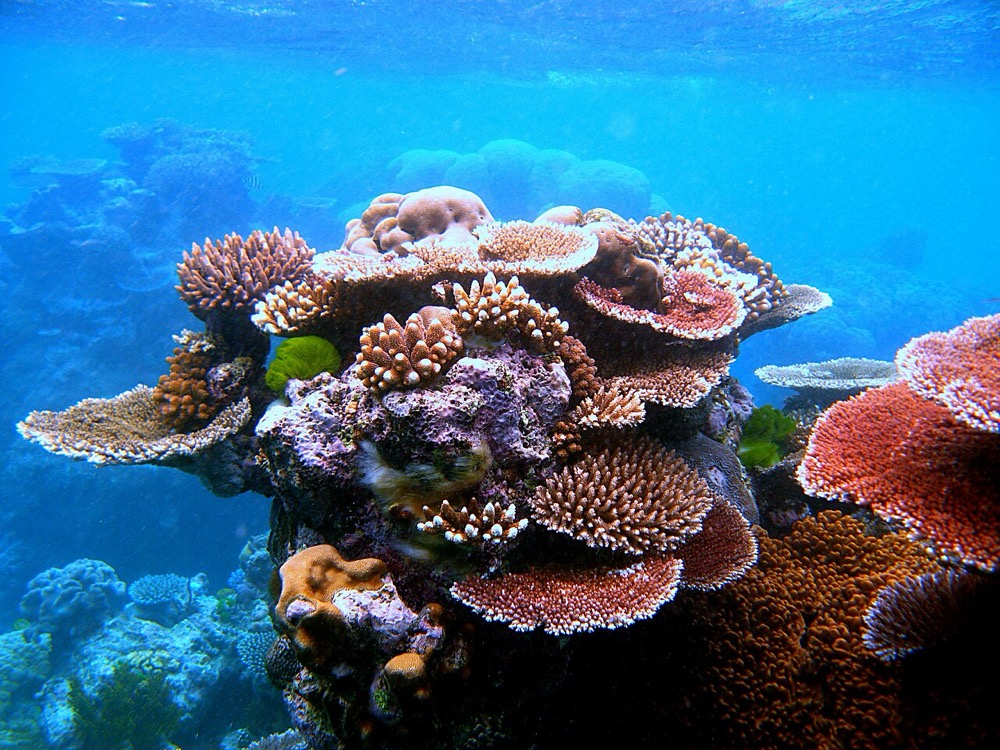
What is the main reason coral reefs are found only in warm, clear, shallow water?
Corals are plants that need freshwater runoff.
Cold water contains no calcium.
Clear water has more nitrogen than turbid water.
Their photosynthetic algae partners need sunlight and warm temperatures.
Corals live in mutualism with zooxanthellae that photosynthesize; this needs light (shallow, clear water) and warmth. Too much heat triggers bleaching. Corals are animals, not plants.
Image: Toby Hudson, CC BY-SA 3.0, via Wikimedia Commons.
In the ocean zone diagram, which depth range is the mesopelagic ('twilight') zone?
About 200 to 1,000 m
0 to 200 m
1,000 to 4,000 m
Below 6,000 m
The epipelagic is 0 to 200 m, mesopelagic 200 to 1,000 m, bathypelagic 1,000 to 4,000 m, abyssopelagic 4,000 to 6,000 m, and hadalpelagic deeper than 6,000 m.
Which scenario is secondary succession?
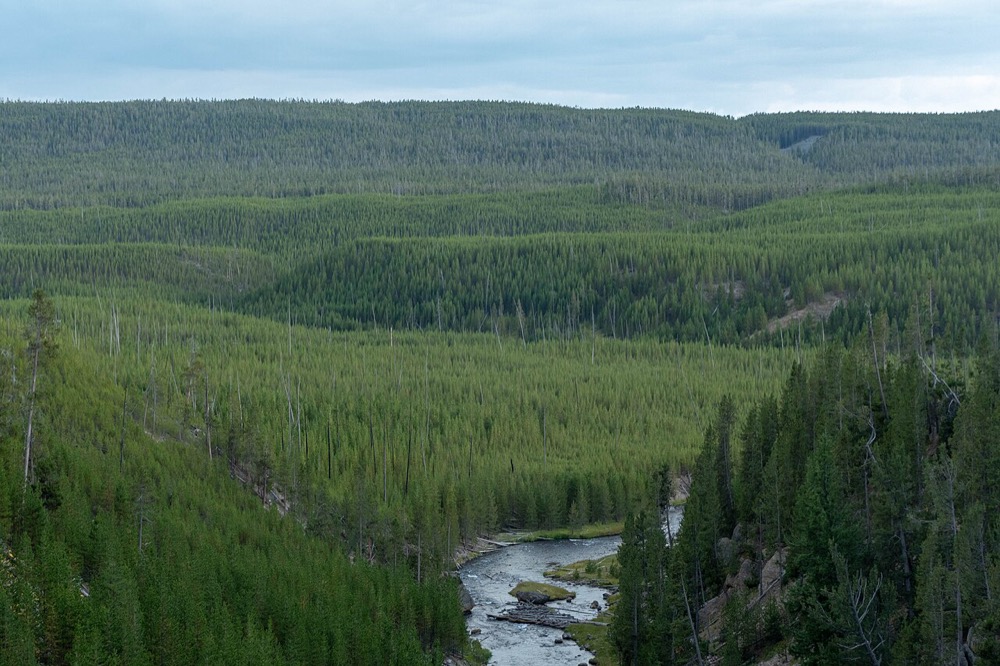
Lichens colonizing a fresh lava flow
Mosses growing on bare rock exposed by a retreating glacier
Grasses and pine seedlings reappearing on a burned forest floor
Algae colonizing a newly formed volcanic island
Secondary succession occurs where soil remains after a disturbance, so it is faster. The other options start on bare rock with no soil: primary succession.
Which organism is typically a pioneer species in primary succession?
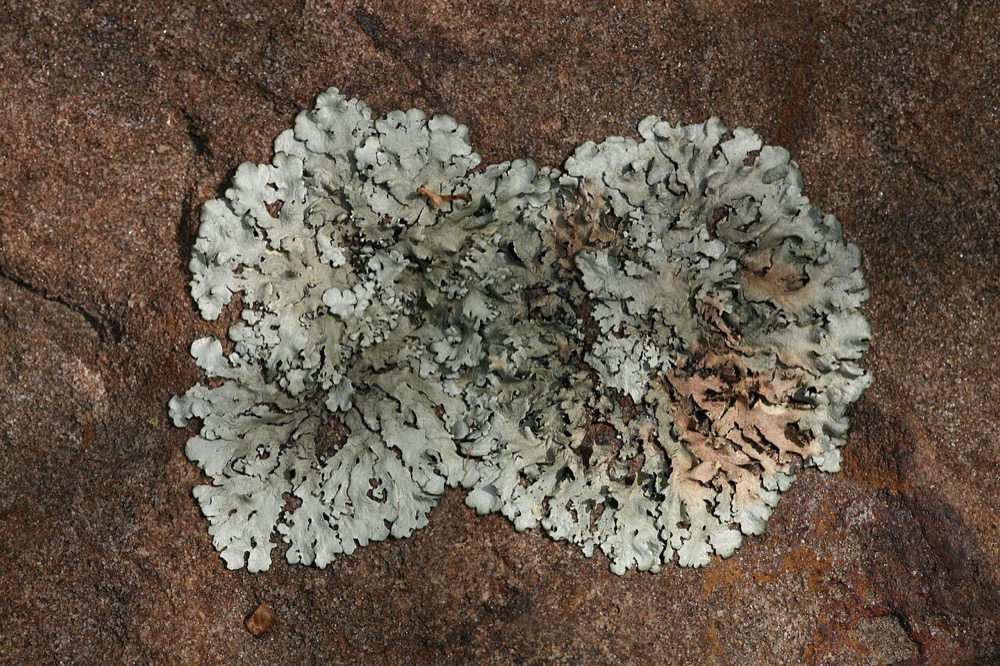
Oak tree
Wolf
Lichen
Beaver
Lichens (and mosses) can live on bare rock and begin breaking it down into soil. Oaks, wolves and beavers need established soil, vegetation or prey.
Image: Daniel Schwen, CC BY-SA 4.0, via Wikimedia Commons.
Which statement best explains why invasive species like kudzu often spread rapidly?
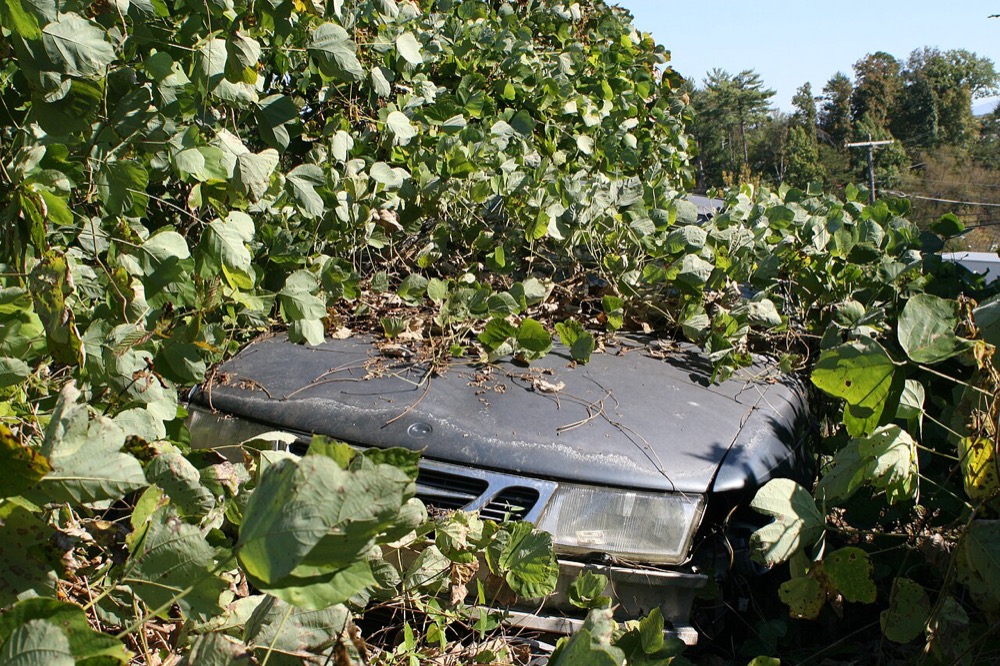
They often lack the predators, parasites and competitors found in their native range.
They are always larger than native species.
They need less sunlight than any native plant.
They reproduce only by seed, so spread is slow.
Release from natural enemies, rapid growth and broad tolerance help invaders. They are not always bigger, and many (like kudzu) spread vegetatively as well as by seed.
Image: Tnvacation, CC BY 4.0, via Wikimedia Commons.
A lake's thermocline is
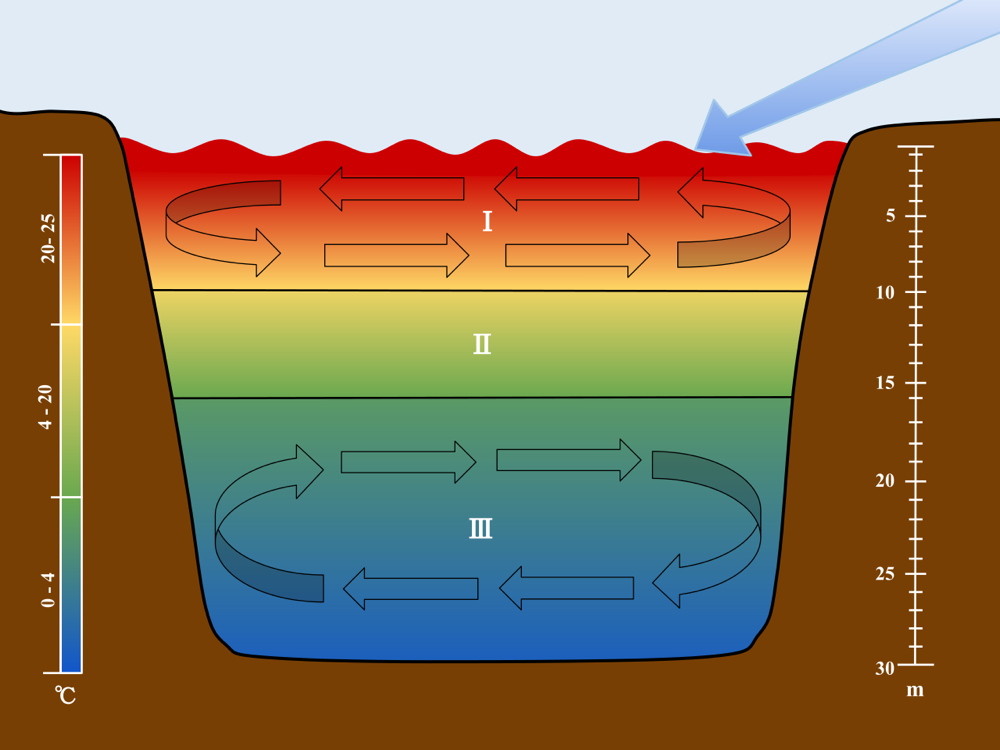
the warm surface layer
the cold bottom layer
the layer where the lake mixes completely in summer
the layer in which temperature changes rapidly with depth
The thermocline is the transition layer between warm surface water (epilimnion) and cold deep water (hypolimnion). It limits mixing in summer.
Image: Mbrookings19, CC BY-SA 4.0, via Wikimedia Commons.
