Quiz · Hard
Applied questions on excitation-contraction coupling, energy systems, neuromuscular disease and nerve injuries.
A patient is poisoned with an organophosphate that inhibits acetylcholinesterase. Which finding is expected?
Flaccid paralysis from blocked ACh release
Absence of end-plate potentials
Loss of troponin function
Persistent muscle contraction and spastic paralysis
Without breakdown of ACh, receptors stay activated, the end plate stays depolarized and muscle cannot relax. Flaccid paralysis follows botulinum toxin or curare instead.
After a whole-body workout, a patient has dark urine, severe muscle pain and a very high serum CK. Which complication is the main concern?
Acute kidney injury from myoglobin
Myasthenic crisis
Hypercalcemia from bone loss
Cardiac tamponade
Rhabdomyolysis releases myoglobin that obstructs and injures renal tubules. Aggressive IV fluids are the mainstay of treatment.
A patient cannot rise from a chair or climb stairs and walks with a pelvic drop on the unsupported side. Which nerve may be injured?
Inferior gluteal nerve
Superior gluteal nerve
Femoral nerve
Obturator nerve
Superior gluteal nerve injury weakens gluteus medius and minimus, producing a Trendelenburg gait. Inferior gluteal injury affects gluteus maximus, which produces difficulty with stairs and rising but not a pelvic drop.
Which sequence correctly orders excitation-contraction coupling?
Ca2+ binds troponin, T-tubule action potential, Ca2+ released from SR, cross-bridges
ACh binds SR, Ca2+ enters from outside, troponin released
Action potential in T-tubule, Ca2+ release from SR, Ca2+ binds troponin, cross-bridge formation
Myosin binds actin, Ca2+ released from SR, action potential
The electrical signal precedes the Ca2+ release; calcium binding to troponin must precede cross-bridge attachment.
On a tension-time graph, stimuli delivered 20 times per second produce a smooth, sustained maximum contraction. What is this called?
Single twitch
Treppe (staircase effect)
Muscle tone
Complete (fused) tetanus
When stimuli arrive faster than the muscle can relax, twitches fuse. Unfused (incomplete) tetanus shows a jagged plateau, and treppe is the stepwise rise in force in a warmed-up muscle at low-frequency stimulation.
Which finding differentiates Duchenne muscular dystrophy from myasthenia gravis?
Dystrophin deficiency and progressive degeneration of muscle fibers
Antibodies against nicotinic receptors
Fatigable ptosis that improves with rest
Improvement with cholinesterase inhibitors
Duchenne is a structural protein defect of muscle (X-linked). The other three options describe myasthenia gravis, an autoimmune NMJ disease.
During a heavy sprint of about 30 seconds, which pathway provides most of the ATP after creatine phosphate is depleted?
Aerobic respiration of fatty acids
Anaerobic glycolysis
Stored ATP only
Protein catabolism
Glycolysis produces ATP quickly without oxygen, at the cost of lactate and H+ accumulation. Aerobic fatty acid oxidation is too slow for maximal sprinting.
Which statement about the biceps curl lever is correct?
It is a first-class lever with the fulcrum in the middle
It is a second-class lever like a wheelbarrow
It is a third-class lever: the effort lies between the fulcrum and the load
It is a lever that always has a mechanical advantage over 1
The biceps inserts near the elbow (fulcrum) with the weight in the hand, so the effort is between them. That gives speed and range at the cost of force.
Which muscle is most likely weak in a patient with a winged scapula?
Trapezius
Rhomboids
Deltoid
Serratus anterior
The serratus anterior holds the scapula against the rib cage; the long thoracic nerve supplies it. Trapezius (CN XI) injury produces a drooping shoulder instead.
A patient with a fractured fibular neck has foot drop and cannot dorsiflex. Which nerve is injured?
Common fibular (peroneal) nerve
Tibial nerve
Femoral nerve
Sural nerve
The common fibular nerve winds around the fibular neck and supplies the dorsiflexors and evertors. The tibial nerve supplies plantar flexors.
Which characteristic distinguishes smooth muscle contraction from skeletal muscle contraction?
Ca2+ binds troponin
Ca2+ binds calmodulin and activates myosin light chain kinase
Contraction requires a nerve action potential at an end plate for each fiber
Sarcomeres shorten in organized bands
Smooth muscle lacks troponin and sarcomeres. Phosphorylation of myosin by MLCK drives cross-bridge cycling.
A patient has a rotator cuff tear and cannot initiate abduction of the arm. Which muscle is most likely torn?
Infraspinatus
Teres minor
Supraspinatus
Subscapularis
The supraspinatus initiates the first 15 degrees of abduction (the deltoid takes over). Infraspinatus and teres minor externally rotate; subscapularis internally rotates.
Why does the length of the A band remain constant during contraction?
Myosin filaments shorten
Z discs move apart
Titin shortens the A band
Thick filaments do not shorten; thin filaments slide past them
Contraction is by sliding, not by filament shortening, which is why the A band stays constant while I band and H zone narrow.
Which muscle would be expected to have the smallest motor units?
Extraocular muscles
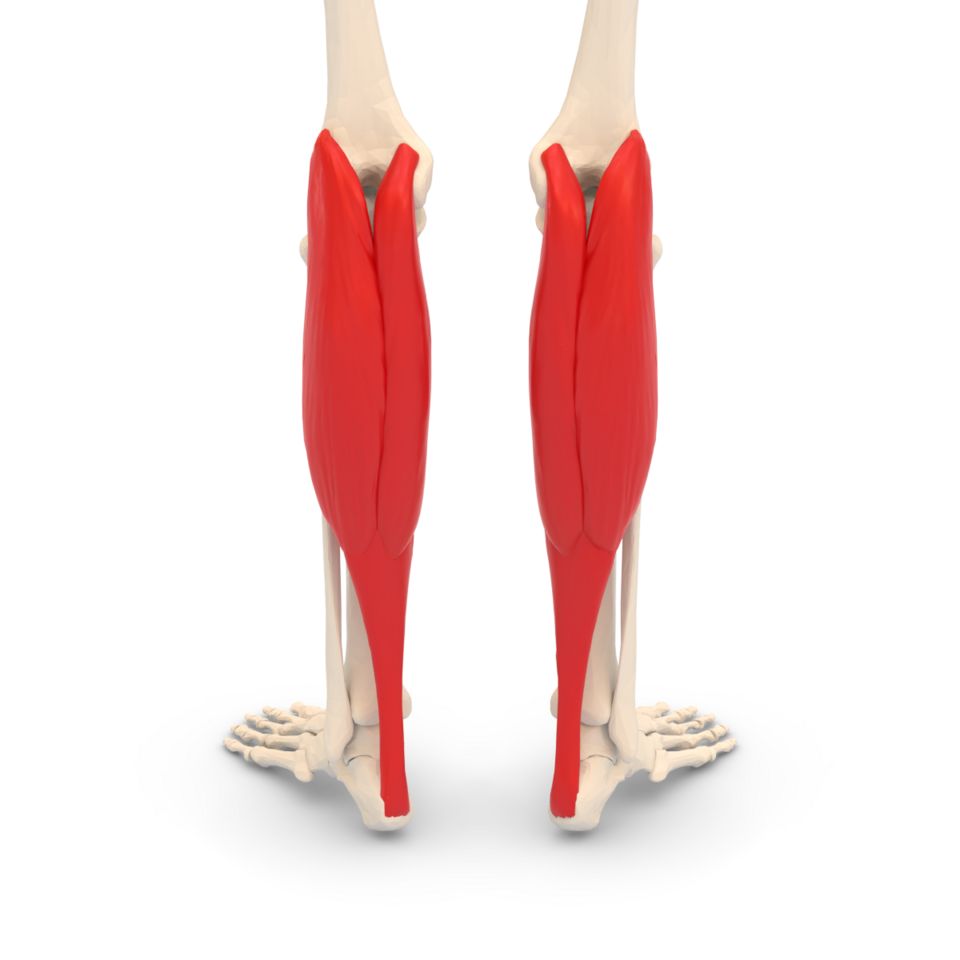
Gastrocnemius
Gluteus maximus
Quadriceps femoris
Muscles for precise movements (eyes, fingers) have few fibers per motor neuron. Large postural and power muscles have hundreds to thousands.
Which muscle is highlighted in the image?
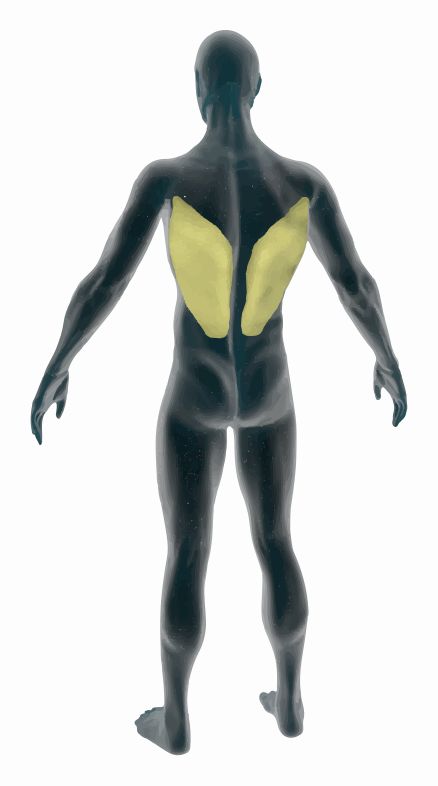
Gluteus maximus
Latissimus dorsi
Trapezius
Rhomboids
The wide muscle spanning the lower back and attaching to the humerus is the latissimus dorsi, which extends, adducts and medially rotates the arm. Image: DataBase Center for Life Science (DBCLS), CC BY 4.0, via Wikimedia Commons.
Which image highlights the biceps brachii?
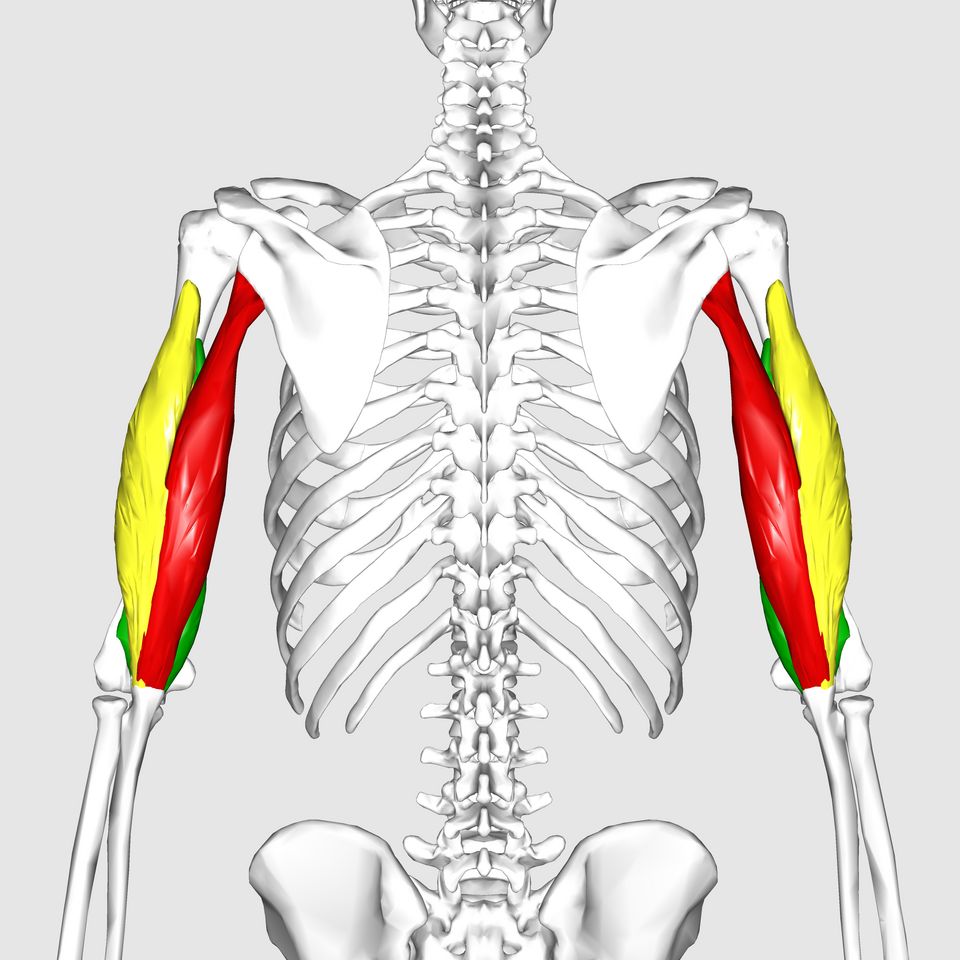
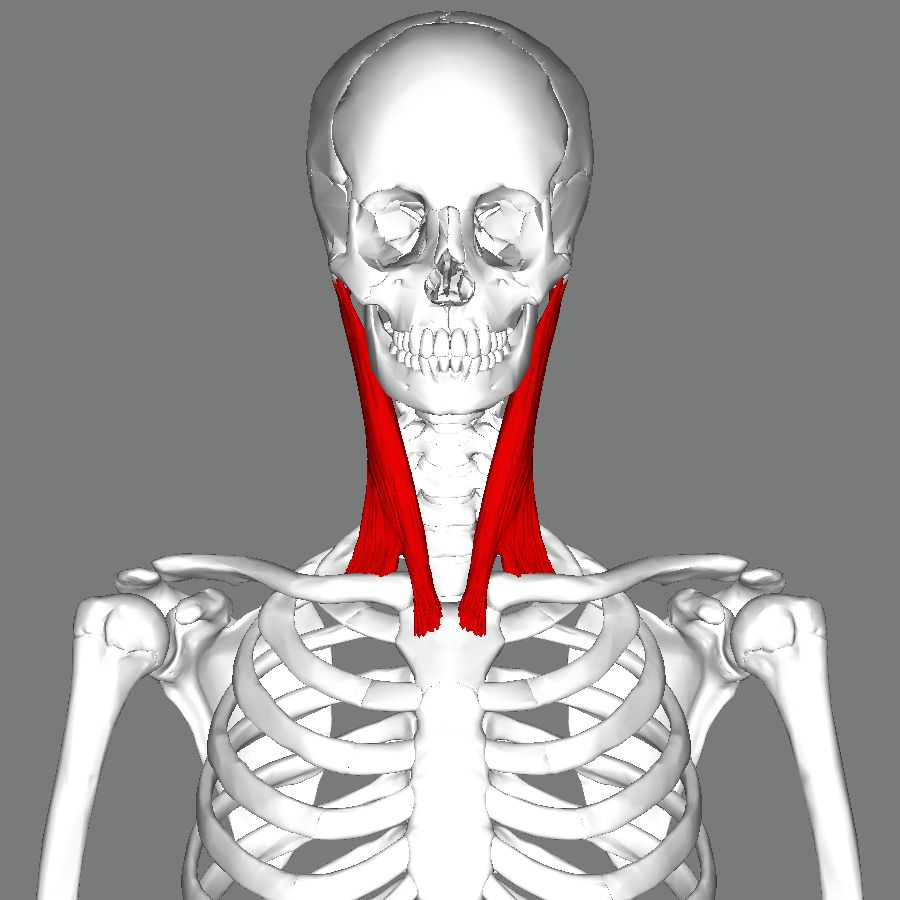
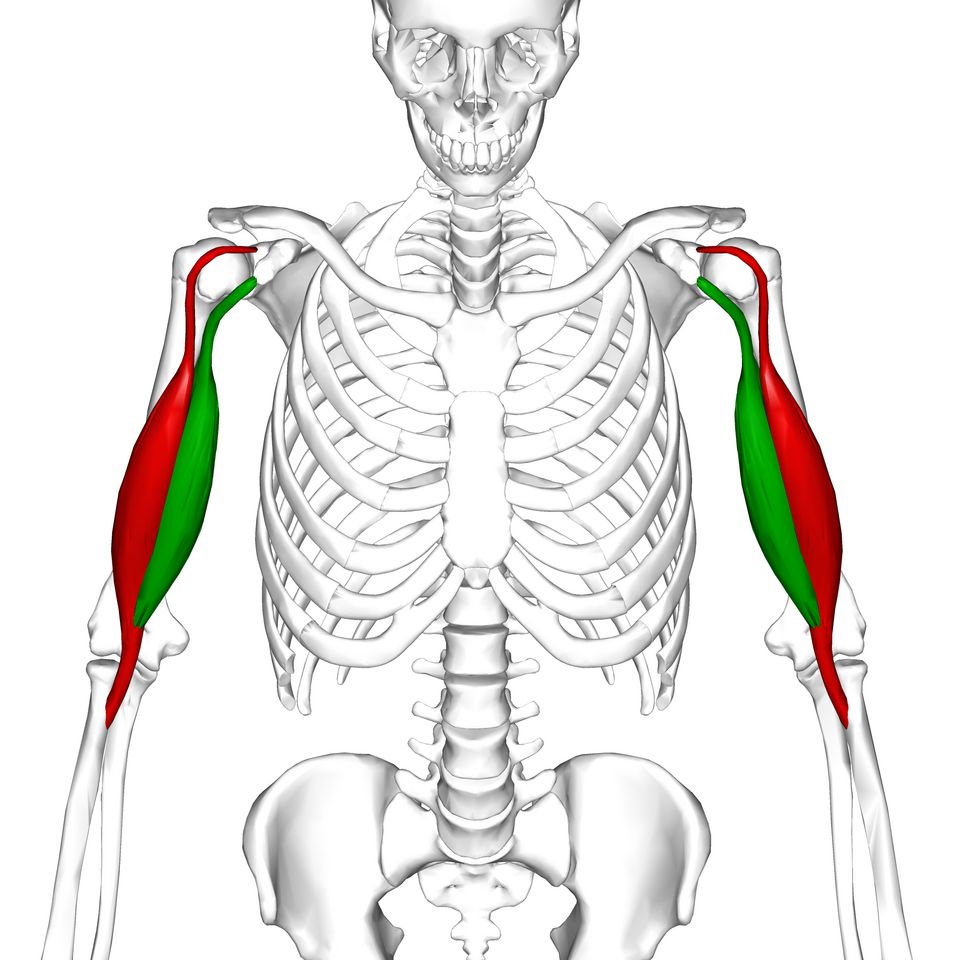
The biceps is on the anterior arm. The triceps image is from behind and shows the posterior arm. Images: Anatomography, CC BY-SA 2.1 jp, and DBCLS, CC BY-SA 2.1 jp, via Wikimedia Commons.
Which finding is expected in rigor mortis?
Muscles relax completely because calcium is lost
Fibers become flaccid due to acetylcholine excess
Troponin is irreversibly phosphorylated
Muscles stiffen because ATP is unavailable for myosin detachment
Cross-bridges form but cannot release without ATP. Calcium leaks from the SR after death, which triggers binding.
