Quiz · Medium
Twenty-four questions on research design, survey methods, sampling diagrams, measurement scales, NPS, statistics and the BCG, Ansoff and Five Forces frameworks.
A brand wants to understand why teenagers feel embarrassed by its packaging. Which research design is best suited first?
A large online survey
A census
A sales forecast model
Exploratory qualitative research such as focus groups or interviews
Exploratory qualitative methods uncover reasons and language; a survey can then measure how widespread the views are.
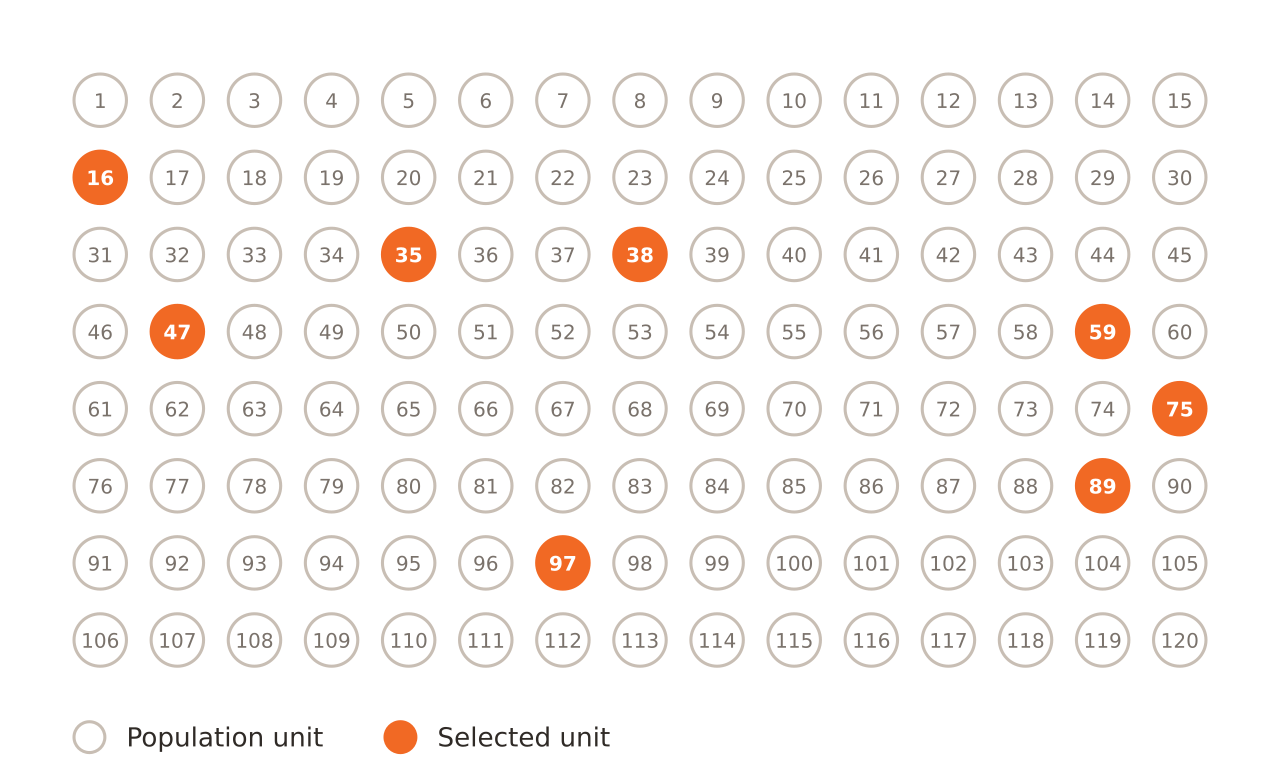
Which sampling method is shown: every unit has an equal chance of selection from the full list?
Quota sampling
Simple random sampling
Snowball sampling
Cluster sampling
Selection is random from the full sampling frame, so each unit has the same probability. Image: Derek Jansen, CC BY 4.0, via Wikimedia Commons.
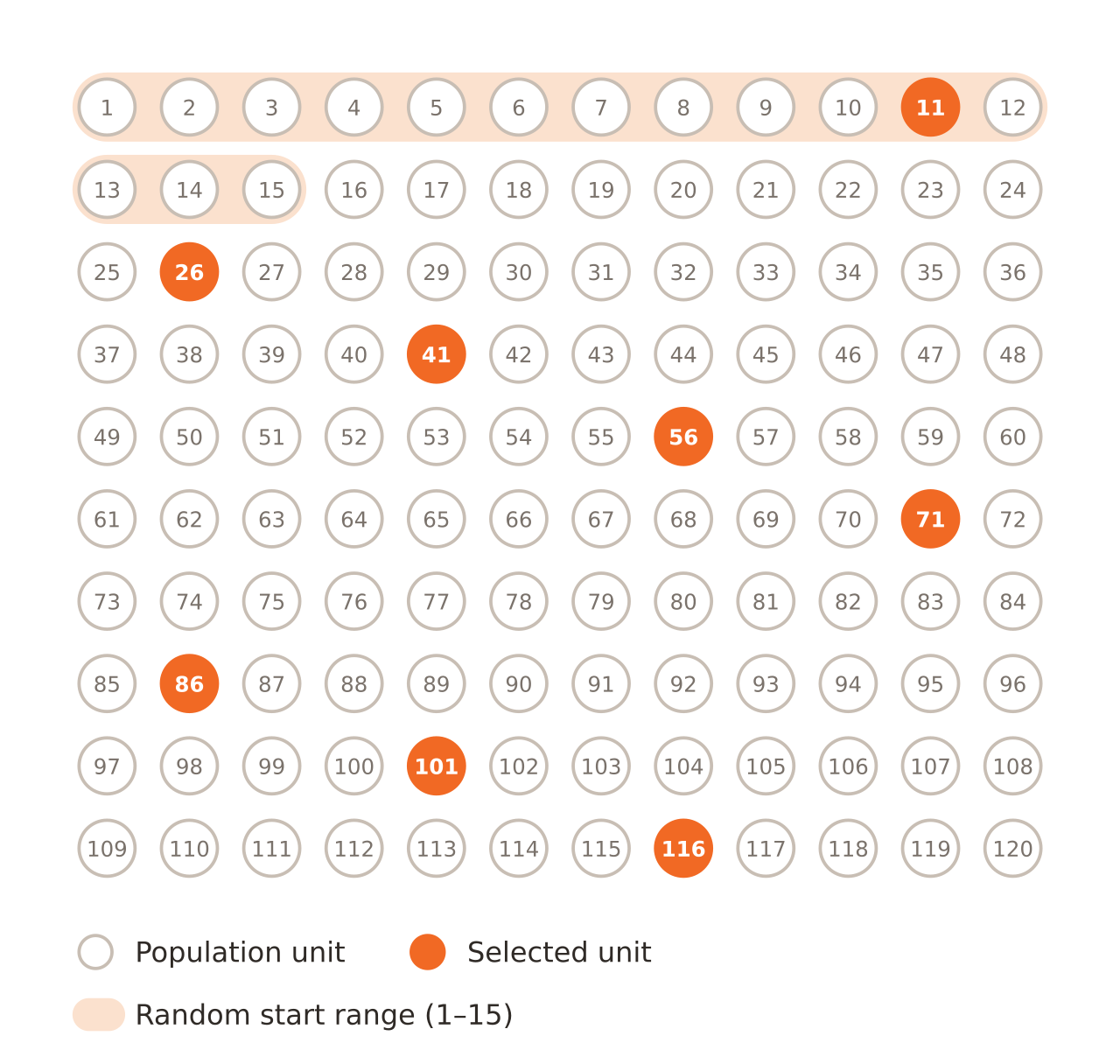
Which sampling method is shown here?
Stratified sampling
Systematic sampling
Convenience sampling
Purposive sampling
Units are chosen at a fixed interval (every 15th) after a random start. Image: Derek Jansen, CC BY 4.0, via Wikimedia Commons.
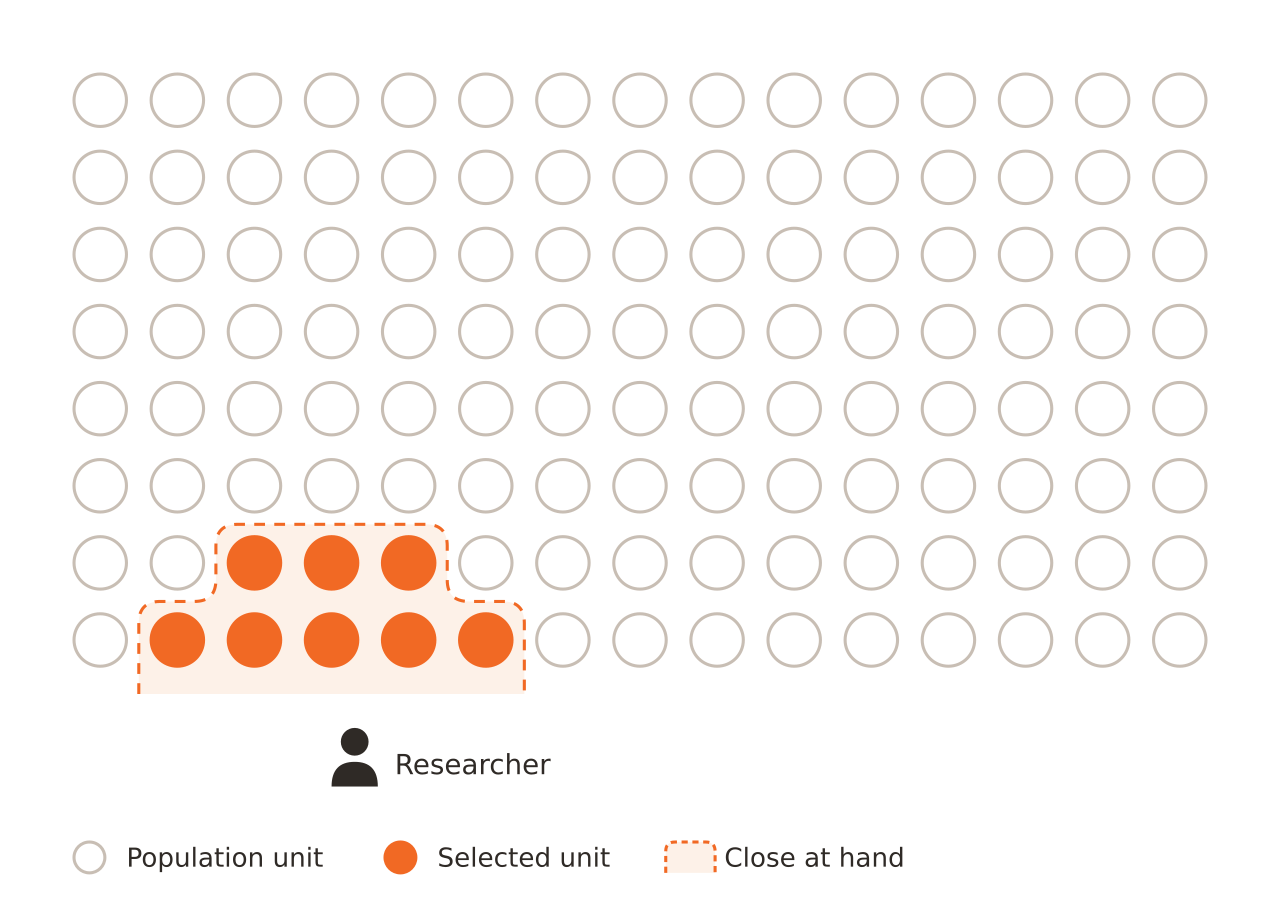
This diagram shows the researcher picking the units closest at hand. This is:
Quota sampling
Snowball sampling
Stratified sampling
Convenience sampling
Convenience sampling is cheap and fast but cannot support reliable inference about the population. Image: Derek Jansen, CC BY 4.0, via Wikimedia Commons.
What is the main difference between stratified and cluster sampling?
Stratified samples from every subgroup, cluster samples whole randomly chosen groups
Stratified uses non-probability selection
Cluster sampling is always more accurate
There is no difference
Strata are distinct subgroups all of which are sampled; clusters are mini-populations, and only some are selected.
Which test would you use to check the association between gender and brand preference (both categorical)?
Chi-square test
t-test
Correlation r
ANOVA
Chi-square tests independence between categorical variables. A t-test compares two means.
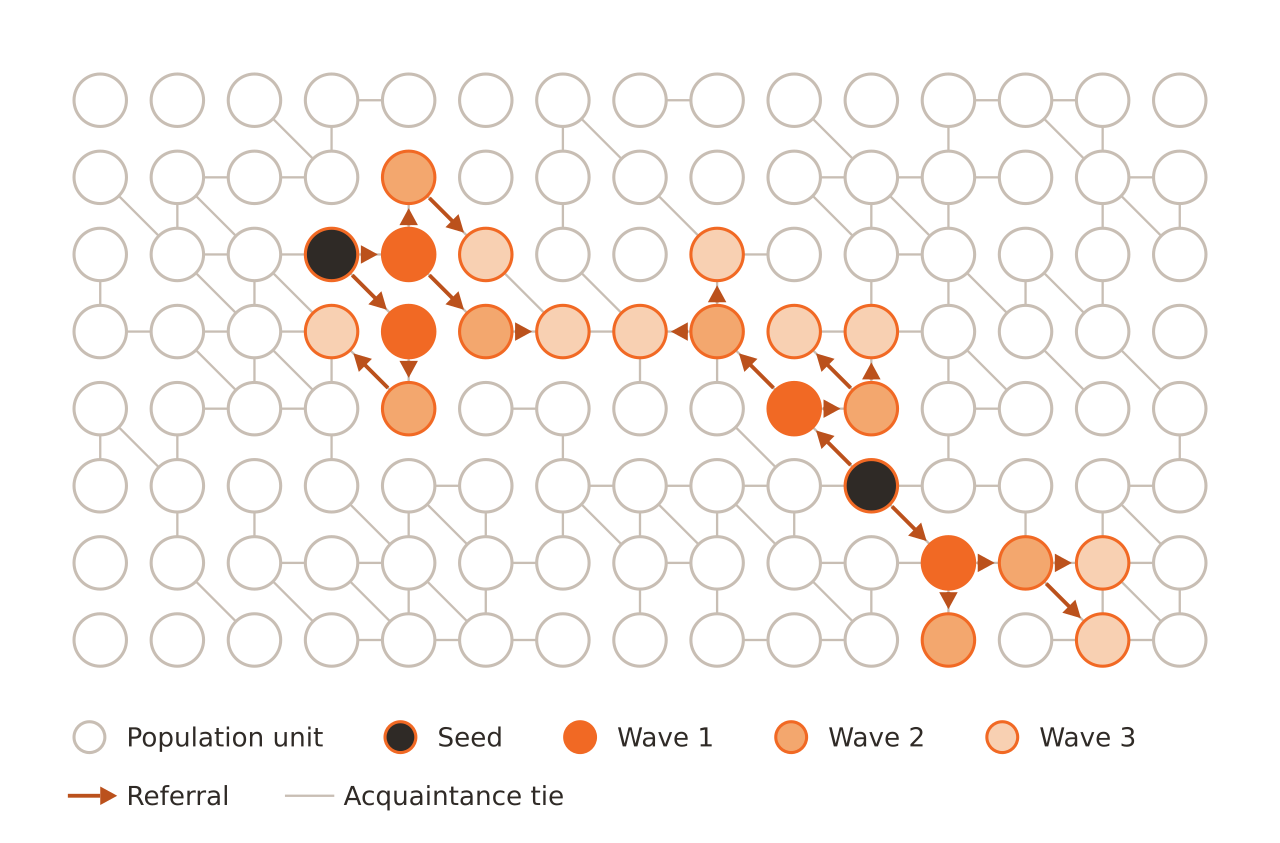
A researcher uses referrals from early respondents to reach rare users of a niche product. This is:
Simple random sampling
Systematic sampling
Snowball sampling
Cluster sampling
Snowball sampling works for hard-to-reach groups but is biased toward connected people. Image: Derek Jansen, CC BY 4.0, via Wikimedia Commons.
A survey asks: 'How satisfied are you with our price and quality?' What is wrong with it?
It is a leading question
It uses a nominal scale
It is open-ended
It is double-barreled
It asks two things at once, so respondents cannot answer clearly about only one.
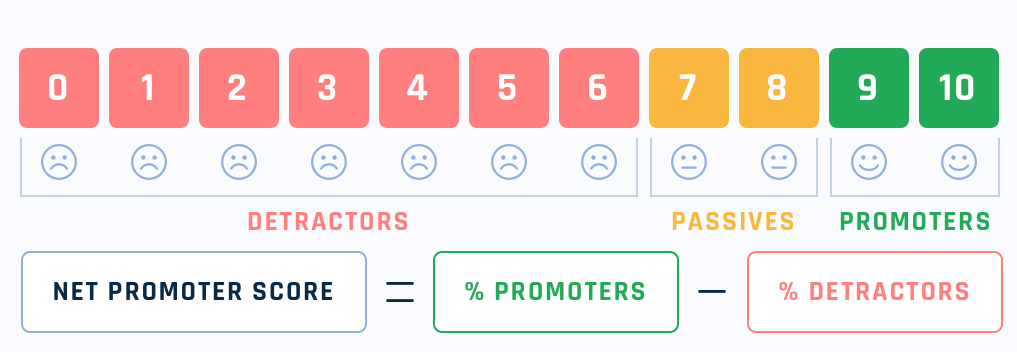
In an NPS survey, 55% score 9-10, 25% score 7-8 and 20% score 0-6. What is the NPS?
+55
+35
+25
+80
NPS = % promoters - % detractors = 55 - 20 = 35. Passives are ignored in the subtraction. Image: Bquast, CC BY 4.0, via Wikimedia Commons.
Which level of measurement is a ranking of five brands from most to least preferred?
Nominal
Interval
Ordinal
Ratio
Rankings show order but not equal distances between ranks, which is ordinal.
Which statement about secondary data is TRUE?
It was collected for another purpose and may not fit your question exactly
It is always more accurate than primary data
It cannot be used for market sizing
It is always free
Secondary data is fast and cheap but may be outdated, differently defined or not specific enough.
What is the main limitation of focus groups?
They cannot explore attitudes
They are always online
Results are not statistically generalizable and can be affected by dominant participants
They need a census
Small, non-random groups and groupthink limit generalization. They remain valuable for exploring ideas.
Which statement about correlation is correct?
Correlation measures the strength of a linear relationship
A high correlation proves causation
r = 2 is possible
Correlation requires an experiment
r ranges from -1 to +1. Causation requires an experiment or additional evidence.
A larger sample reduces which type of error?
Non-sampling error caused by a biased question
Measurement bias
Nonresponse bias
Sampling error
Sampling error shrinks as n grows. Biased wording or a biased frame stays biased however large the sample.
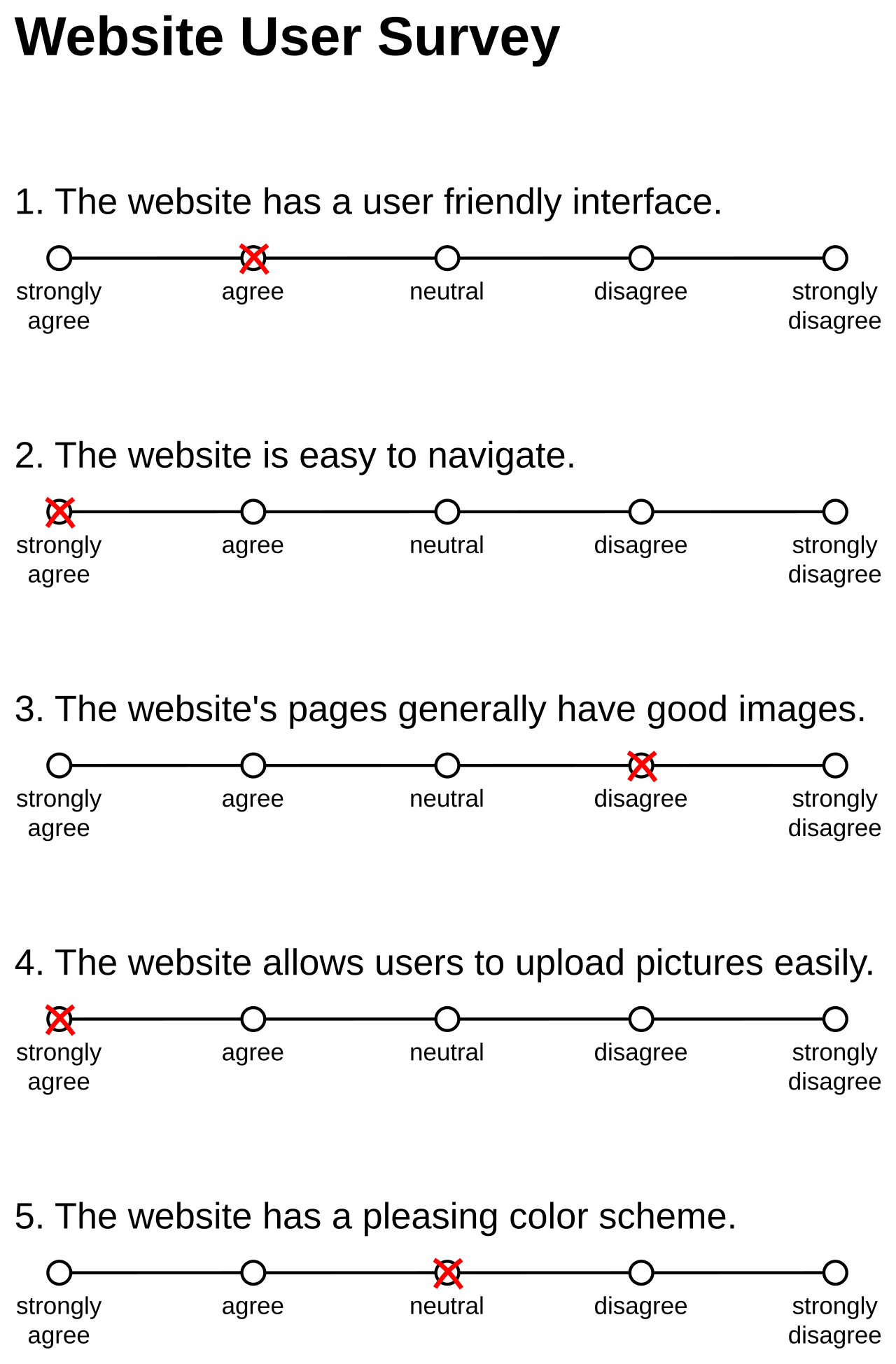
Which of these is a Likert-type item?
'Rate the brand: cheap ... expensive' between two adjectives
'The service was fast.' Strongly disagree ... Strongly agree
'Which brand did you buy?'
'Your age?'
Likert items use agree-disagree scales. The first option is a semantic differential. Image: Nicholas Smith, CC BY-SA 3.0, via Wikimedia Commons.
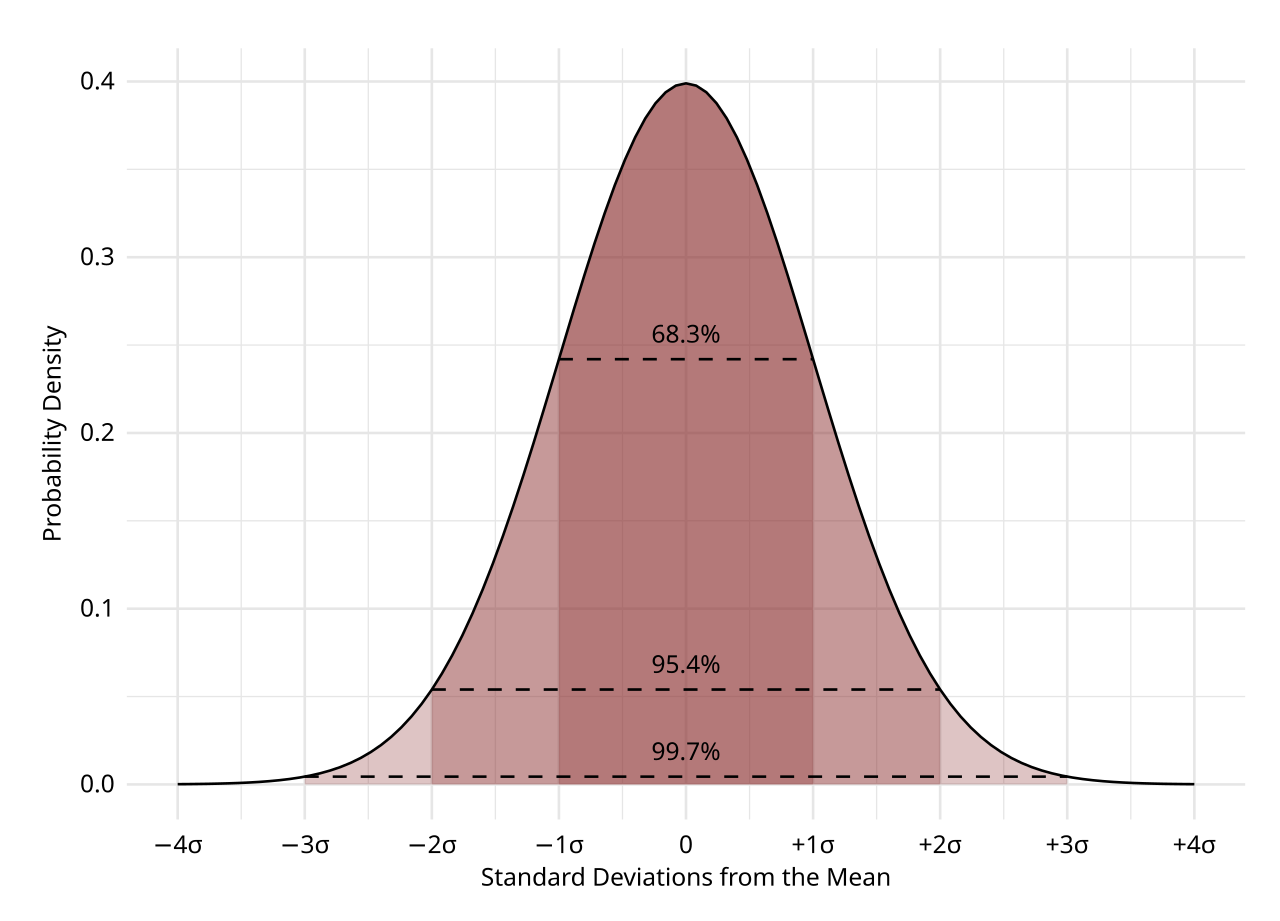
Approximately what share of data lies within two standard deviations of the mean in a normal distribution?
68%
95%
90%
99.7%
About 95.4% (rounded to 95%). 68% is within 1 SD and 99.7% within 3 SD. Image: D Wells, CC BY-SA 4.0, via Wikimedia Commons.
A researcher interviews only shoppers at a downtown mall on weekday mornings to study all city shoppers. The main issue is:
Hawthorne effect
Response order effect
Ceiling effect
Selection bias
The sample excludes people who shop at other times and places, so it is not representative.
True or False: With a 95% confidence interval, there is a 95% probability that the true value lies within this particular interval.
True
False
The 95% describes the long-run reliability of the method. Once computed, the interval either contains the true value or does not.
What does 'sugging' mean?
Suggesting answers to respondents
Sampling by suggestion
Summarizing survey results
Selling under the guise of research
Selling under the guise of a survey is unethical and prohibited by research codes.
A study pays for a TV ratings service that many firms use. This data is:
Custom research
Syndicated research
Qualitative research
Experimental research
Syndicated data is collected on a standard basis and sold to many clients.
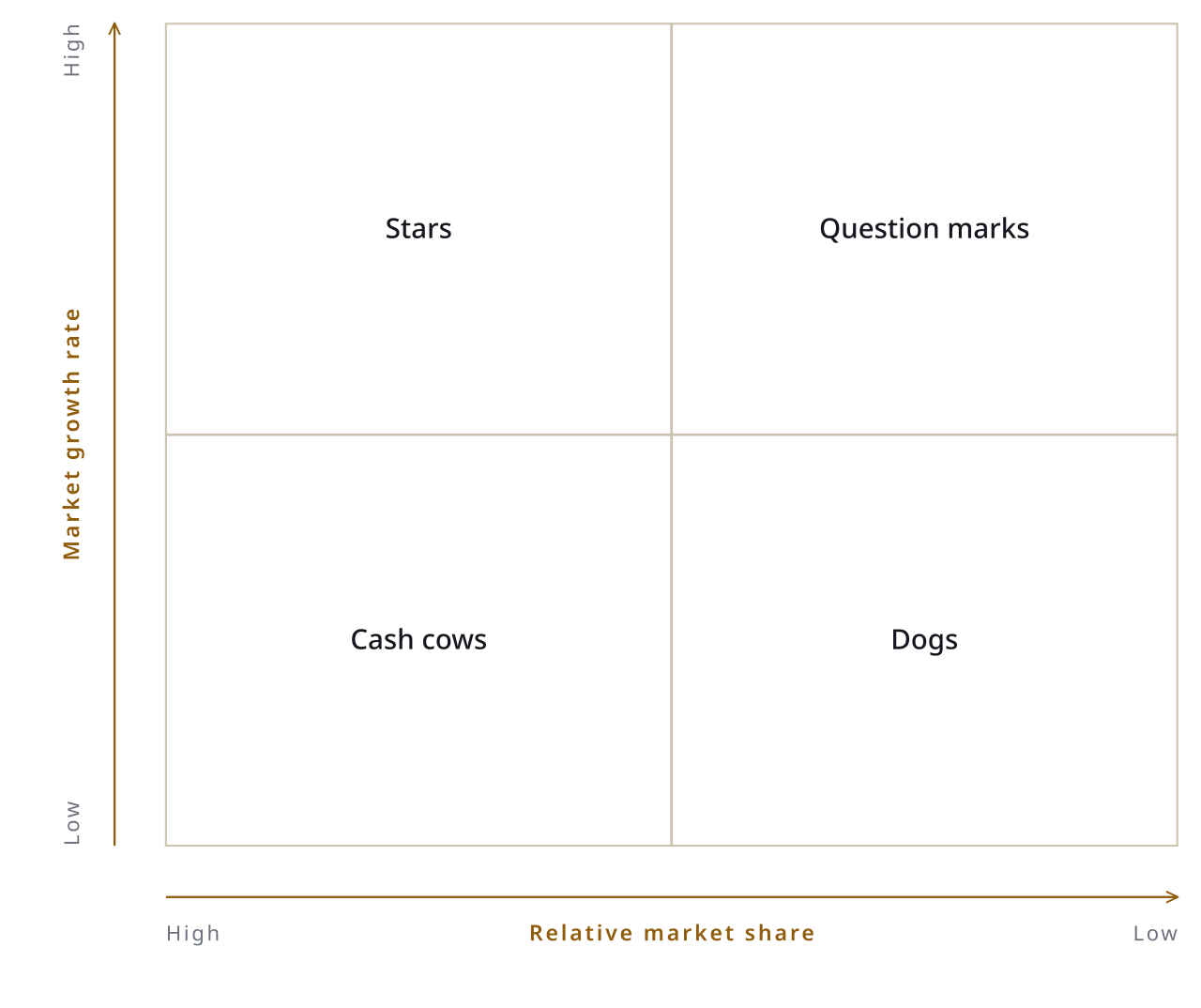
In a BCG-type portfolio review, a product with low market share in a high-growth market is a:
Star
Cash cow
Question mark
Dog
Question marks need heavy investment to become stars or should be divested. Image: Peter Gladdish, CC BY 4.0, via Wikimedia Commons.
A company sells its existing product in a new country. According to Ansoff, this is:
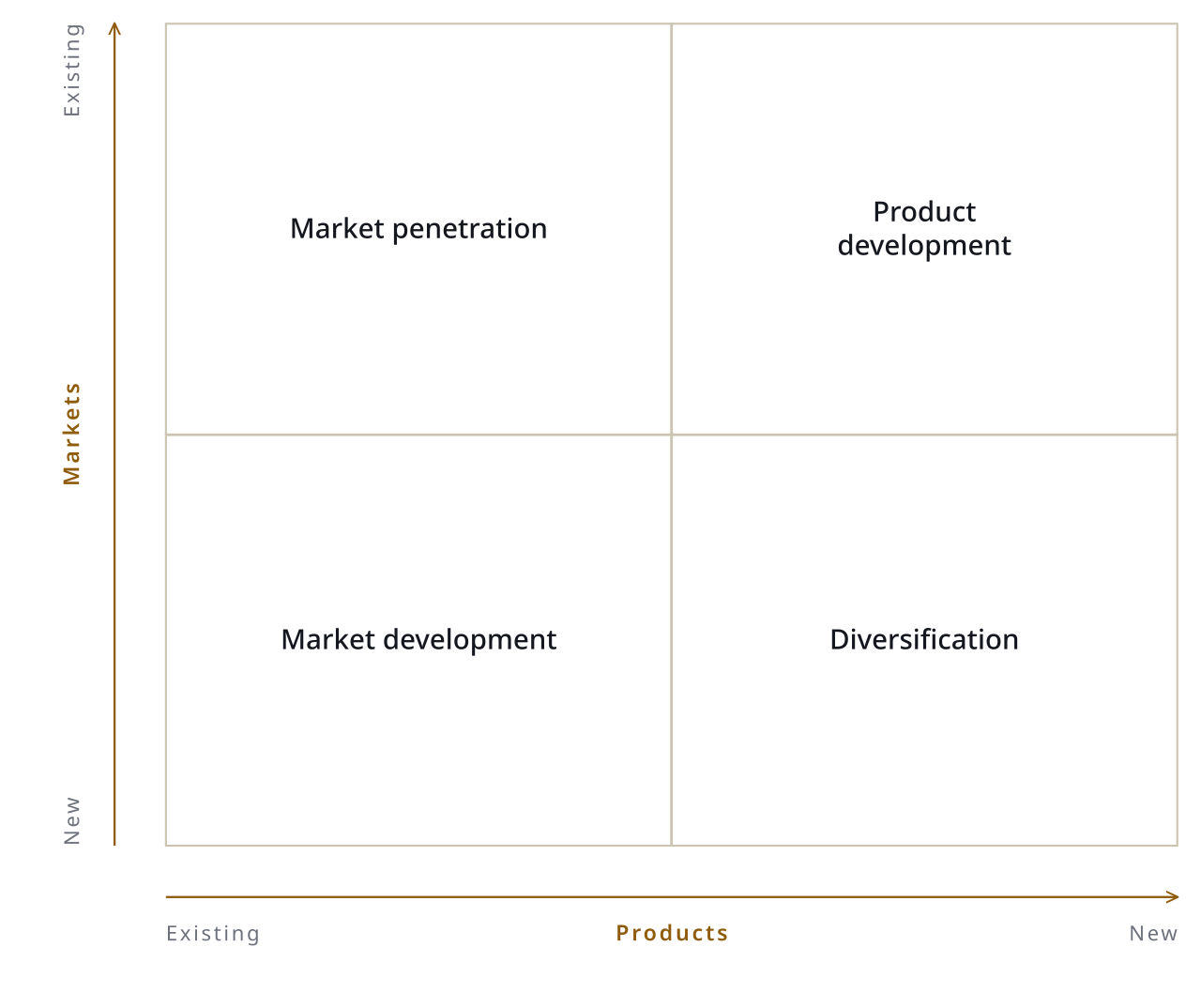
Market development
Market penetration
Product development
Diversification
Existing product, new market: market development. Image: Peter Gladdish, CC BY 4.0, via Wikimedia Commons.
In Porter's Five Forces, which force does a firm face when customers can easily switch to a different product meeting the same need?
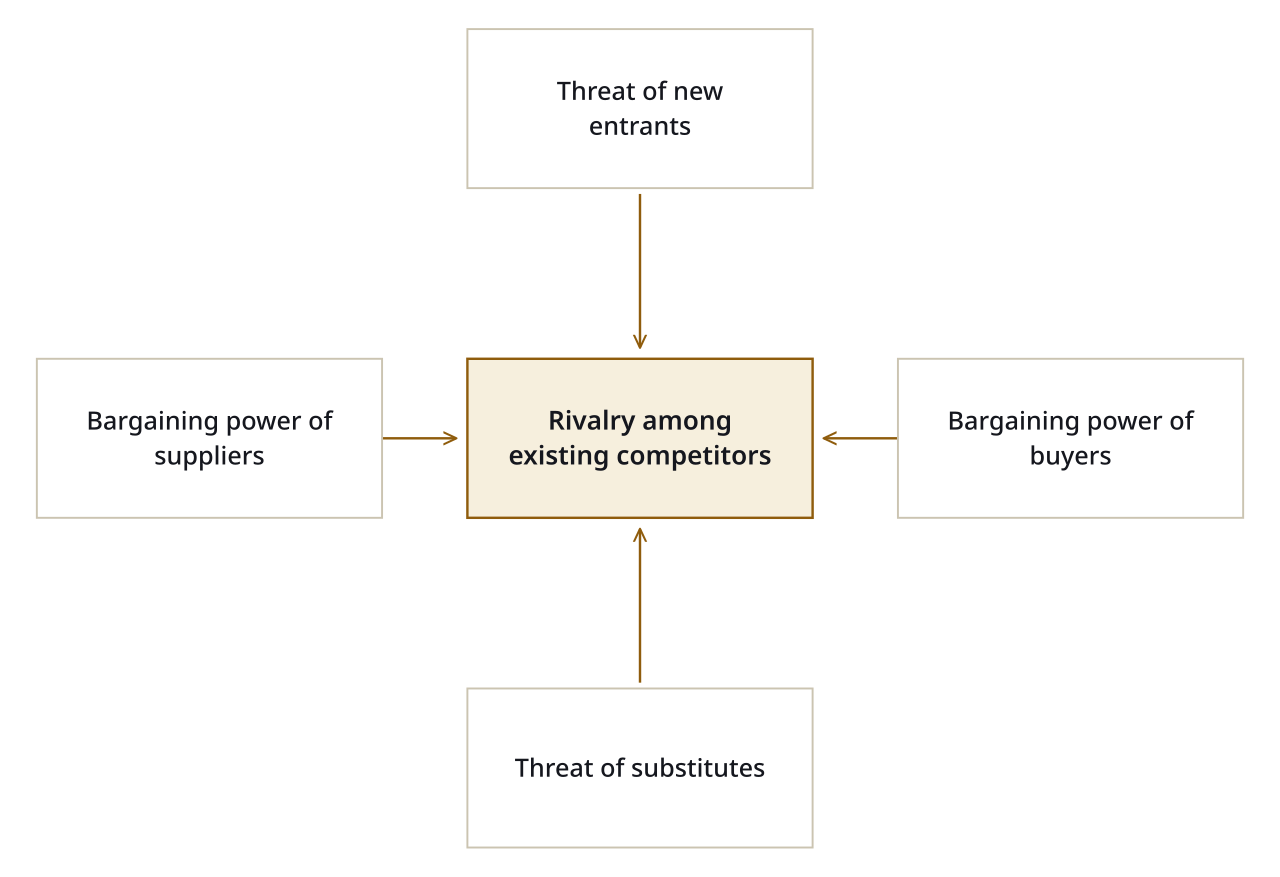
Rivalry
Supplier power
Threat of substitutes
Barriers to entry
Substitutes are products from other industries that satisfy the same need. Direct rivals sell similar products. Image: Peter Gladdish, CC BY 4.0, via Wikimedia Commons.
An SOM (serviceable obtainable market) is:
The portion of the market a firm can realistically capture
The whole global market
All customers who need the product
Competitors' total sales
TAM > SAM > SOM; SOM is the realistic share given resources and competition.
