Quiz · Easy
Eighteen questions on element identification (with photos), families, blocks, electron configurations, trends and the history of the table.
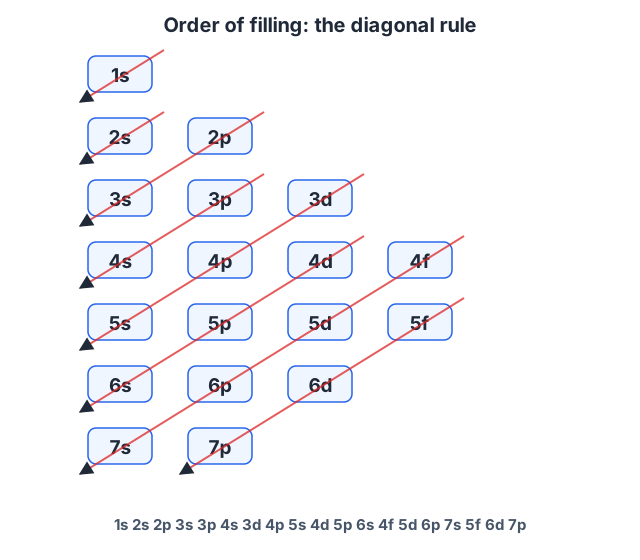
According to the diagonal rule, which subshell fills immediately after 3p?
4s
3d
4p
4f
The order is 1s 2s 2p 3s 3p 4s 3d 4p.
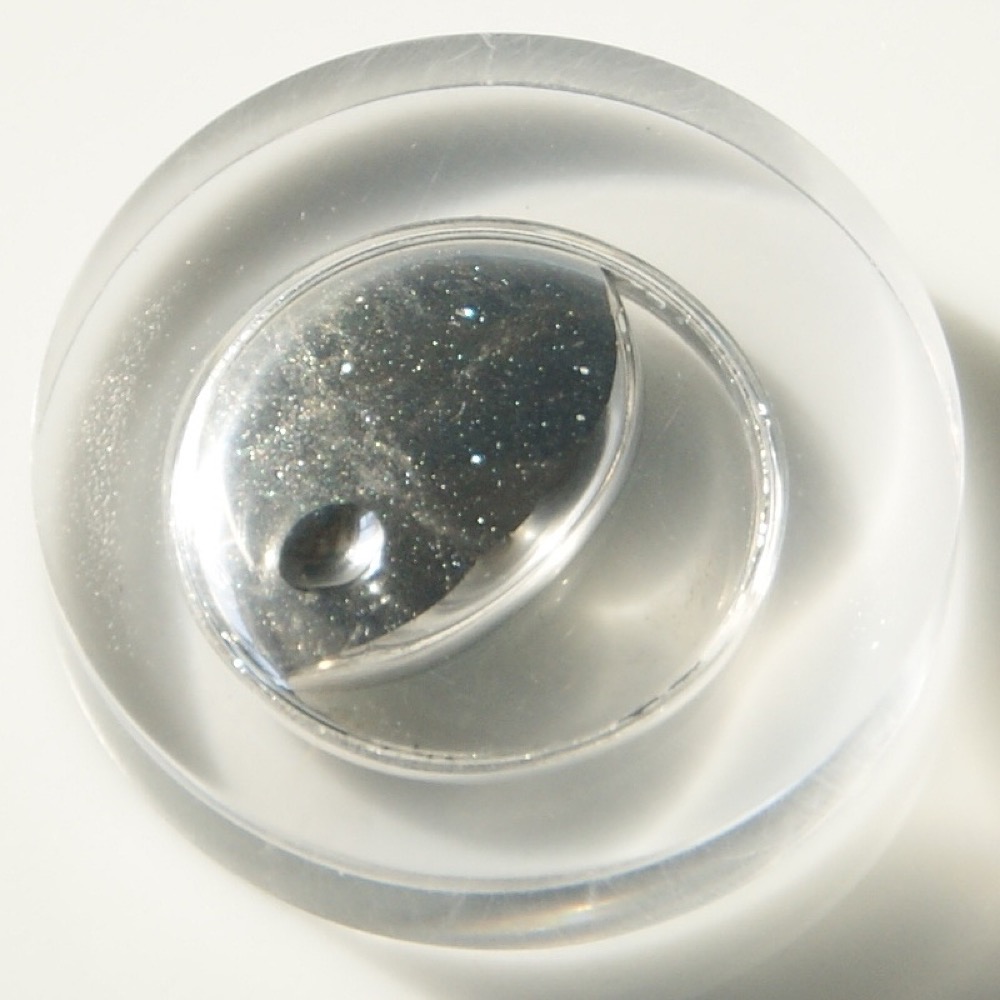
Which element is shown? (Silvery liquid metal at room temperature.)
Gallium
Cesium
Mercury
Bromine
Mercury is the only metal that is liquid at room temperature. Bromine is the only liquid nonmetal. Gallium and cesium melt only slightly above room temperature.
Image: Hi-Res Images of Chemical Elements, CC BY 3.0, via Wikimedia Commons.
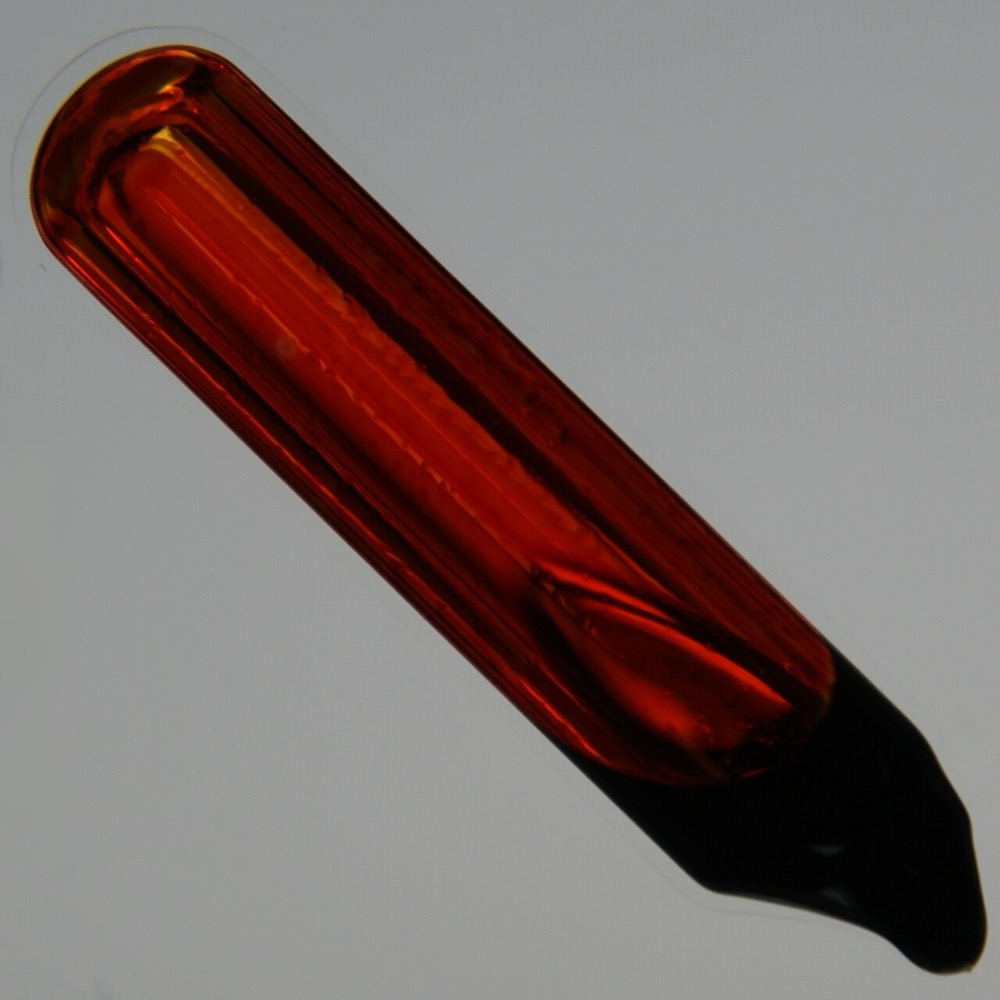
Which element is shown? (A red-brown liquid nonmetal.)
Bromine
Mercury
Iodine
Chlorine
Bromine is a red-brown liquid; iodine is a dark solid, and chlorine is a gas.
Image: Hi-Res Images of Chemical Elements, CC BY 3.0, via Wikimedia Commons.
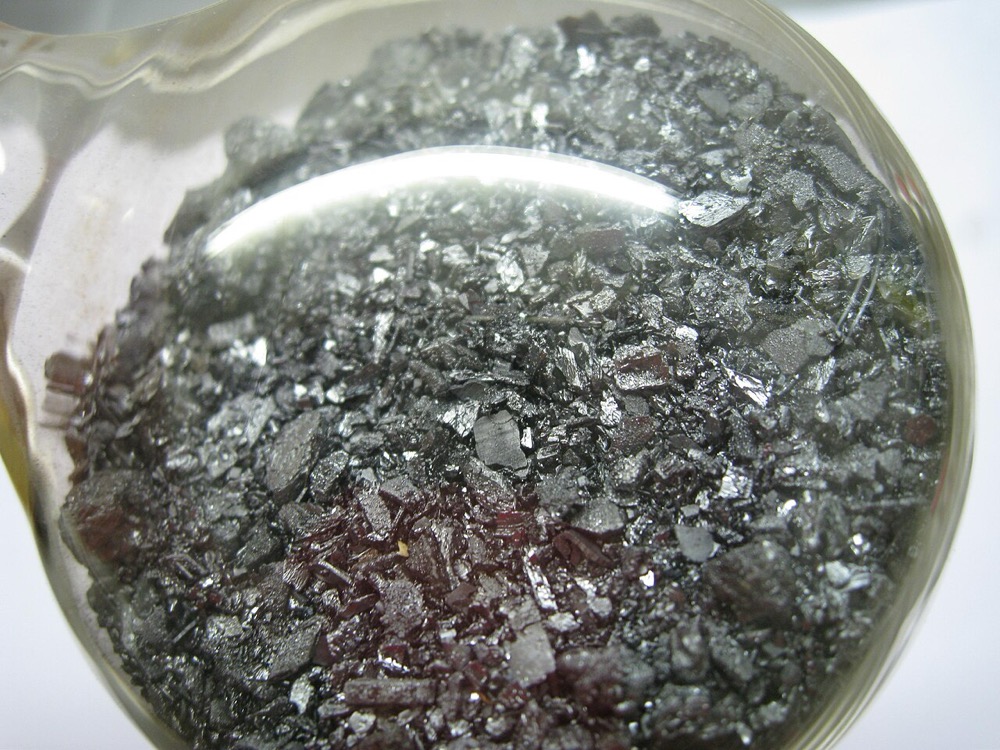
Which element has these dark gray-violet crystals that sublime to a violet vapor?
Sulfur
Chlorine
Bromine
Iodine
Iodine, a halogen, is a solid at room temperature.
Image: Dnn87, CC BY 3.0, via Wikimedia Commons.
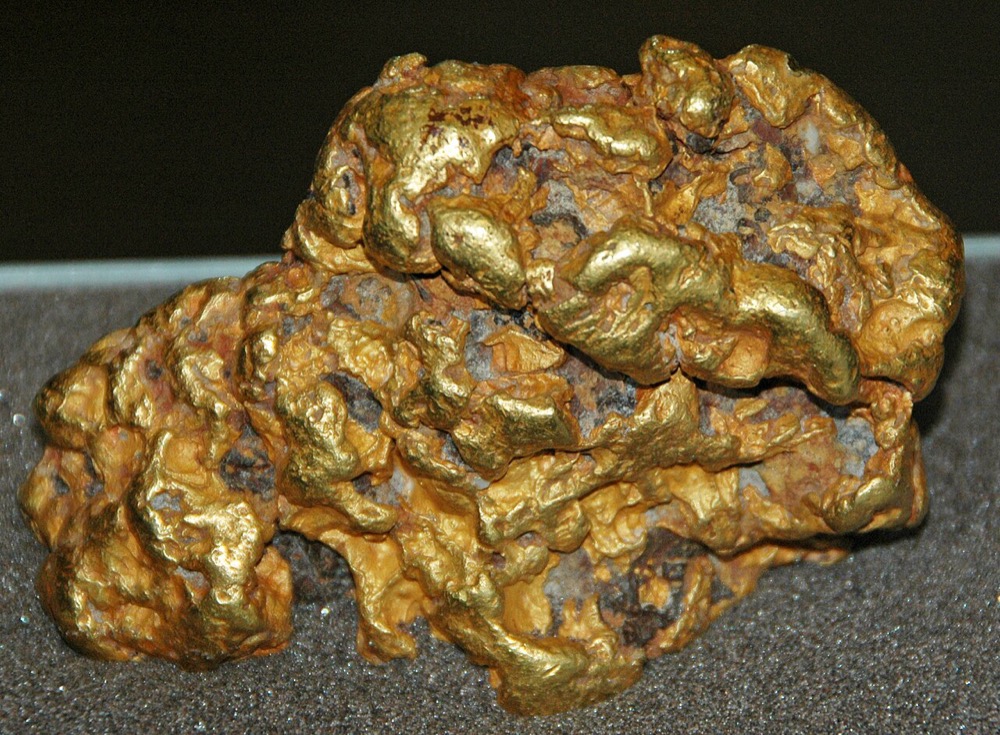
What is the symbol for gold?
Go
Gd
Au
Ag
Au comes from the Latin aurum. Ag is silver (argentum), Gd is gadolinium.
Image: James St. John, CC BY 2.0, via Wikimedia Commons.
Which family contains Li, Na and K?
Transition metals
Alkali metals
Alkaline earth metals
Halogens
Group 1 (except H) are the alkali metals, each with one valence electron.
Which statement about the group of elements F, Cl, Br and I is correct?
They are noble gases
They are alkali metals
They are metalloids
They are halogens with seven valence electrons
Group 17 are halogens with the configuration ns² np⁵.
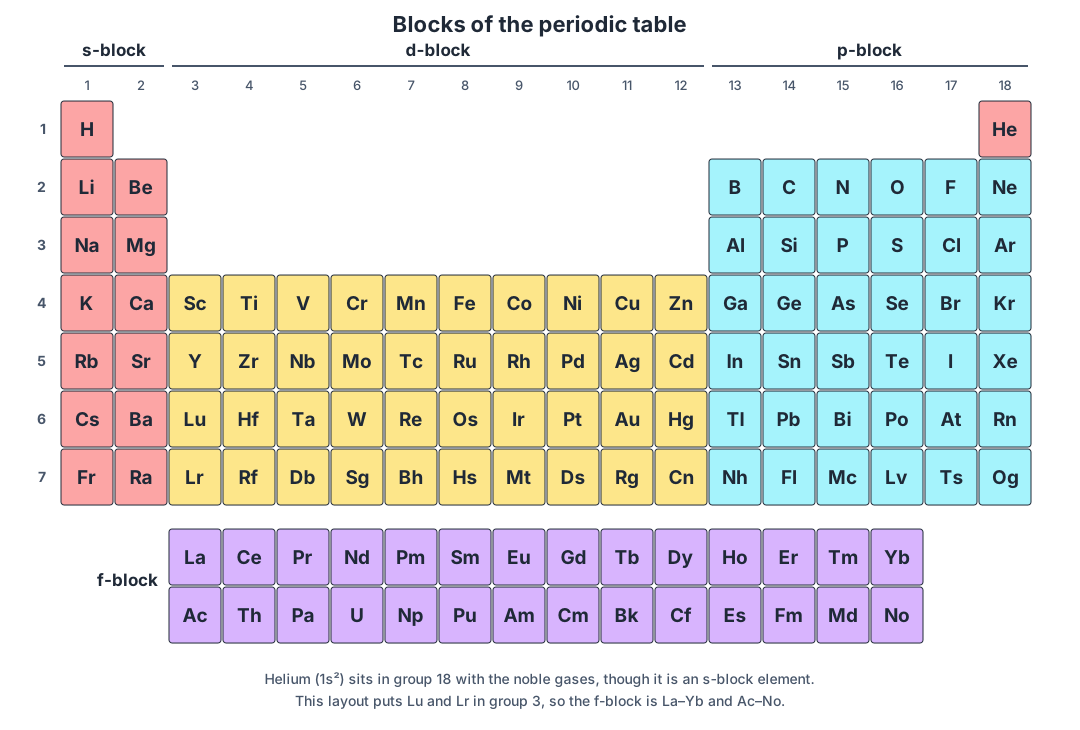
In the periodic table image, which block contains the transition metals?
s-block
p-block
f-block
d-block
The transition metals (groups 3–12) fill the d subshell.
An atom has the electron configuration 1s² 2s² 2p⁶ 3s² 3p⁶ 4s². In which group is it?
Group 12
Group 18
Group 2
Group 4
Two valence electrons in the 4s subshell: Ca, an alkaline earth metal in group 2.
Across period 3 from Na to Cl, atomic radius:
Increases then decreases
Decreases
Increases
Stays the same
The nuclear charge rises and the electrons are added to the same shell, so the atom contracts.
Which has the highest first ionization energy?
Helium
Neon
Argon
Lithium
Ionization energy increases up a group and across a period; helium's electrons are closest to the nucleus.
Which element is the most electronegative?
Fluorine
Oxygen
Chlorine
Cesium
Fluorine has electronegativity 3.98 (Pauling), the highest of all elements.
Which is larger: K or K⁺?
They are equal
Depends on the temperature
K
K⁺
The K atom loses its 4s electron to become K⁺ and the outermost shell is gone, so the ion is much smaller.
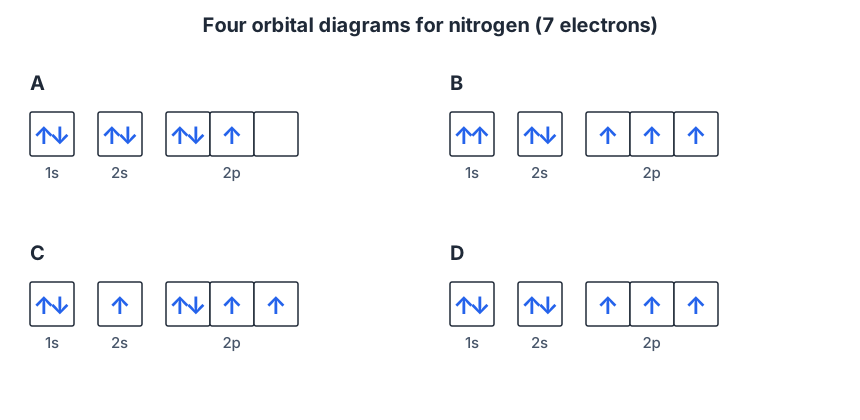
Which orbital diagram for nitrogen (7 electrons) is correct?
C
D
A
B
D shows 1s² 2s² 2p³ with the three 2p electrons unpaired, obeying Hund's rule. The others violate Hund (A), Pauli (B) or Aufbau (C).
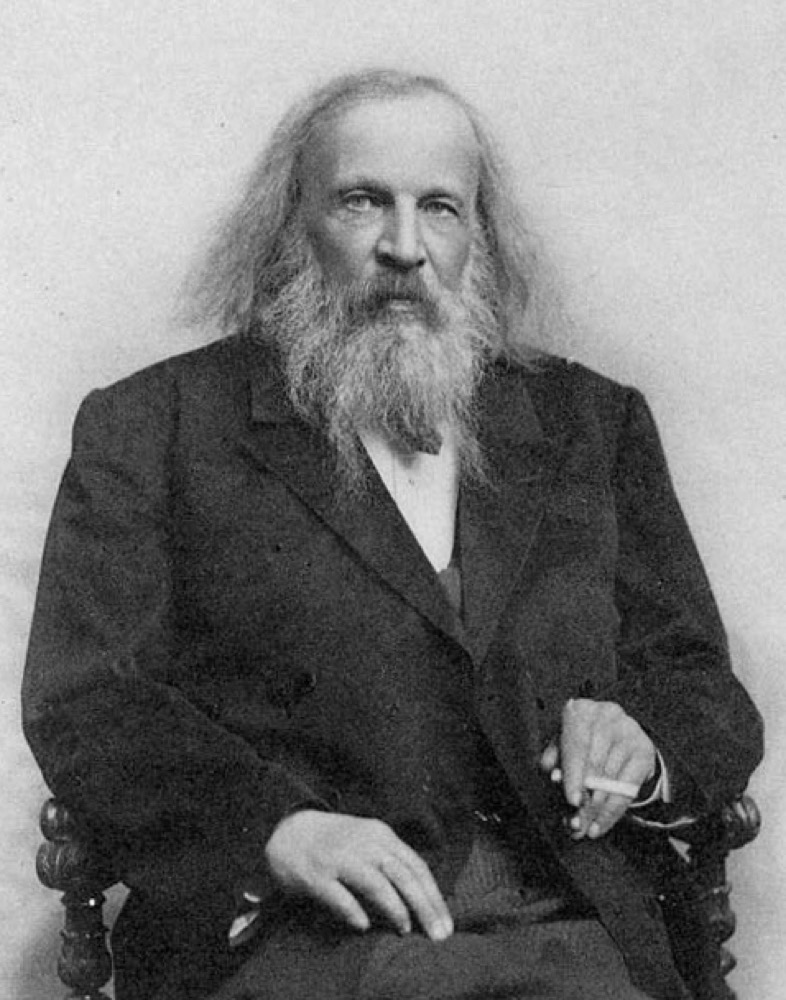
Who arranged the elements in a periodic table in 1869 and predicted undiscovered elements?
Moseley
Dalton
Bohr
Mendeleev
Mendeleev ordered the elements by atomic mass and by properties, and he left gaps for elements such as gallium and germanium.
What is the modern basis for ordering the elements in the periodic table?
Date of discovery
Atomic number
Atomic mass
Density
Moseley showed in 1913 that the order follows nuclear charge (atomic number).
Which is the symbol for sodium?
Sd
Na
So
S
Na comes from the Latin natrium. S is sulfur.
Which element is a metalloid?
Silicon
Sulfur
Aluminum
Selenium
Silicon is a semiconductor with properties between those of metals and nonmetals; Al is a post-transition metal and S and Se are nonmetals.
