Quiz · Medium
Diffusion, language families, world religions, boundaries, states and supranational organisations.
A culture hearth is:
A traditional home fireplace
The place where a cultural trait originated and spread from
A region where cultures are mixed
A cultural border
Examples include Mesopotamia and the Indus Valley.
When people physically move and carry a cultural trait with them, this is:
Contagious diffusion
Hierarchical diffusion
Relocation diffusion
Stimulus diffusion
Expansion diffusion spreads a trait without the people moving.
Spreading from major cities or leaders to smaller places is called:
Contagious diffusion
Relocation diffusion
Reverse diffusion
Hierarchical diffusion
Fashion trends often spread from big cities to small towns.
Which organisation is NOT a supranational organisation?
European Union
A national parliament
African Union
ASEAN
Supranational organisations bring together several states.
Which language family has the most speakers worldwide?
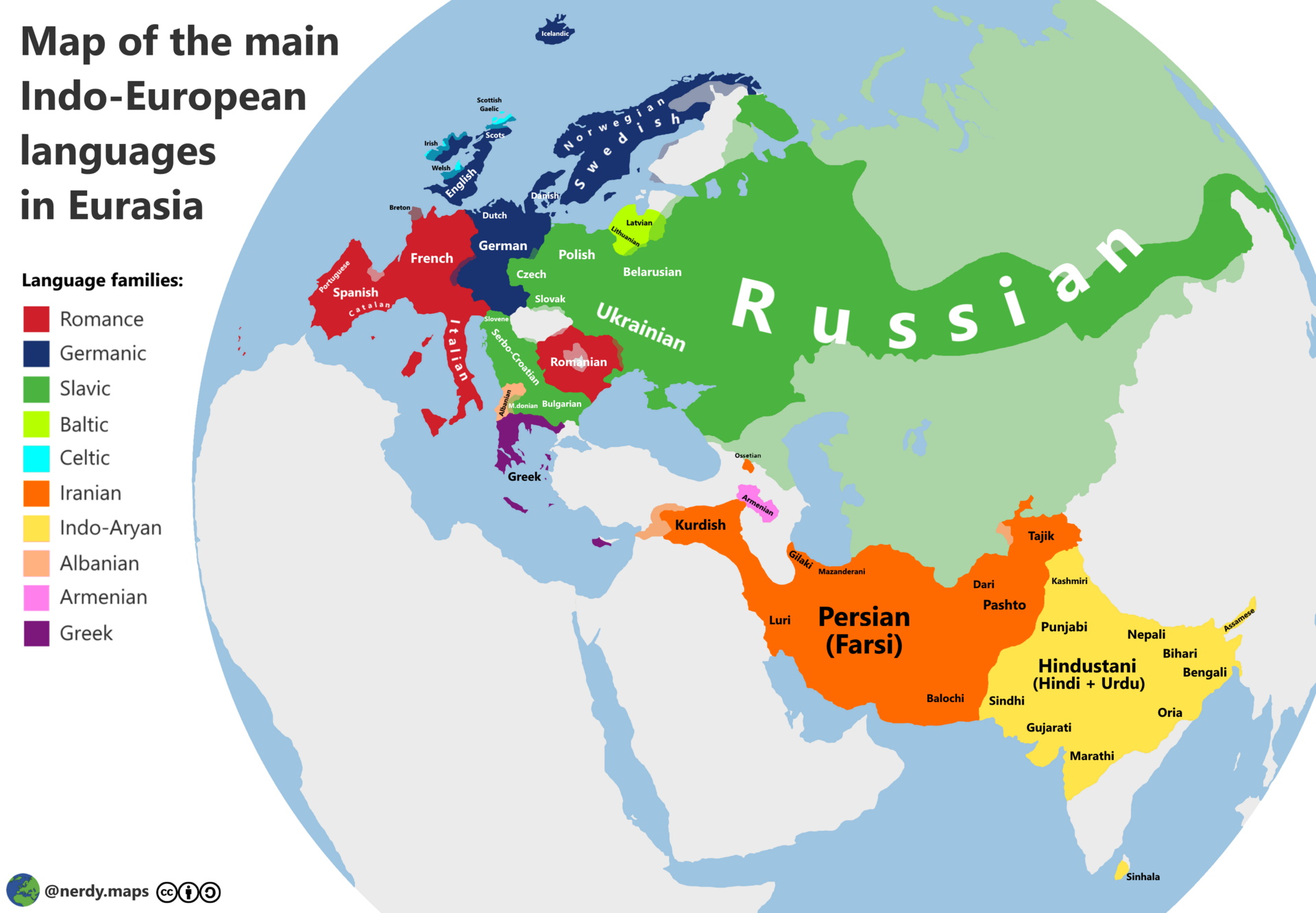
Indo-European
Sino-Tibetan
Niger-Congo
Afro-Asiatic
It includes English, Spanish, Hindi, Russian and many others.
Image: nerdy.maps, CC BY-SA 4.0, via Wikimedia Commons.
Which language has the most native speakers?
English
Mandarin Chinese
Spanish
Hindi
English has the most total speakers when second-language speakers are counted.
A language that develops when a pidgin becomes a community's mother tongue is a:
Dialect
Lingua franca
Isolate
Creole
Haitian Creole is an example.
Which country has the most individual languages?
India
Papua New Guinea
Nigeria
Indonesia
It has more than 800 languages.
Which describes a universalizing religion?
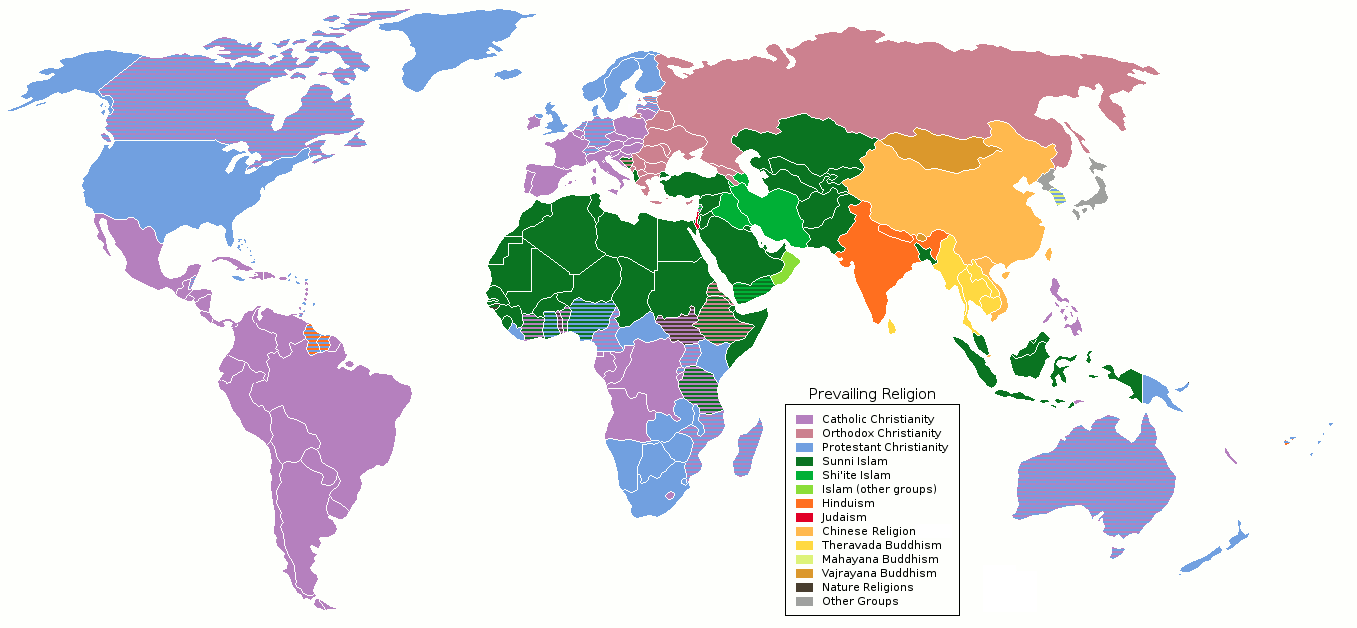
One tied to one ethnic group, like Judaism
One with no followers outside its hearth
One that actively seeks converts, like Christianity or Islam
One that has no written text
Ethnic religions, such as Hinduism or Shinto, rarely seek converts.
Image: LilTeK21 at English Wikipedia, CC BY-SA 4.0, via Wikimedia Commons.
Which religion arose in the Indus and Ganges valleys?
Islam
Christianity
Hinduism
Judaism
Buddhism and Sikhism also began in South Asia.
Which country has the world's largest Muslim population?
Saudi Arabia
Egypt
Iran
Indonesia
Pakistan and India also have very large Muslim populations.
A state whose citizens mostly share one national identity is a(n):
Stateless nation
Federation
Nation-state
Enclave
Japan and Iceland are commonly cited.
The Kurds are an example of:
A stateless nation
A nation-state
A supranational organisation
An enclave
They are spread across Turkey, Iraq, Iran and Syria.
A territory completely surrounded by another country is a(n):
Exclave
Peninsula
Enclave
Archipelago
Lesotho is an enclave in South Africa.
Which country contains the exclave of Kaliningrad?
Poland
Lithuania
Russia
Germany
It sits on the Baltic between Poland and Lithuania.
How many landlocked countries are there?
14
28
44
73
Only Liechtenstein and Uzbekistan are double-landlocked.
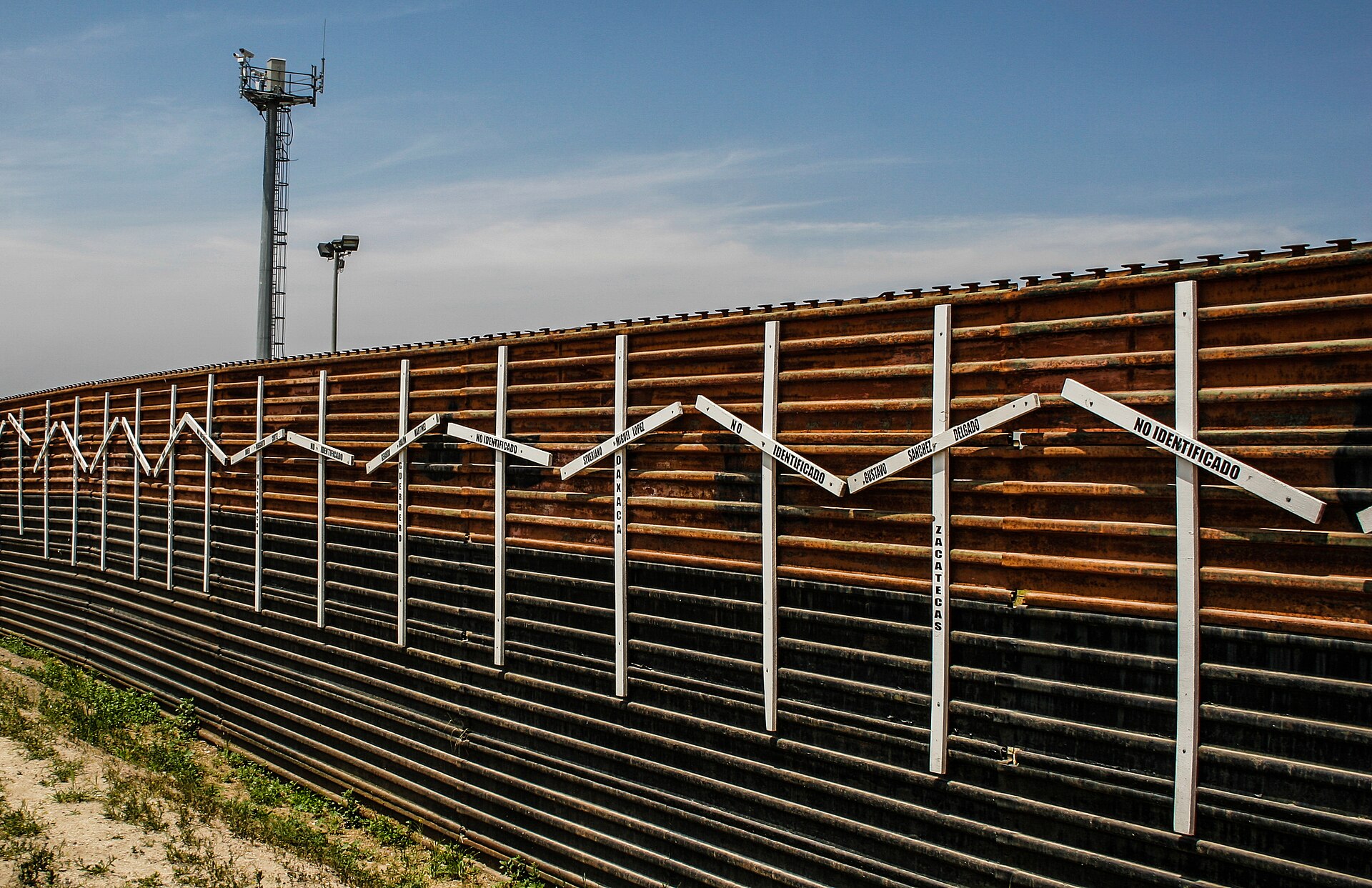
The 49th parallel between the US and Canada is an example of what kind of boundary?
Geometric
Physical
Cultural
Natural
Straight lines drawn on a map, not following a natural feature.
Image: Tomascastelazo, CC BY-SA 4.0, via Wikimedia Commons.
The Berlin Conference of 1884-85 is associated with:
The end of World War I
The partition of Africa by European powers
The founding of the UN
The Cold War
No African leaders were invited.
Forces that unite a country are called:
Centrifugal forces
Centripetal forces
Devolution forces
Sovereign forces
A national language and strong institutions are examples.
Gerrymandering is:
Drawing electoral districts to favour a party
Joining two countries
A form of federalism
A type of colonisation
It is named for Elbridge Gerry and a salamander-shaped district.
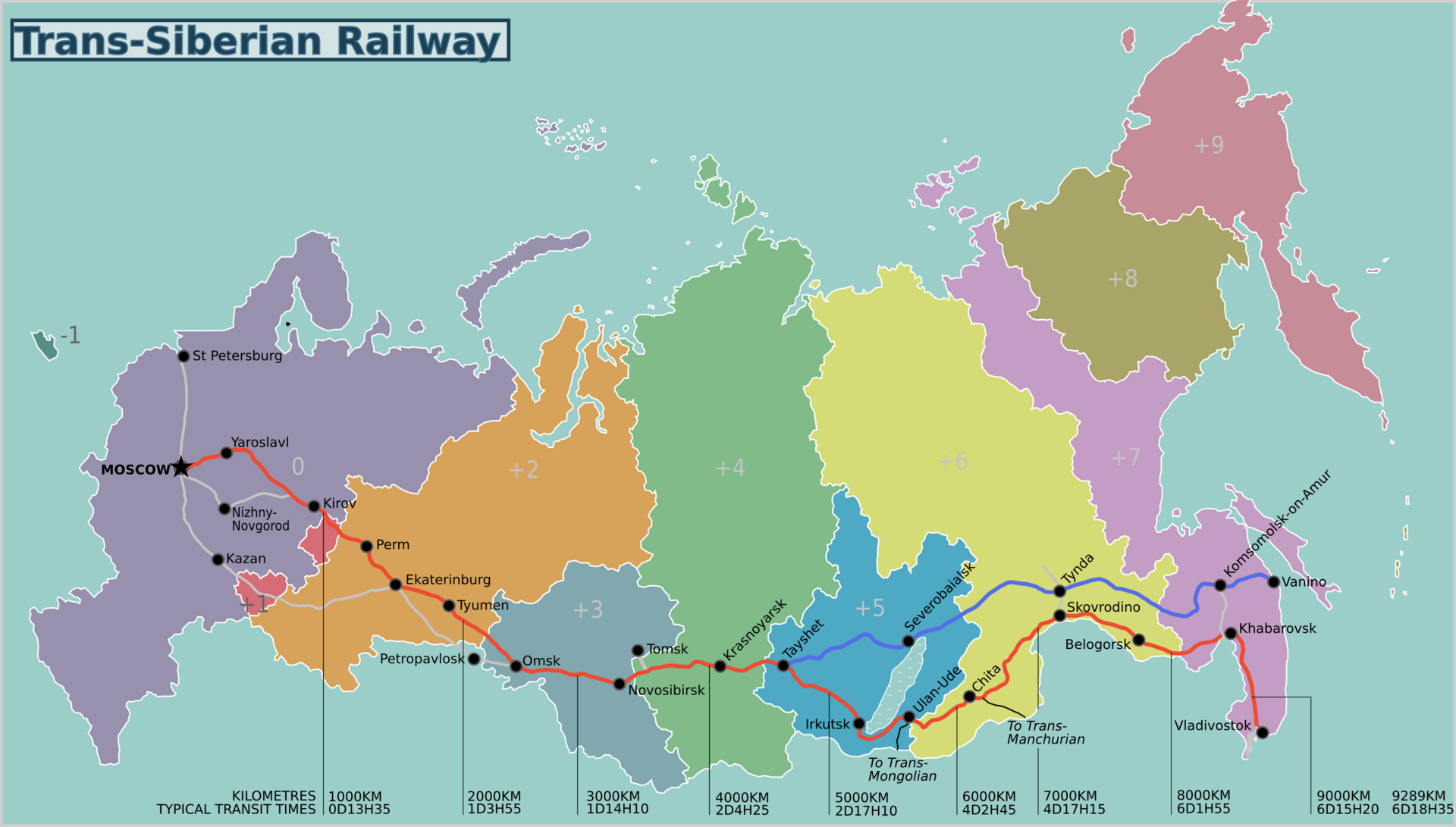
Vladivostok, the eastern end of the Trans-Siberian Railway, is how many hours ahead of Moscow?
Three
Five
Seven
Eleven
The railway crosses seven time-zone boundaries over about 9,289 km.
Image: Stefan Ertmann & Lokal Profil, CC BY-SA 2.5, via Wikimedia Commons.
