Quiz · Medium
Check your understanding of caste and class, mobility, poverty, discrimination, gender inequality and global stratification, with charts, maps and photographs.
A Gini coefficient of 0.60 compared with 0.25 indicates:
a higher poverty line
much greater income inequality
much greater equality
identical inequality
Gini ranges from 0 (equal) to 1 (one person has all). 0.25 is among the lowest in the world; 0.60 is very high.
This sign (1943) is an example of:
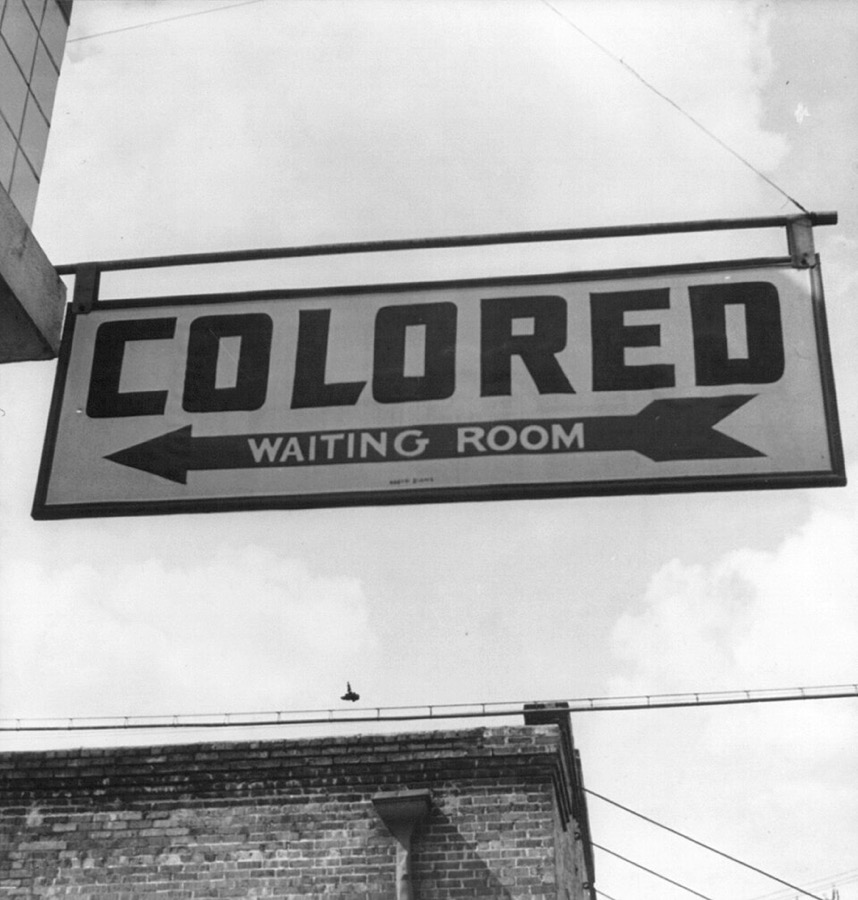
de jure segregation
de facto segregation
structural mobility
meritocracy
A legally required separation is de jure. De facto segregation exists in practice (for example through housing patterns) without a law requiring it.
In the Lorenz diagram, the shaded area between the 45-degree line and the Lorenz curve is used to calculate:
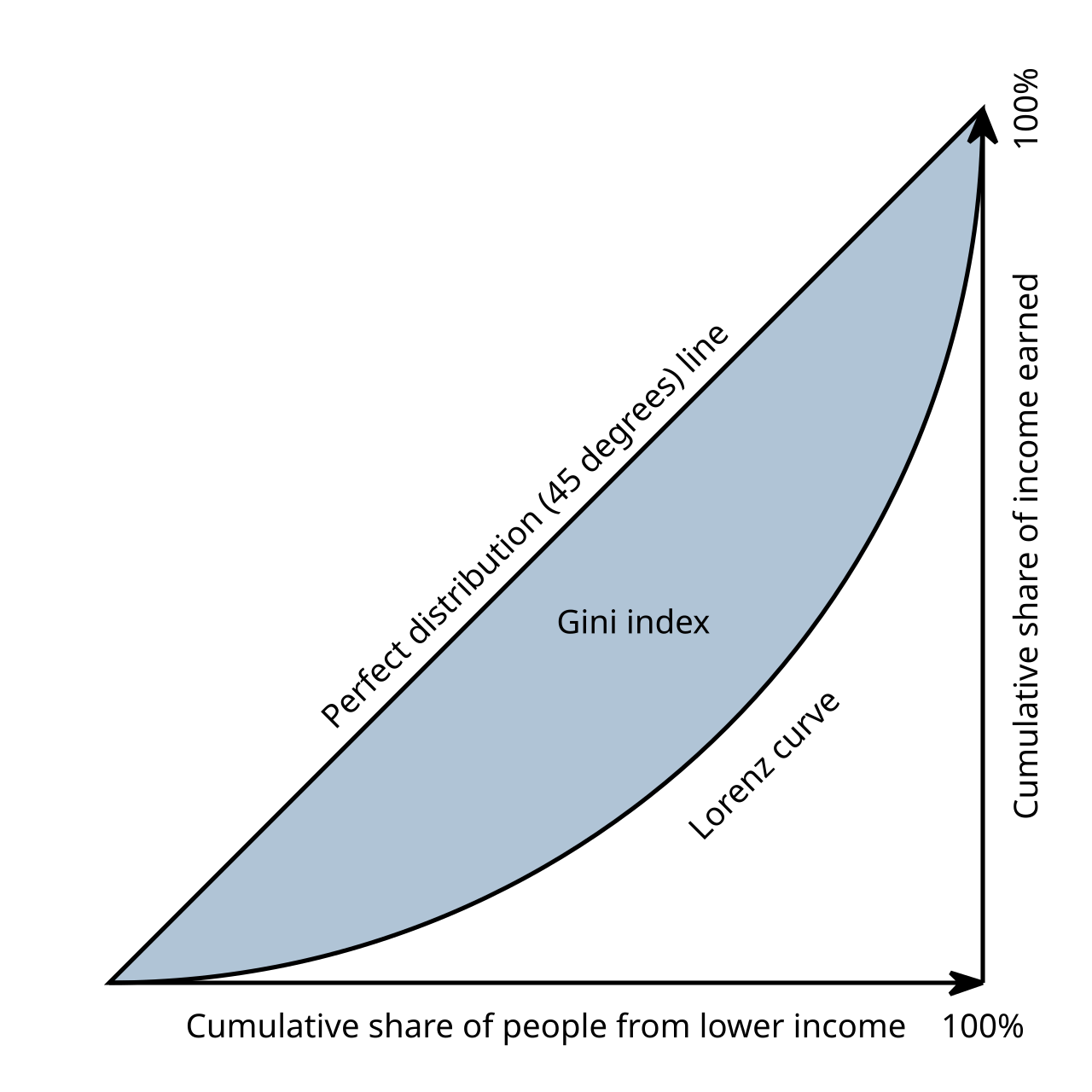
the unemployment rate
the poverty line
the median income
the Gini coefficient
The Gini coefficient is that shaded area divided by the total area under the line of equality. A larger shaded area means more inequality.
On the Booth poverty map key, which category is the lowest?
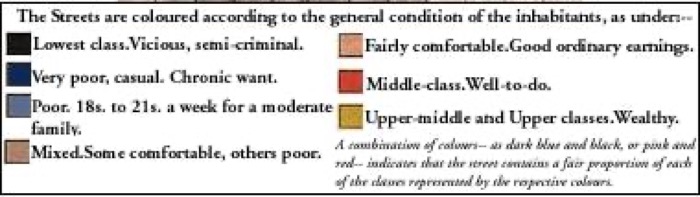
Poor (light blue)
Mixed (purple)
Lowest class: vicious, semi-criminal (black)
Very poor: casual, chronic want (dark blue)
Booth's black streets were the lowest category. Dark blue was very poor. The key was designed as a gradient from black to yellow (wealthy).
This Indian caste pyramid is an example of which kind of stratification system?
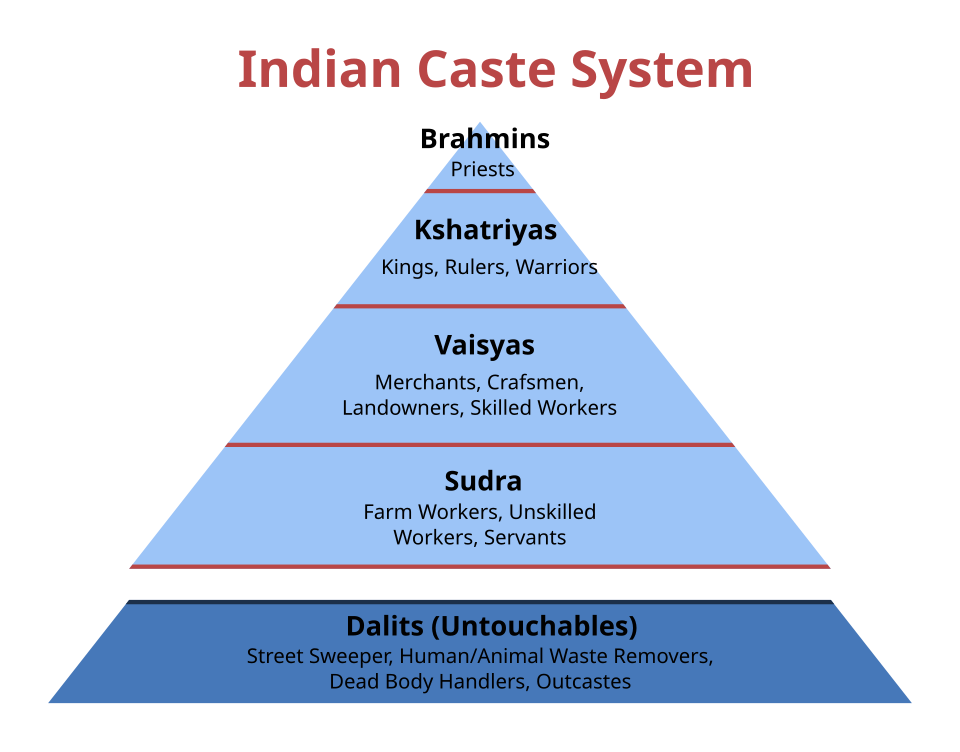
An open class system
A meritocracy
A system based on achievement
A closed system with status ascribed at birth
Caste is closed: position is inherited and marriage is restricted. Class systems are open (in principle) and based partly on achievement. Image: Dave Jarvis, CC BY 4.0, via Wikimedia Commons.
A functionalist like Davis and Moore would justify unequal pay for surgeons by saying:
wages are set by the proletariat
important, hard-to-fill positions need higher rewards
the rich exploit the poor
pay reflects discrimination
The Davis-Moore thesis views stratification as functional. Conflict theorists reject it as ignoring inherited advantage.
What happened to the top 1 percent's share of US income between 1975 and 2015, according to this chart?
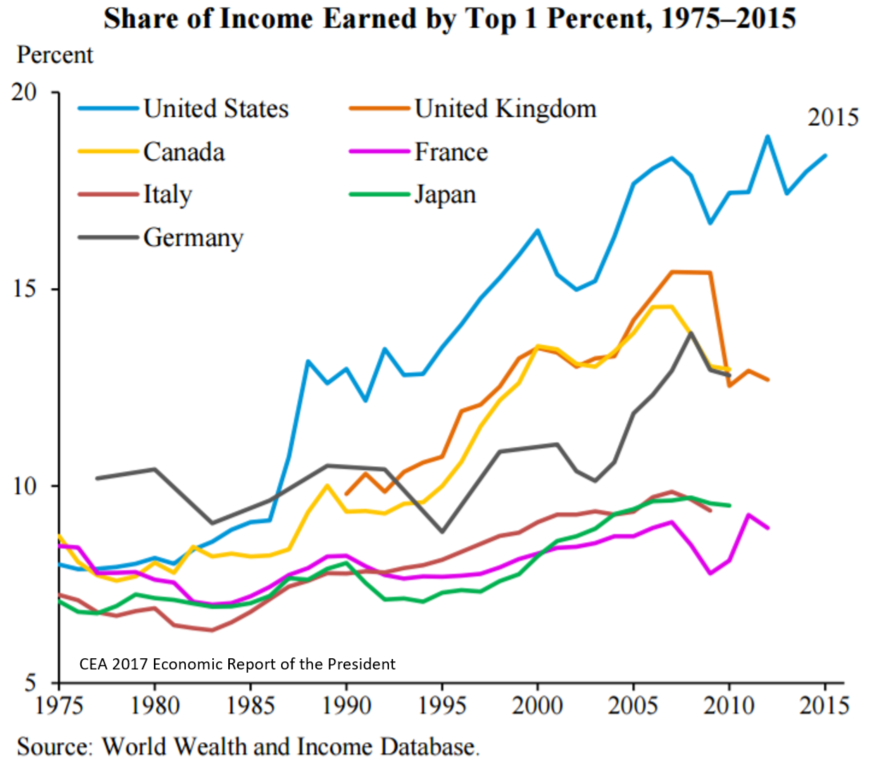
It rose slightly then fell back
It more than doubled
It stayed roughly constant
It fell by half
The share rose from roughly 8 percent to more than 18 percent. In several other rich countries the increase was much smaller.
Which statement correctly distinguishes income from wealth?
Wealth is assets minus debts; income is money received over a period
Wealth is wages; income is property
They are the same thing
Income is assets minus debts; wealth is annual pay
Wealth is a stock measured at a point in time; income is a flow. Wealth is usually much more concentrated.
A factory worker's son becomes a lawyer. This is:
intragenerational horizontal mobility
intergenerational upward vertical mobility
structural mobility only
downward vertical mobility
Compared with the father's position, the son moved up: intergenerational and vertical. Intragenerational mobility would compare positions across the same person's career.
A decline in manufacturing jobs forces many workers into lower-paying service jobs. This is an example of:
meritocracy
caste mobility
horizontal mobility
structural mobility
Structural mobility results from changes in the occupational structure, not individual effort.
Weber differed from Marx by arguing that stratification has:
two dimensions: income and wealth
one dimension: ownership of capital
three dimensions: class, status and party
no economic basis
Marx emphasized class. Weber added status (prestige) and party (political power).
Which is the best example of a structural explanation of poverty?
Poverty is caused by bad budgeting
Plant closures and discrimination reduce job opportunities in a neighborhood
Poor people lack motivation
Poor parents teach children to avoid work
Structural explanations focus on social conditions such as unemployment and discrimination. The others are individual or cultural explanations, which most sociologists regard as inadequate.
A bank refuses mortgages in neighborhoods drawn as high-risk on maps, mostly where Black families live. This is:
individual discrimination only
meritocracy
institutional discrimination (redlining)
de facto segregation by choice
Policies and practices of organizations can produce unequal outcomes regardless of any individual's prejudice. Redlining was institutional.
Merton's typology: a person who holds prejudiced attitudes but treats everyone equally at work is a:
prejudiced discriminator
prejudiced nondiscriminator (a "timid bigot")
unprejudiced discriminator
unprejudiced nondiscriminator
Merton's four types cross attitudes (prejudice) with behavior (discrimination); the fourth, prejudiced and discriminating, is the active bigot. This person holds the attitude but does not act on it.
The "glass ceiling" refers to:
men being promoted faster in female jobs
invisible barriers that prevent women and minorities from reaching top positions
the highest possible income tax rate
a ceiling on welfare benefits
The last option describes the glass escalator.
According to Hochschild, the second shift is:
a second job in a different field
a night-time job
unpaid housework and childcare done after paid work
overtime pay
The Second Shift (1989) examined how employed women still did most domestic work.
Dependency theory explains global poverty mainly by:
exploitative relationships between rich and poor nations
poor climate
lack of Western values in poor countries
overpopulation
Modernization theory blames internal traditional culture; dependency theory emphasizes external relations, such as colonial history and unequal trade.
In world-systems theory, countries that supply raw materials and cheap labor to wealthier ones are the:
core
first world
semi-periphery
periphery
Core states dominate; the semi-periphery lies between; the periphery supplies raw materials and labor.
Annette Lareau found that middle-class parents typically practice:
tracking
accomplishment of natural growth
hidden curriculum
concerted cultivation
Working-class and poor parents were more likely to practice the accomplishment of natural growth. Concerted cultivation develops skills that schools reward.
In Pager's audit study, which applicants received the fewest callbacks?
Black applicants without a record
White applicants with a record
Black applicants with a criminal record
White applicants without a record
About 5 percent for Black applicants with a record. Black applicants without a record (about 14%) did worse than white applicants with a record (about 17%).
Which pair is correctly matched?
Veblen: glass ceiling
Wilson: culture of poverty
Bourdieu: cultural capital
Lewis: the underclass
Oscar Lewis introduced the culture of poverty; Wilson wrote about the underclass; Veblen coined conspicuous consumption.
What did the 2009 earnings chart show about women's median weekly earnings relative to men's?
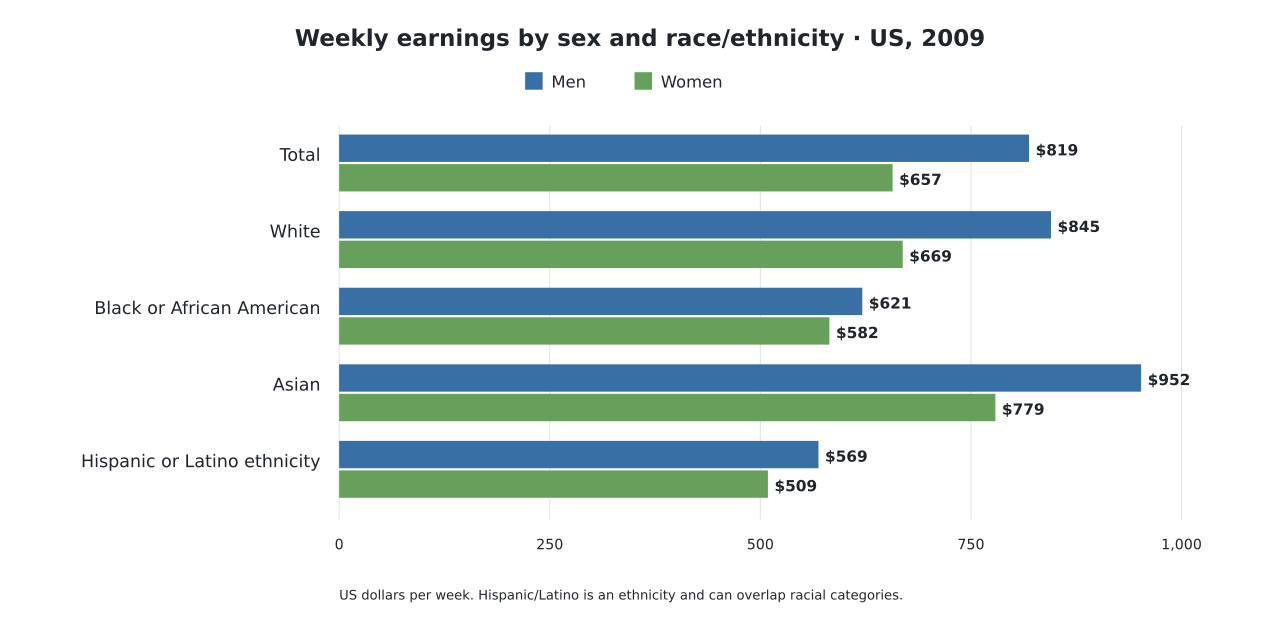
They were lower in every race and ethnic group shown
They could not be compared
They were equal among Black workers
They were higher for Asian workers
Women earned less in all groups shown (total $657 vs $819). Asian women earned the most of the women's groups; the gap was smallest among Black workers. Image: Sonicyouth86 and PJ Geest, CC BY-SA 3.0, via Wikimedia Commons.
Which statement about race and inequality is most consistent with sociological findings?
Race has no effect on inequality in modern societies
Racial inequality is explained mainly by culture
Race is socially constructed, yet has real effects on life chances
Race is a biological category that explains inequality
Racial categories are socially made, but racism, segregation and discrimination produce measurable differences in income, wealth, health and treatment.
The 1954 Brown v. Board of Education decision:
ended all discrimination in jobs
created affirmative action
banned housing discrimination
declared separate public schools for Black and white students unconstitutional
Brown overturned separate but equal in schools. The Civil Rights Act (1964) and Fair Housing Act (1968) covered employment and housing.
