Quiz · Medium
Three pillars, footprints, IPAT, commons, externalities, SDGs, waste hierarchy, circular economy and renewable energy.
Which statement best matches the Brundtland definition of sustainable development?
Economic growth at any environmental cost
Maximizing profit for current shareholders
Development that meets present needs without compromising the ability of future generations to meet theirs
Protecting nature by stopping all development
The 1987 Brundtland report made this the standard definition. It balances present and future needs, not growth versus preservation alone.
In the three pillars Venn diagram, the overlap of ENVIRONMENT and SOCIETY (without the economy) is labeled:
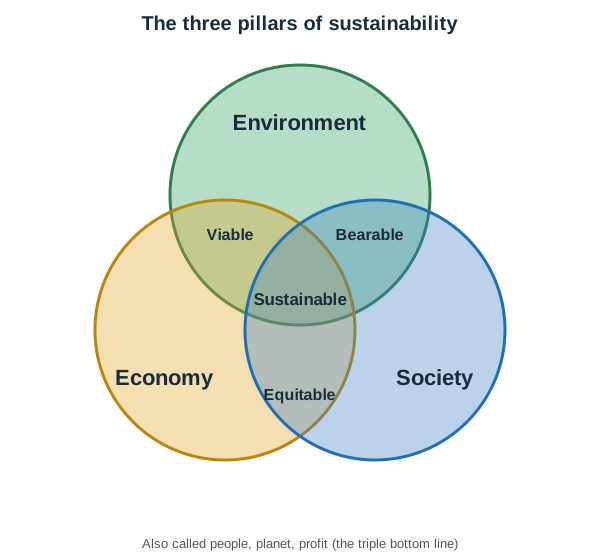
Bearable
Equitable
Viable
Sustainable
Environment + society = bearable; environment + economy = viable; society + economy = equitable; all three = sustainable.
The ecological footprint of a country is LARGER than its biocapacity. This means the country:
Has an ecological reserve
Is perfectly sustainable
Has a smaller population than other countries
Is using resources faster than its own ecosystems regenerate them
An ecological deficit means demand exceeds local regenerative capacity, so the country draws down stocks or imports resources.
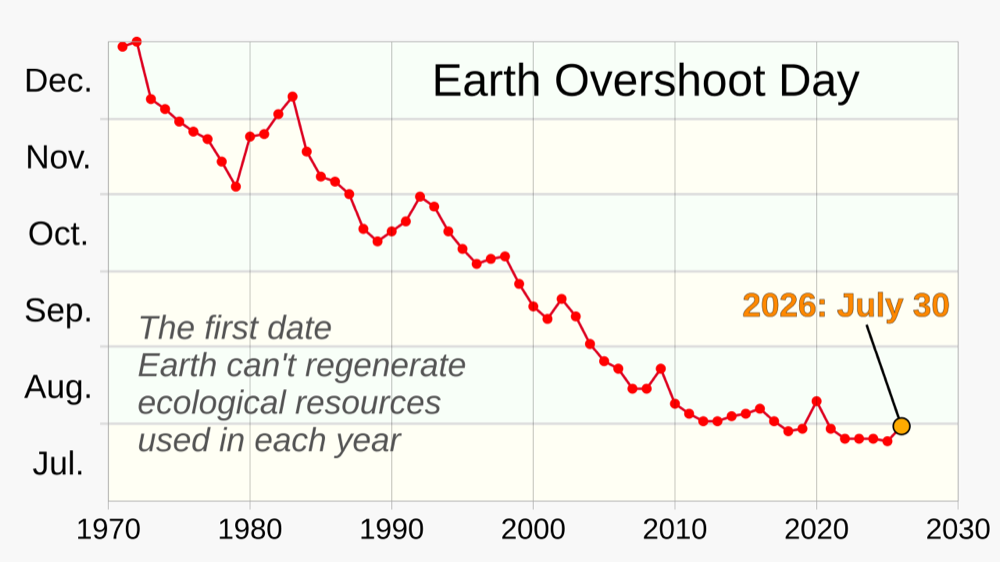
What does the trend in the graph indicate about Earth Overshoot Day?
Humanity is using fewer resources than in 1970
Humanity is using resources faster each decade than the Earth can regenerate them
The date was constant over time
Earth's biocapacity has grown steadily
The date has moved from about December to around late July, meaning it takes less of the year to use a full year's biocapacity. Image: RCraig09, CC BY-SA 4.0.
In the IPAT equation I = P x A x T, population doubles, affluence doubles and technology improves so that the impact per unit of consumption is halved. What happens to total impact?
Four times the original impact
Double the original impact
Half the original impact
No change
I = 2 x 2 x 0.5 = 2, so impact doubles. The technology gain only offsets half of the growth from population and affluence.
Which situation is the best example of the 'tragedy of the commons'?
A factory selling polluted water to customers
A farmer overgrazing his own privately owned field
A town running out of money for a library
Fishing boats from many countries depleting fish in international waters
Open-access shared resources are overused because each user gains the full benefit but shares the cost of depletion.
A power plant emits pollutants that damage nearby residents' health without them being compensated. Economists call this:
A negative externality
A public good
Natural capital
A subsidy
The cost is borne by third parties and is not in the price. Taxes or permits can internalize it.
Which policy tool sets a limit on total emissions and lets companies trade permits?
Eco-labeling
Carbon tax
Cap-and-trade
Command-and-control
Cap-and-trade fixes the quantity of emissions; a carbon tax fixes the price per tonne.
Which UN Sustainable Development Goal is 'Affordable and clean energy'?
SDG 9
SDG 12
SDG 7
SDG 13
SDG 13 is Climate action, SDG 9 is Industry, innovation and infrastructure, SDG 12 is Responsible consumption and production.
Which agreement aims to limit global warming to well below 2 degrees C and pursue 1.5 degrees C?
The Paris Agreement
The Kyoto Protocol
The Ramsar Convention
The Montreal Protocol
Paris (2015) uses nationally determined contributions. The Montreal Protocol targets ozone-depleting substances.
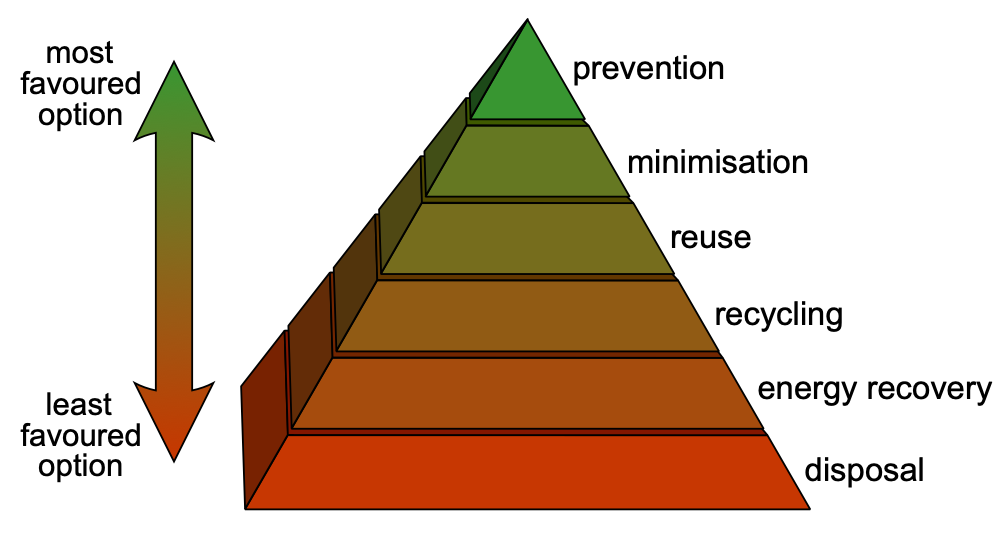
Which top-of-the-hierarchy waste management strategy is MOST preferred?
Recycling
Energy recovery
Landfilling
Waste prevention
Preventing waste avoids the energy and materials needed for production and disposal. Image: Drstuey and Stannered, CC BY-SA 3.0.
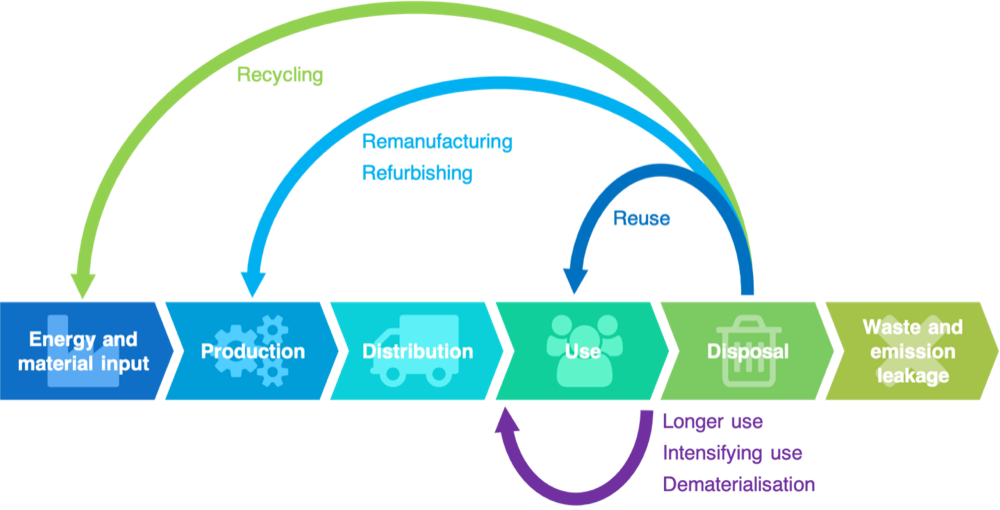
In a circular economy, which action keeps products in use LONGEST?
Recycling them into new materials
Repairing and remanufacturing them
Landfilling them
Incinerating them for energy
Reuse, repair and remanufacture retain most of a product's embodied value and energy; recycling loses some. Image: Geissdoerfer et al., CC BY 4.0.
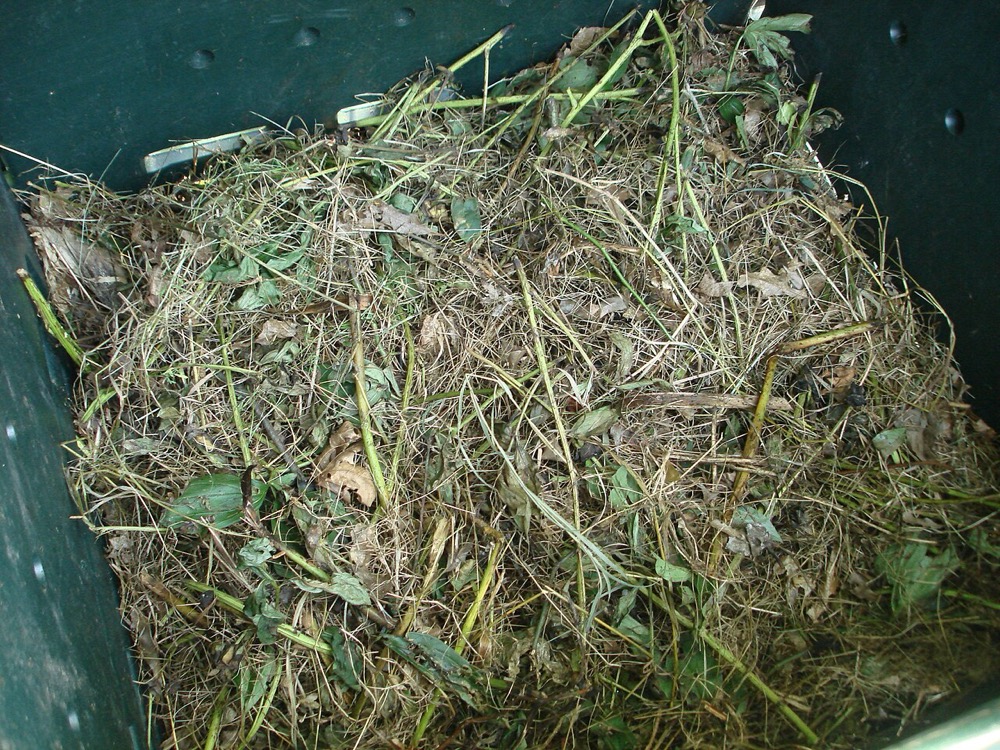
What is the main environmental benefit of composting food waste instead of sending it to a landfill?
It eliminates the need for water
It avoids methane production from anaerobic decomposition and returns nutrients to soil
It creates new landfill space only
It produces large amounts of CO2 from fossil fuels
Anaerobic decay in landfills releases methane; aerobic composting mostly releases CO2 from biogenic carbon and creates a soil amendment. Image: Ksd5, CC0.
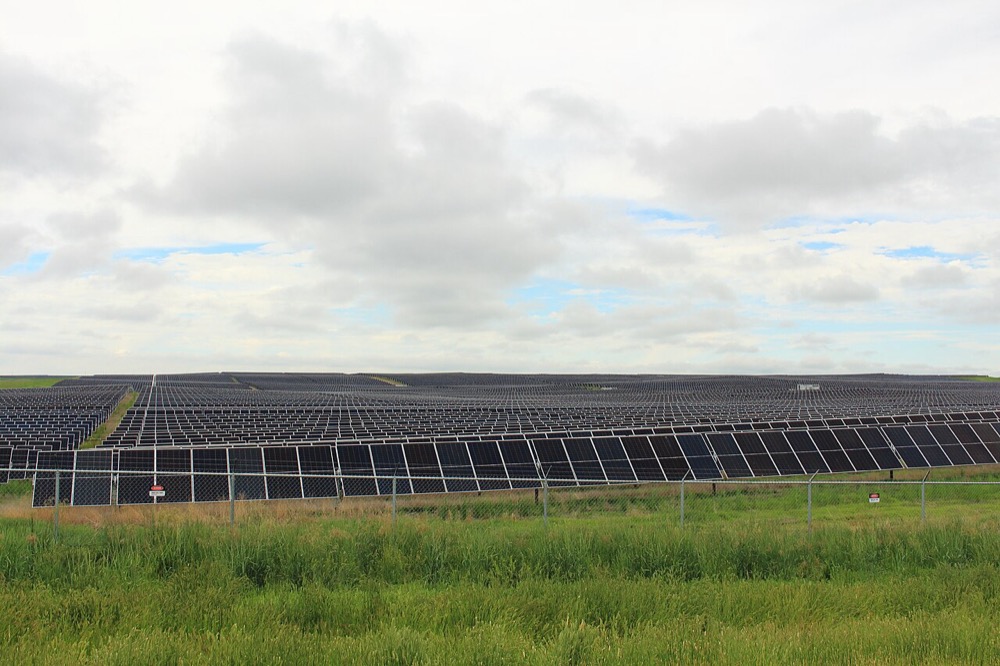
Which statement about solar photovoltaic energy is correct?
It uses heat from nuclear reactions
It produces electricity only when the temperature is high
It needs a steam turbine to generate power
It converts sunlight directly to electricity with no emissions during operation
PV cells use the photoelectric effect. Concentrated solar thermal plants use steam turbines. Image: Kkiefuik, CC BY 4.0.
Which is a DISADVANTAGE of wind and solar power?
Intermittency because output varies with weather
They release large amounts of CO2 during operation
They cannot be built on a large scale
They use finite fuels
Variable output requires storage, backup or a diverse grid. They have no operating emissions and use free fuel.
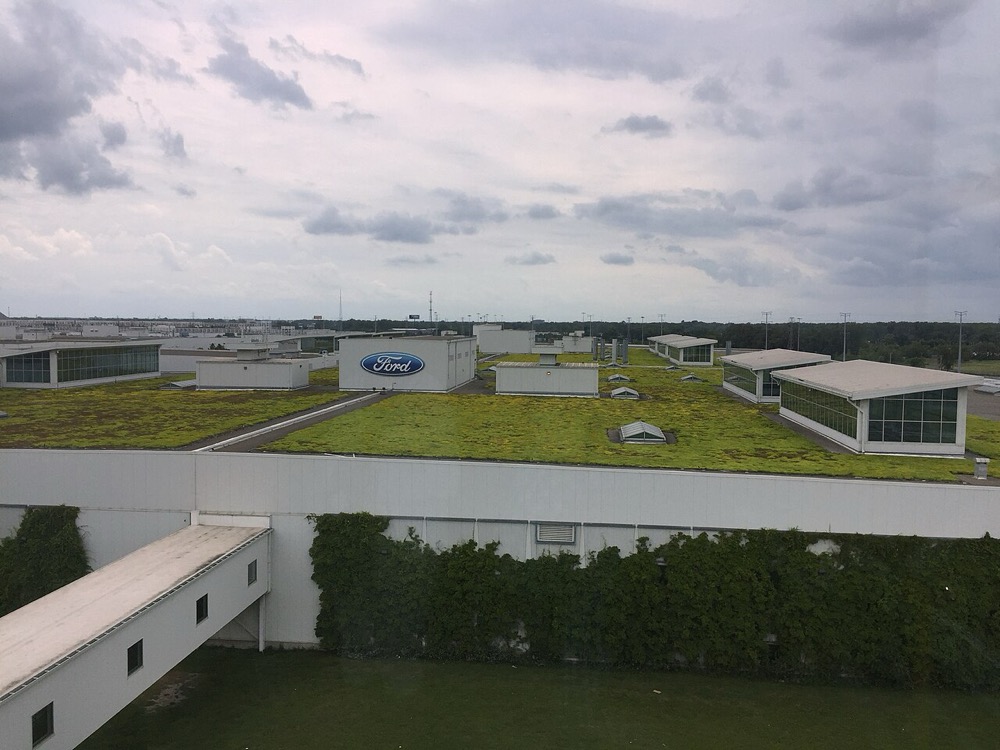
Why might a green roof reduce a building's energy use?
It increases the roof's heat absorption
It lets more rainwater into the building
Soil and plants add insulation and cool the building through evapotranspiration
It blocks all sunlight at all times
Green roofs also absorb stormwater and reduce the urban heat island. Image: Antony-22, CC BY-SA 4.0.
Which agricultural practice BEST reduces soil erosion on a steep hillside?
Clearing all vegetation
Monoculture with bare soil between harvests
Terracing and contour plowing
Plowing straight up and down the slope
These practices slow runoff along the contour. Bare, up-and-down plowing speeds water down the slope.
Which of these is an example of using a renewable resource unsustainably?
Harvesting fish faster than the population can reproduce
Planting a tree for each one cut
Using solar energy to heat water
Recycling aluminum
Renewable resources deplete if harvested faster than they regenerate.
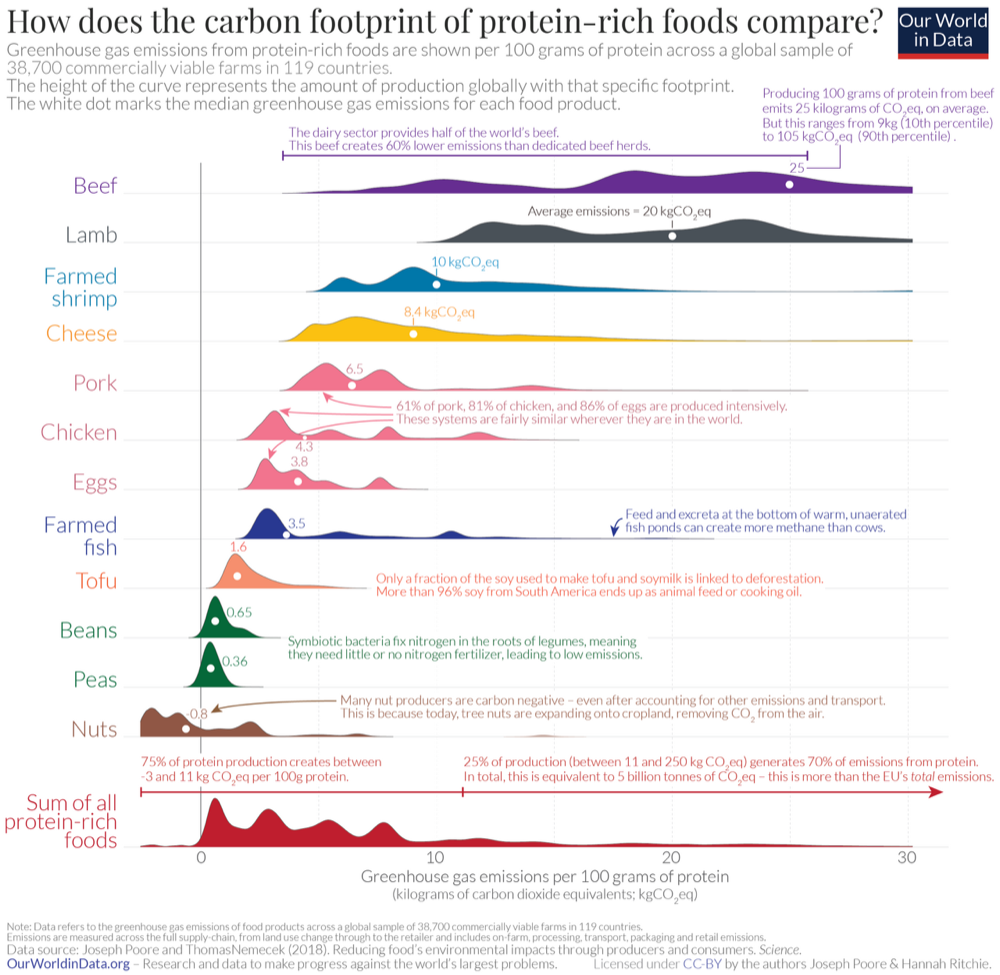
Which foods have the largest greenhouse gas emissions per 100 g of protein in this chart?
Nuts
Beans and peas
Tofu
Beef and lamb
Ruminant meat has high methane emissions and land use. Image: Our World in Data, CC BY 4.0.
A population grows at 1.4% per year. Using the rule of 70, about how long will it take to double?
14 years
50 years
98 years
70 years
70 / 1.4 = 50 years. The rule of 70 divides 70 by the percentage growth rate.
Which statement about carbon offsets is MOST accurate?
They remove all emissions from the atmosphere automatically
They fund emissions reductions elsewhere, but their effectiveness depends on whether the reductions are real, additional and permanent
They always reduce emissions more than cutting your own
They are required by the Paris Agreement for every person
Offset quality varies; avoiding emissions directly is more certain.
A city adds dense housing near transit stations, bike lanes and parks. This is an example of:
A tragedy of the commons
Brownfield contamination
Urban sprawl
Smart growth
Smart growth concentrates development to reduce car use and protect open land.
Which of these would a 'strong sustainability' perspective emphasize?
Natural capital such as soils and a stable climate cannot be fully replaced by human-made capital
Economic growth is the only goal
Technology can replace any natural resource
Only present-day needs matter
Strong sustainability sets limits on using up critical natural capital.
