Quiz · Easy
Read real-world Portuguese: road signs, a bus stop, menu items, shop windows and public notices, with photos from Brazil.
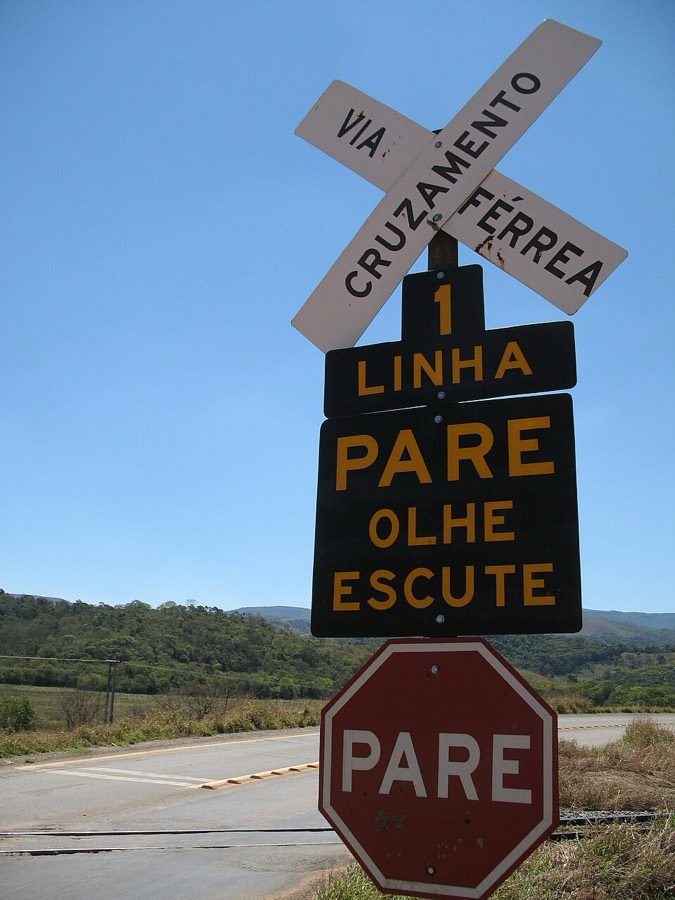
Look at the sign on the road. What does the sign say you must do?
Slow down
Give way
Stop
Turn right
PARE is the imperative of parar (to stop). The text above it, "Pare, olhe, escute", means stop, look, listen: this is a railway crossing. Image: Vinicius Moreira Rod…, CC BY-SA 3.0, via Wikimedia Commons.
The sign above says "Cruzamento via férrea". What is it warning about?
A pedestrian crossing
A road junction
A bridge
A railway crossing
Via férrea = railway (literally 'iron way'); cruzamento = crossing. A pedestrian crossing is faixa de pedestres. Image: Vinicius Moreira Rod…, CC BY-SA 3.0, via Wikimedia Commons.
What is the name of this place where people wait for the bus in Brazil?
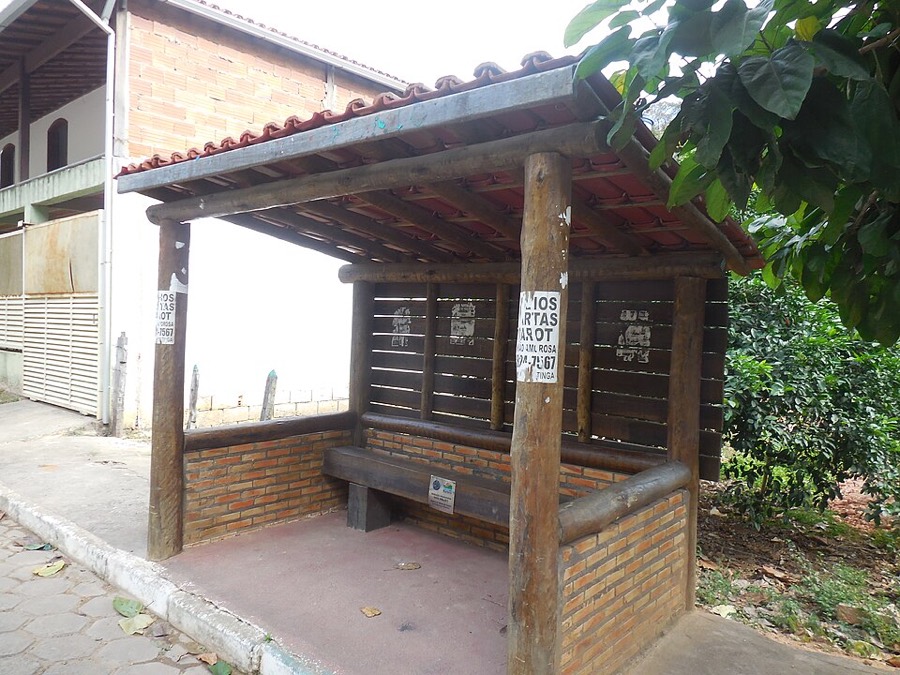
Ponto de ônibus
Estação de trem
Praça
Garagem
O ponto de ônibus is a bus stop. In Portugal it would be paragem de autocarro. Image: HVL, CC BY 4.0, via Wikimedia Commons.
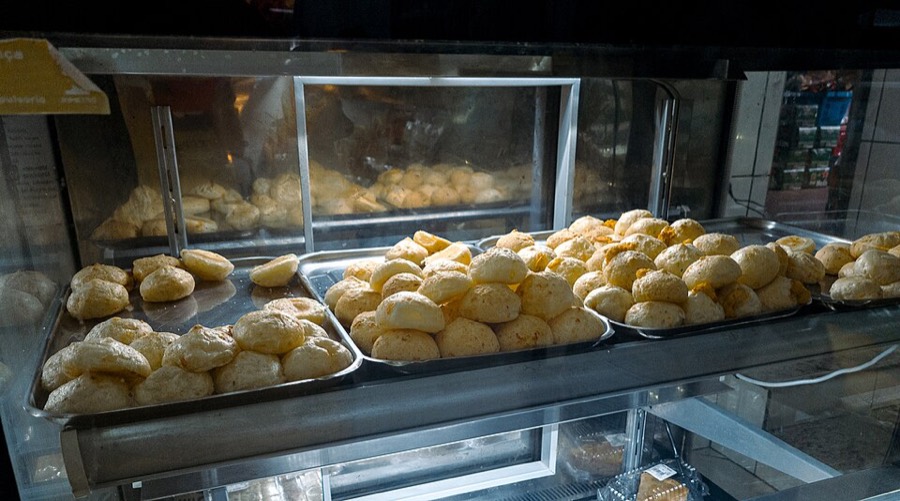
These round golden cheese rolls are a classic Brazilian snack. What are they called?
Queijo de pão
Pão de queijo
Pastel de nata
Pão de ló
Pão de queijo = 'cheese bread' (made with cassava starch and cheese). Pastel de nata is a Portuguese custard tart; pão de ló is a sponge cake. Image: Tet, CC0, via Wikimedia Commons.
On a door you read "EMPURRE". What should you do?
Pull
Knock
Push
Wait
Empurre = push (from empurrar). Puxe = pull. Learn the pair: empurre/puxe.
A sign says "Proibido fumar". What does it mean?
Smoking area
Fire exit
Please be quiet
No smoking
Proibido = forbidden. Fumar = to smoke. A smoking area would be fumódromo or área para fumantes.
You see "Liquidação: tudo com 50% de desconto" in a shop window. What is going on?
A sale with everything half price
The shop is closing at 5 p.m.
Everything costs 50 reais
New products have arrived
Liquidação = clearance sale; desconto = discount. Fifty percent off means half price. Don't confuse with liquidar (settle a debt).
A menu says "Prato do dia: arroz, feijão, bife e salada". What is the prato do dia?
A dessert
A set daily lunch plate
A drink
A takeaway fee
Prato do dia = dish of the day. In Brazil it often comes with rice and beans (arroz e feijão), the staple pair.
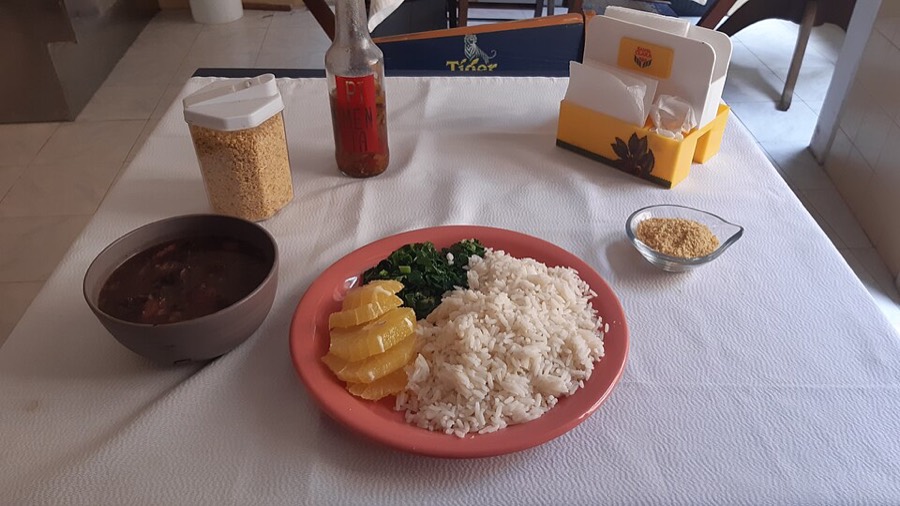
This plate shows rice, black beans, collard greens and orange slices. Which Portuguese word means 'beans'?
Arroz
Couve
Feijão
Laranja
Feijão = beans; arroz = rice; couve = collard greens (kale-like); laranja = orange. Arroz e feijão is the everyday Brazilian pairing. Image: Ridiculopathy, CC0, via Wikimedia Commons.
A notice says "Saída de emergência. Mantenha livre." What does "mantenha livre" ask you to do?
Keep it locked
Keep it quiet
Keep it closed
Keep it clear
Mantenha is the formal imperative of manter (to keep). Livre = free, unobstructed. Saída = exit.
On a shop door you see "Aberto" in the morning and "Fechado" at night. What do the words mean?
Open and closed
Free and busy
Open and for sale
Closed and for rent
Aberto = open; fechado = closed. Both are past participles used as adjectives (abrir, fechar).
A bus sign reads "Assentos preferenciais". Who are these seats for?
Only drivers
People who need priority, such as older adults and pregnant women
Tourists
Children only
Assento preferencial = priority seat. Brazilian law reserves them for older people, pregnant people, people with disabilities, people with infants and others.
