Quiz · Hard
Harder, applied questions on stylistic change and architecture in Greek and Roman art and on the conventions of Egyptian and Near Eastern art.
Why do scholars rely on Roman marble copies to study many Greek statues?
The original Greek statues were all made of marble and survive
Many Greek bronzes were melted down, so Roman marble copies preserve their designs
Romans were not influenced by Greek art, so copies show Roman style
Copies were made by Greek artists only for export
Bronze was valuable and reused. Copies are crucial evidence for the Discobolus, Doryphoros and Dying Gaul. Romans heavily admired Greek art.
Which pair is correctly matched?
Lysippos - Parthenon pediment sculptures
Myron - Doryphoros
Praxiteles - Aphrodite of Knidos (first monumental female nude)
Polykleitos - Discobolus
Myron made the Discobolus and Polykleitos the Doryphoros. Phidias led the Parthenon sculpture, and Lysippos was Alexander's court sculptor.
Which feature distinguishes the Early Classical (Severe) style, as in the Charioteer of Delphi, from the Archaic kouroi?
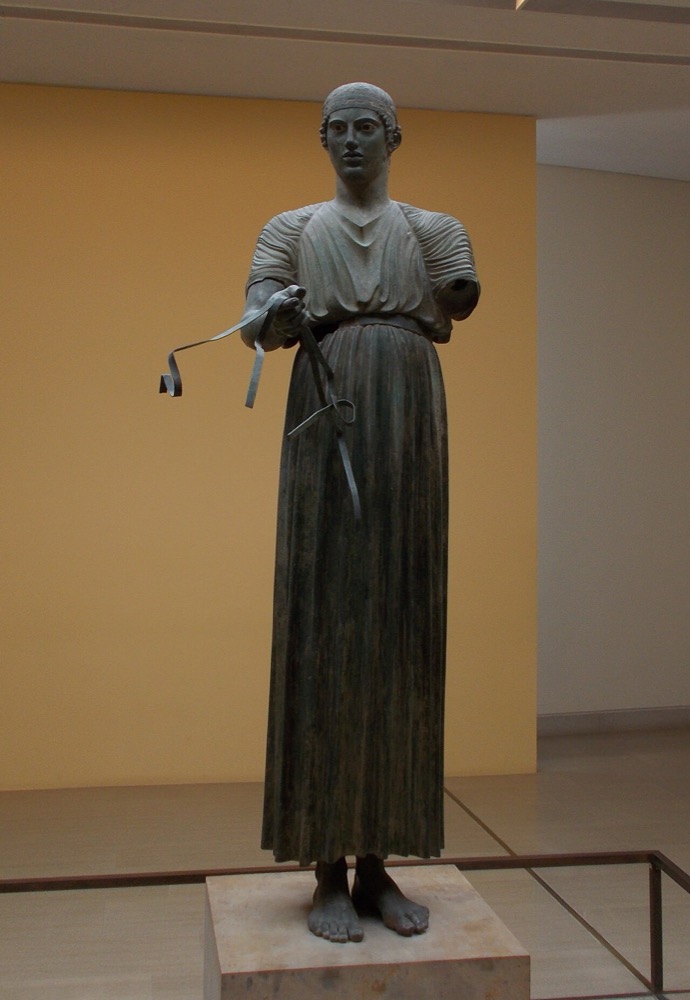
Extreme emotion and diagonal movement
A canon based on cubes and cylinders
Relaxed weight shift and a serious, naturalistic expression, instead of a rigid pose and archaic smile
A return to geometric patterns
Severe-style figures show the new stance and calm seriousness. Extreme emotion appears only in the Hellenistic period.
Image: Odysses, CC BY-SA 4.0, via Wikimedia Commons.
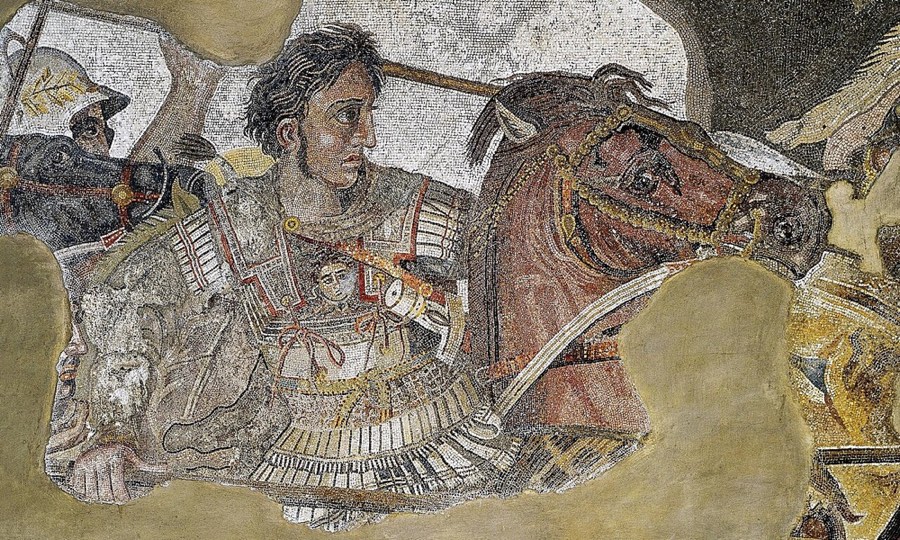
The Alexander Mosaic is best described as:
An Etruscan tomb painting
An Egyptian painted relief of Ramesses II
A Greek relief from the Parthenon
A Roman floor mosaic after a Hellenistic Greek painting of Alexander and Darius
It is from Pompeii's House of the Faun and shows dynamic foreshortened figures.
A Hellenistic work differs from a High Classical one because it:
Uses only geometric patterns
Is carved to be seen from a single frontal view
Emphasizes emotion, realism and dramatic movement
Shows only gods in calm, idealized poses
High Classical art idealizes and balances (Doryphoros, Parthenon). Hellenistic art explores pathos (Dying Gaul, Laocoön) and ordinary subjects.
Roman Republican portraits of old men with wrinkles are called:
Idealized
Abstract
Archaic
Veristic
Verism valued gravitas over beauty. Augustan portraits switched to idealized, youthful classicism.
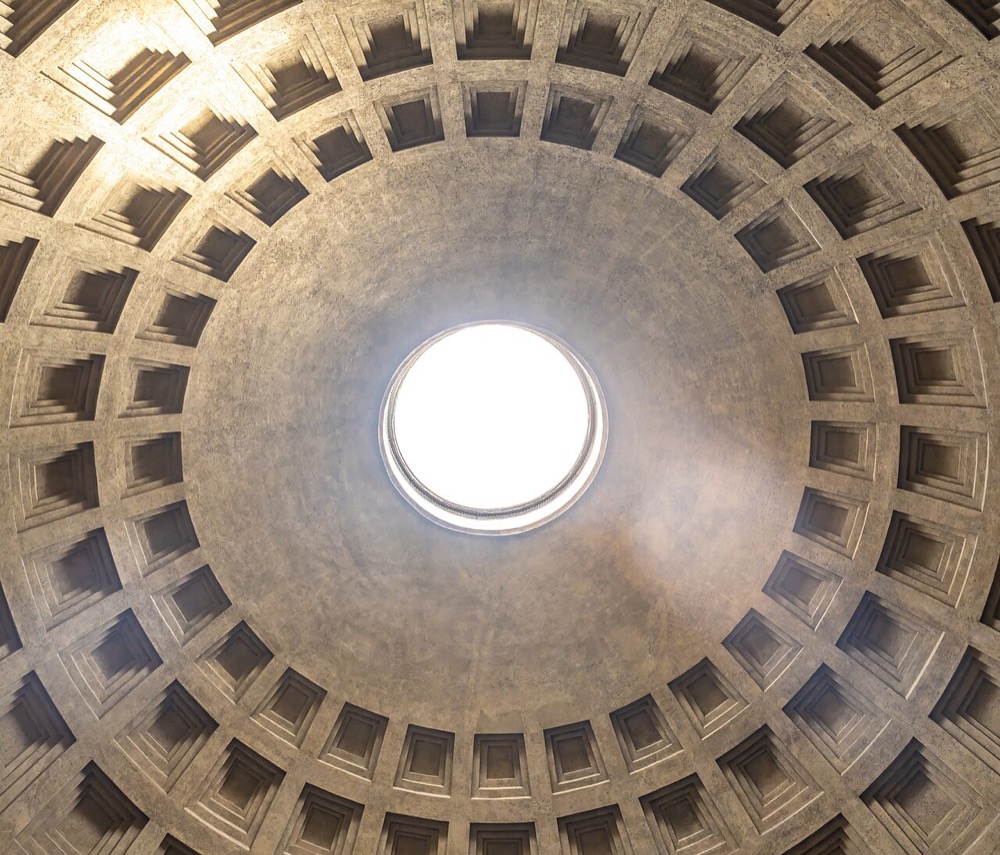
Why does the Pantheon's dome use coffers and progressively lighter material toward the top?
To decorate the outside of the dome
To reduce weight and thrust
To make room for stained glass
To increase the weight on the walls for stability
Coffers (recessed panels) and lighter aggregates reduced the load, allowing a huge unreinforced concrete dome. The oculus is the only light source; there is no stained glass.
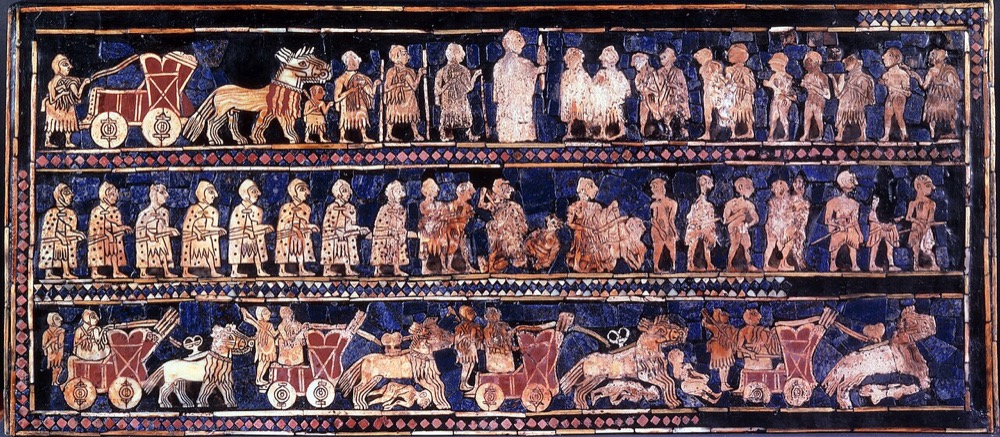
Which describes the 'hierarchy of scale' in the Standard of Ur's War panel?
All figures are the same height to show equality
Figures shrink with distance
The king is taller than the other figures and breaks the register line
Enemies are shown larger than the Sumerian soldiers
In the top register the king's head rises above the rest. Sumerian and Egyptian art use size for importance, not distance.
The relieving triangle above the Lion Gate lintel serves to:
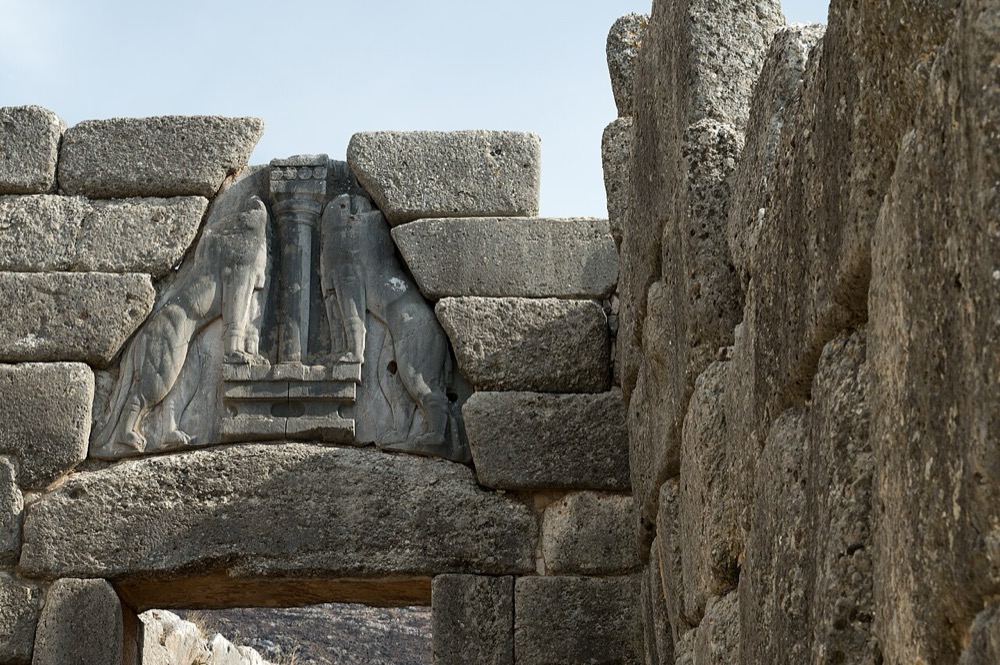
Lighten the load on the lintel
Display the royal coat of arms
Support the roof of the tomb
Provide a window
A corbelled opening is left over the lintel so the heavy wall above does not crush it; the lion relief fills it. The Gate is Mycenaean, c. 1250 BCE.
Image: Zde, CC BY-SA 4.0, via Wikimedia Commons.
Which statement about the Colosseum is accurate?
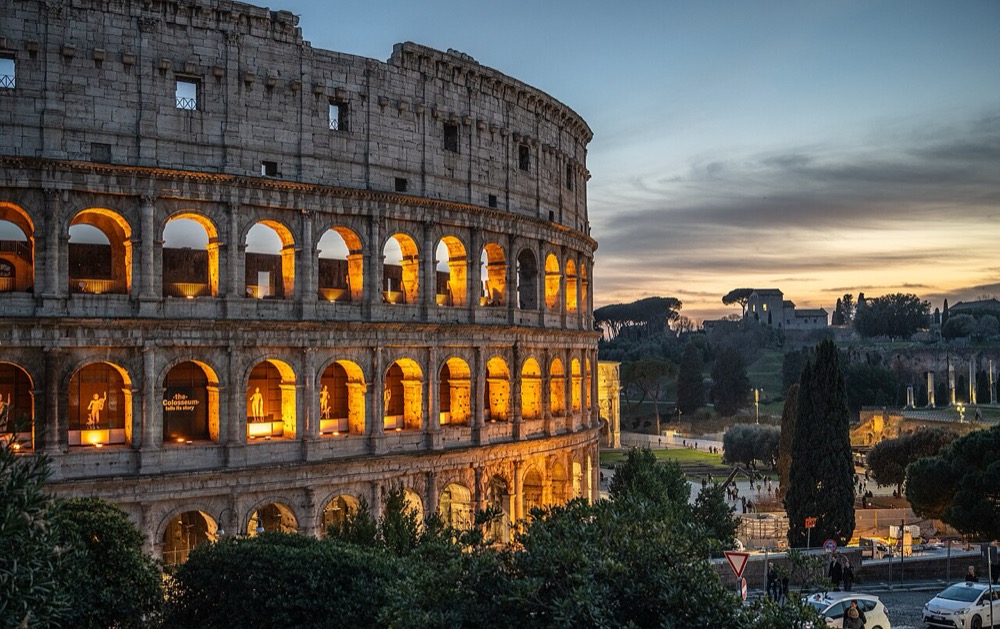
It dates to the 2nd century BCE during the Republic
It was built by Augustus entirely of marble blocks
It was built using concrete vaulting faced with travertine, and it opened in 80 CE under Titus
It was a temple dedicated to all gods
It is a Flavian amphitheater. Augustus's era was earlier, and the temple to all the gods is the Pantheon.
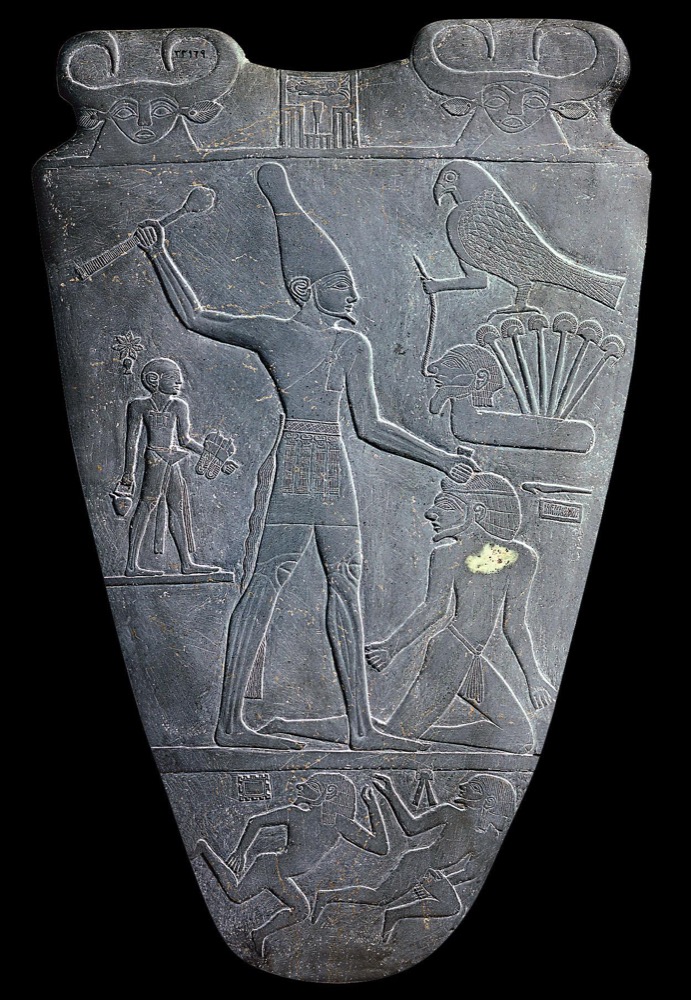
The Narmer Palette is significant because it:
Shows the weighing of the heart
Is the earliest known Greek vase
Shows early Egyptian conventions such as registers and the king's two crowns
Was made for Hammurabi
Created c. 3100 BCE, it shows the unification theme and the conventions that persisted for millennia.
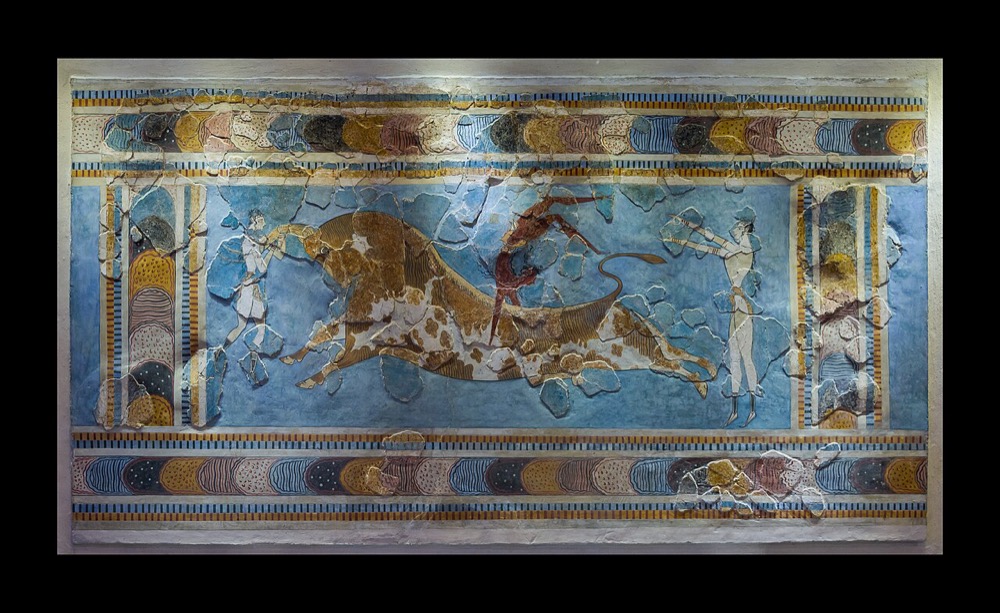
Which statement correctly contrasts Minoan and Mycenaean art?
Both cultures built ziggurats
Minoan art is militaristic while Mycenaean art is peaceful
Minoan palaces lack fortifications and show lively nature scenes, while Mycenaean citadels are heavily fortified
Minoan art is Egyptian in origin and Mycenaean is Persian
Minoan Knossos had open courts and frescoes of bull-leaping; Mycenae had Cyclopean walls and the Lion Gate.
Which is NOT a feature of Egyptian Old Kingdom tomb sculpture?
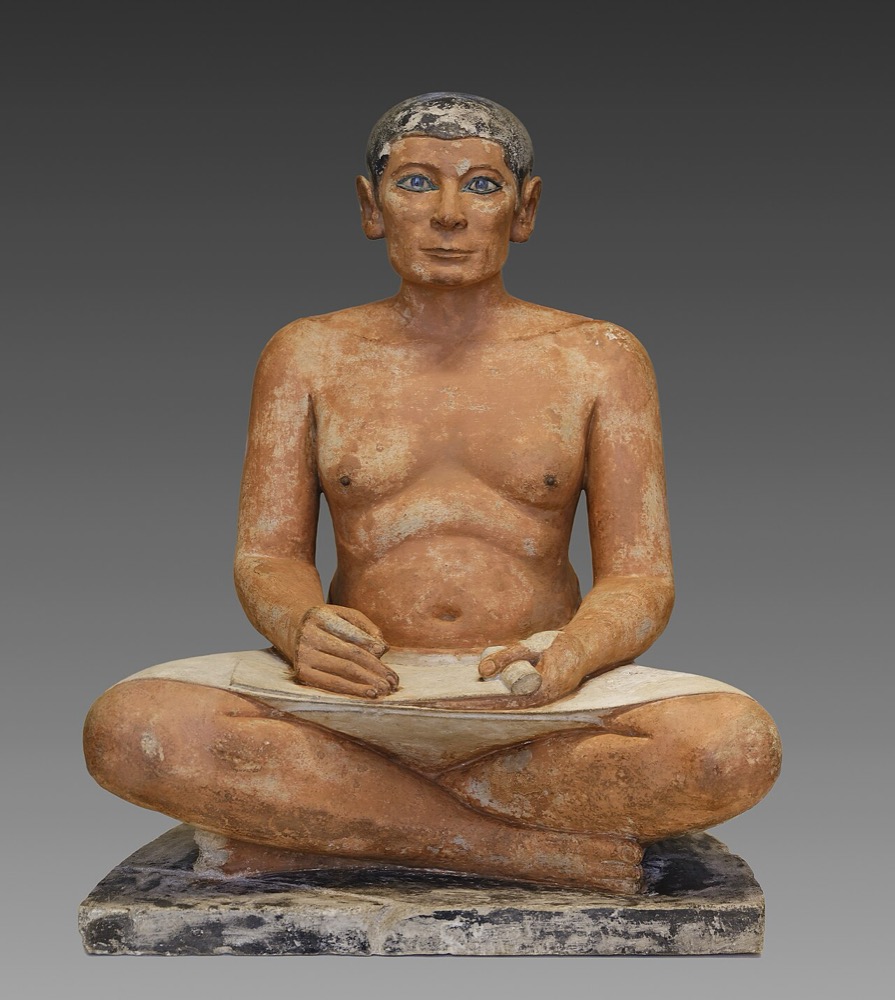
A canon of proportion
Dramatic diagonal composition that shows violent emotion
Painted limestone with inlaid eyes
Rigid frontal pose
The Seated Scribe is exceptionally lifelike, but Egyptian sculpture stresses stability and repose. Violent emotion is a Hellenistic trait.
Hadrian's Pantheon dome has a diameter of 43.3 m. How does its interior height to the oculus compare?
It is half the diameter
It is the same, so a perfect sphere fits inside
It is twice the diameter
It is one-third of the diameter
The interior is designed on a sphere: the height from the floor to the oculus equals the diameter of the rotunda.
True or false: the Venus de Milo is a Hellenistic sculpture.
False
True
It dates to c. 150-125 BCE, so it is Hellenistic, though its idealized head follows Classical models.
A scholar sees a late Roman portrait with a huge fixed stare and a block-like head. This reflects:
The influence of Egyptian composite view
The revival of Republican verism
A return to Greek Archaic style
A move from naturalism to a spiritual, abstract power image in the late empire
Constantine's colossal head and the Tetrarchs mark a change to symbolic form that leads into Byzantine art.
