Quiz · Hard
Harder questions on Vietnam, 1968, detente, Reagan and Gorbachev, 1989 and the end of the USSR.
What was the result of the Tet Offensive (1968) for the American public?
It ended the war immediately
It proved the domino theory
It showed the war was far from won and reduced support for it
It led to the use of nuclear weapons
Militarily the communists lost many fighters, but the surprise scale of the attacks hit US morale.
What did the Gulf of Tonkin Resolution allow?
Congress to declare war on North Vietnam
President Johnson to use military force in Vietnam without a formal declaration of war
Withdrawal of US advisers
A ceasefire in 1964
It was used to escalate the war from 1965.
What was Nixon's policy of Vietnamization?
Gradual US troop withdrawal while South Vietnamese forces took over combat
Using nuclear weapons against the North
Handing control of the war to the UN
A permanent US base in Saigon
The Paris Peace Accords (1973) completed the US withdrawal; Saigon fell in 1975.
What was the Prague Spring (1968)?
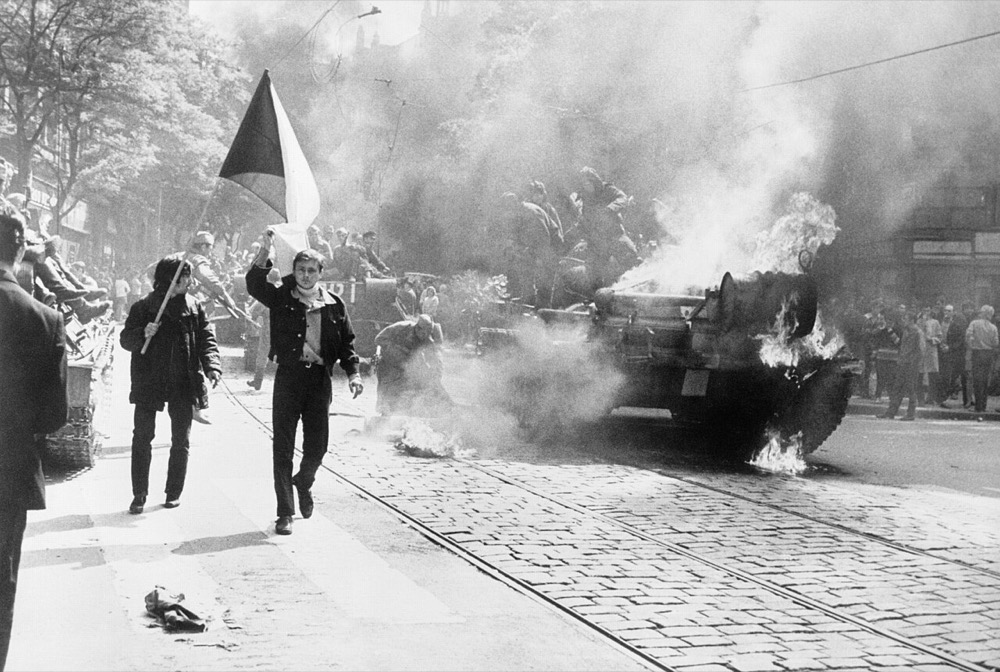
A Hungarian uprising of 1956
A Polish strike movement
The overthrow of Ceausescu
A Czechoslovak reform movement crushed by a Warsaw Pact invasion
The invasion established the Brezhnev Doctrine.
Which pair of achievements in 1972 illustrates détente?
The Berlin Wall and the Cuban Missile Crisis
The Marshall Plan and NATO
Nixon's visit to China and the SALT I/ABM treaties with the USSR
Glasnost and perestroika
Triangular diplomacy exploited the Sino-Soviet split.
The Helsinki Accords (1975) later helped dissidents in Eastern Europe because they:
Gave them US passports
Included commitments to human rights that the Soviet bloc signed
Ended communist rule in Poland
Created the European Union
Groups such as Charter 77 in Czechoslovakia cited Helsinki to challenge their governments.
The 1975 image of astronauts and cosmonauts shaking hands in orbit is a symbol of:
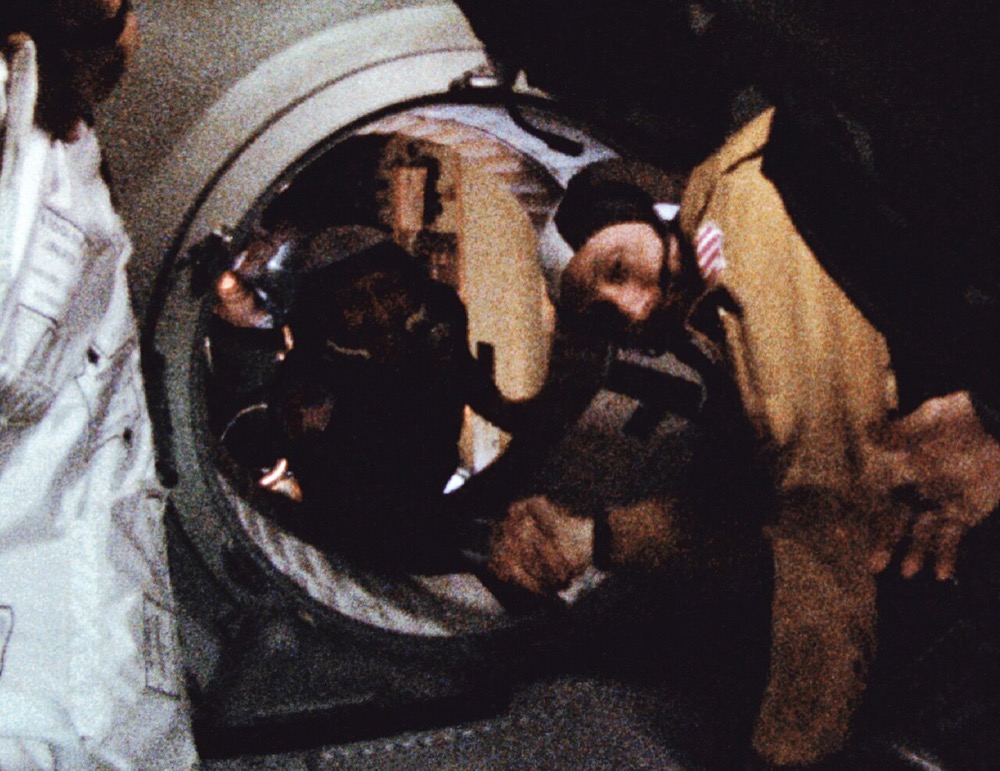
Detente
The space race's start
The Cuban Missile Crisis
Reagan's SDI
The Apollo-Soyuz mission was the first joint US-Soviet mission.
What ended the era of détente?
The building of the Berlin Wall
The Cuban Missile Crisis
The fall of Saigon
The Soviet invasion of Afghanistan in December 1979
The US boycotted the 1980 Moscow Olympics and the Senate shelved SALT II.
Why was Solidarity in Poland important?
It was the Polish army's political wing
It overthrew the government in 1980
It was the first independent trade union in the Soviet bloc and helped end communist rule in Poland
It was founded by the CIA
Martial law (December 1981) failed to destroy it; it won the 1989 semi-free elections.
What was Gorbachev's glasnost?
Economic restructuring
A policy of openness and freer discussion
The Soviet withdrawal from Afghanistan
A new arms treaty
Perestroika was the economic restructuring; glasnost let criticism of the system flourish.
What did Reagan and Gorbachev achieve at the Reykjavik summit (1986)?
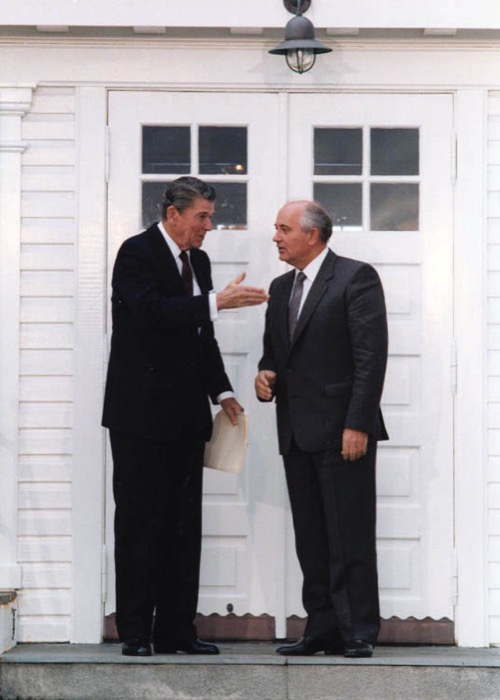
They nearly agreed to eliminate nuclear weapons but disagreed over SDI
They ended the Cold War
They signed the INF Treaty there
They agreed to reunify Germany
The INF Treaty followed in December 1987.
Which statement about the INF Treaty (1987) is correct?
It abolished all nuclear weapons
It limited the number of aircraft
It ended the Warsaw Pact
It eliminated an entire class of nuclear missiles
It removed ground-launched missiles with ranges of 500-5,500 km.
Which event came first?
The Berlin Wall falls
Ceausescu is executed
Solidarity wins Poland's 1989 elections
The USSR dissolves
Order: Poland (June 1989), Hungary opens its border, Berlin Wall (9 November), Velvet Revolution, Romania (December 1989), German unity (1990), USSR dissolves (1991).
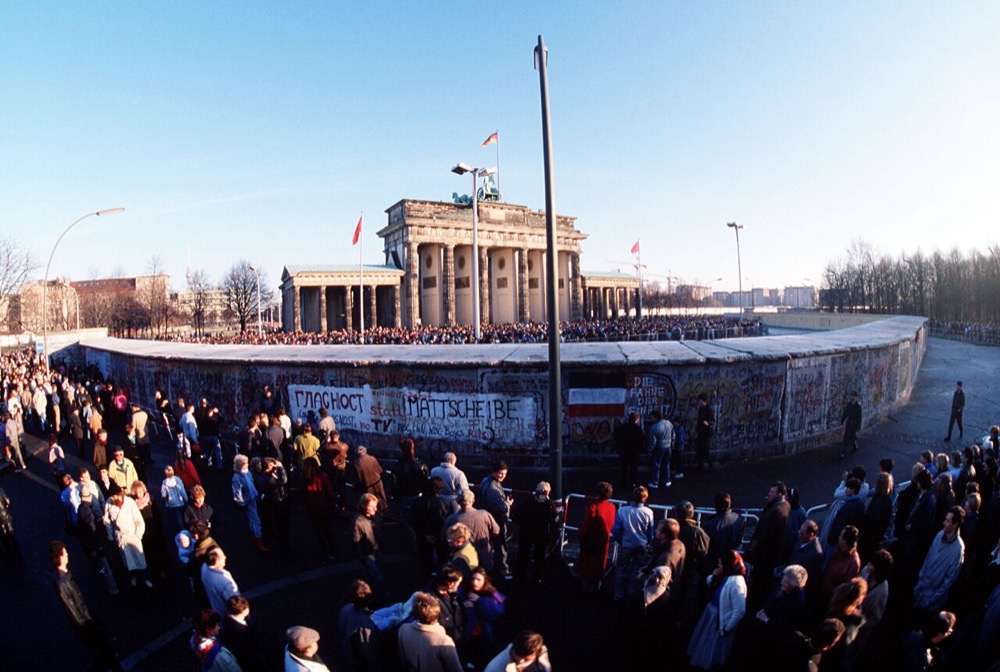
What led East Germany to open its border on 9 November 1989?
Soviet troops withdrew from Berlin
Mass protests, escapes through Hungary and Czechoslovakia, and a mistaken announcement about travel rules
A UN resolution
An American ultimatum
The crowd overwhelmed the guards at the checkpoints.
Why did Gorbachev not use force to keep Eastern Europe in 1989?
He had rejected the Brezhnev Doctrine and wanted Western economic cooperation
The Soviet army had left Europe
Reagan forbade it
He supported the removal of communism everywhere
The USSR's refusal to intervene made the 1989 revolutions possible.
When was Germany reunified?
9 November 1989
25 December 1991
1 July 1991
3 October 1990
East Germany joined the Federal Republic after the 'Two Plus Four' agreement with the WWII Allies.
Which was NOT a cause of the Soviet Union's collapse?
Economic stagnation and overspending on arms
Nationalism in the republics
The outcome of the Cuban Missile Crisis in 1962
Failed August 1991 coup
Cuba 1962 was far too early and was not decisive; the collapse is explained by economic, political and nationalist pressures of the 1980s.
The Cold War is usually said to have ended with:
The fall of Saigon in 1975
The dissolution of the USSR in December 1991
The Helsinki Accords in 1975
The Cuban Missile Crisis in 1962
Many historians also mark 1989-90 (fall of the Wall, German reunification) as the end.
Which pairing of Cold War proxy conflicts is correct?
Korea (1950-53) and Afghanistan (1979-89)
Berlin and Cuba
Vietnam and Hungary
Suez and Poland
Berlin, Cuba and Hungary were direct crises or interventions, not proxy wars in the usual sense.
What does the Sinatra Doctrine mean?
The US would use music diplomacy
Reagan's nuclear plan
A Soviet space project
The USSR would let its satellites go their own way
The phrase was a joke from Soviet spokesman Gennady Gerasimov in 1989.
Which statement best describes Reagan's approach?
Full appeasement of the USSR
Withdrawal from NATO
Military build-up and hard rhetoric first, then negotiation with Gorbachev
Recognition of the Soviet satellites
The 1983 SDI and 'evil empire' speech came before the 1986-87 summits.
The Soviet-Afghan War (1979-89) ended with a Soviet victory and a stable communist Afghanistan.
True
False
The USSR withdrew in 1989 after heavy losses; the communist government fell in 1992.
Which statement about the Warsaw Pact is correct?
It was created in 1949
It was dissolved in July 1991, before the USSR itself
It was dissolved in 1989
It included Yugoslavia
It formed in 1955; Yugoslavia was non-aligned; Poland, Hungary and others later joined NATO.
