Quiz · Medium
Plate boundaries, hotspots, volcano types, the Ring of Fire and earthquake waves.
Which layer of Earth is liquid?
The inner core
The mantle
The outer core
The lithosphere
The outer core is molten iron and nickel. The inner core is solid because of the immense pressure, and the mantle is hot solid rock that flows very slowly.
The San Andreas Fault is an example of which type of plate boundary?
Convergent
Divergent
Subduction
Transform
Plates slide sideways past each other on a transform boundary, so crust is neither made nor destroyed.
Which feature forms where an oceanic plate sinks beneath a continental plate?
A mid-ocean ridge
A rift valley
A hotspot island chain
A deep ocean trench and an inland volcanic arc
The Peru-Chile Trench and the Andes are the textbook example.
Which two plates collided to build the Himalayas?
The Indian Plate and the Eurasian Plate
The African Plate and the Eurasian Plate
The Pacific Plate and the Indian Plate
The Nazca Plate and the South American Plate
The collision began about 50 million years ago and continues today.
The Hawaiian Islands formed from:
A hotspot under the moving Pacific Plate
A subduction zone
A mid-ocean ridge
A transform fault
The islands get older to the northwest as the plate carries them away from the fixed plume.
Which type of volcano is broad and gently sloping, built from runny basalt lava?
Stratovolcano
Shield volcano
Cinder cone
Caldera
Mauna Loa in Hawaii is the classic shield volcano.
Mount Fuji and Mount St. Helens are both:
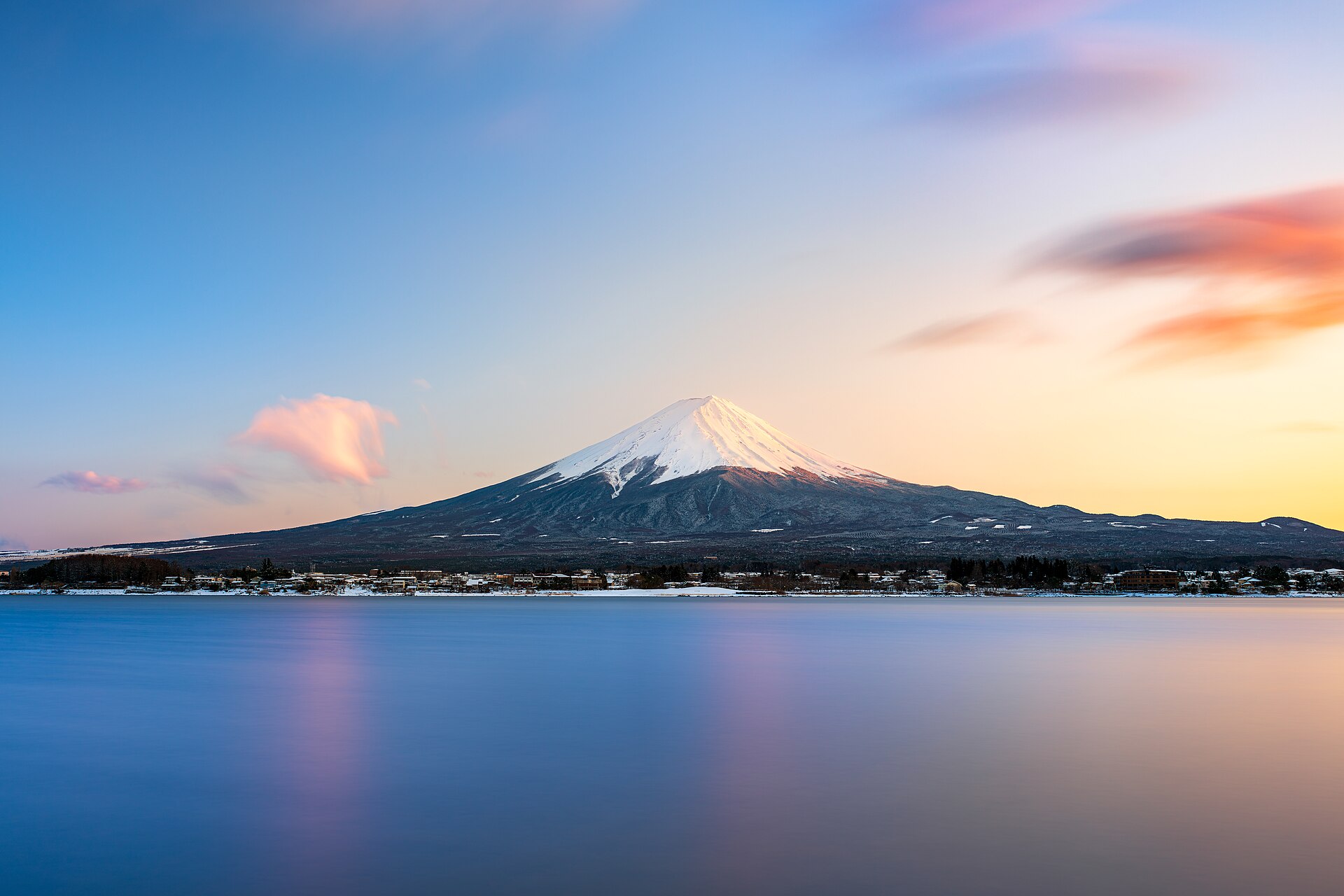
Shield volcanoes
Stratovolcanoes
Cinder cones
Calderas
Their steep, symmetrical cones are built from alternating layers of lava and ash.
Image: Romain Guy from San Francisco, USA, CC0, via Wikimedia Commons.
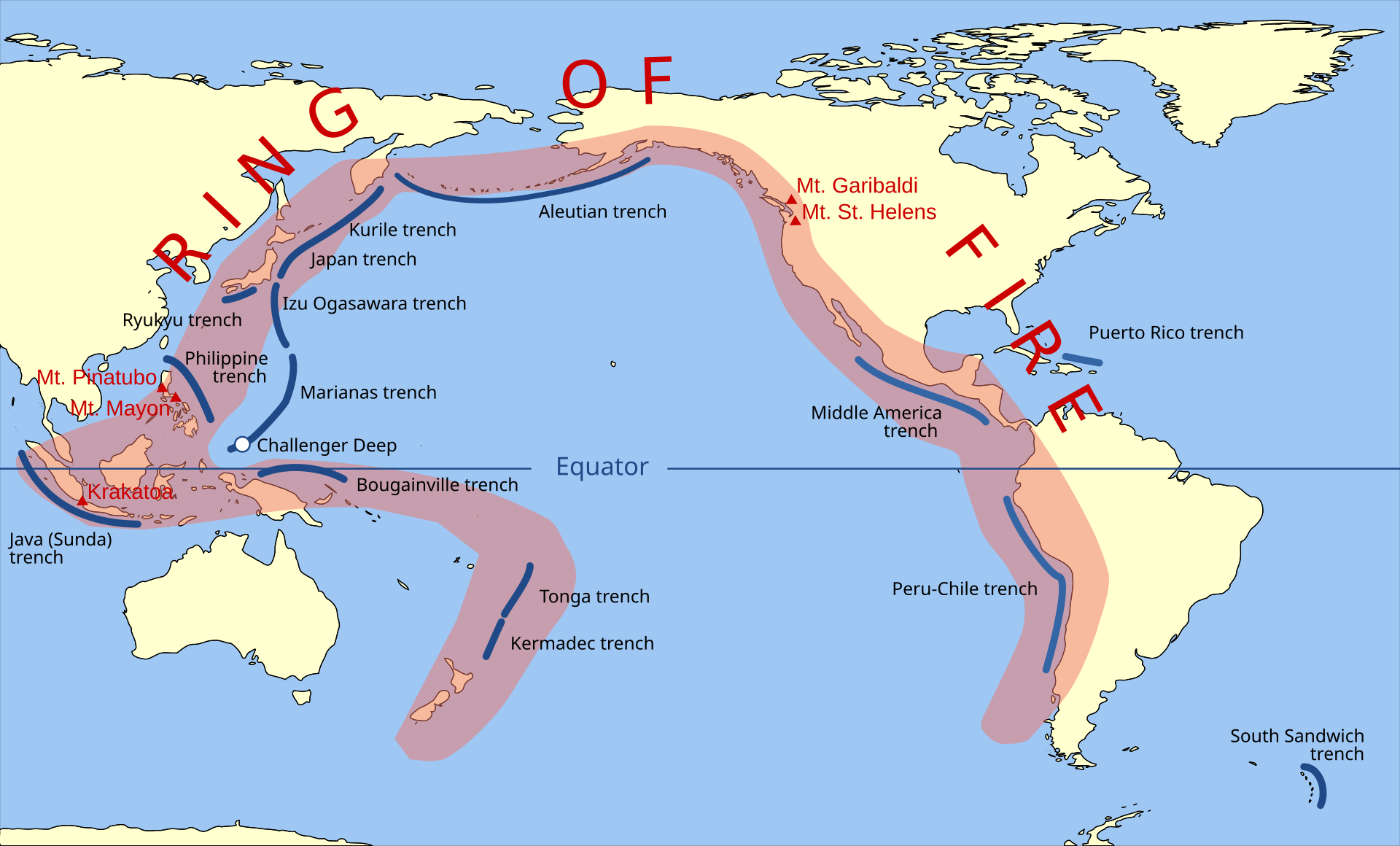
About what share of the world's earthquakes occurs around the Ring of Fire?
About 10%
About 30%
About 90%
About 50%
The Pacific's edges are lined with subduction zones, so most of the world's earthquakes and active volcanoes are there.
Which seismic waves cannot travel through liquid?
P waves
Both P and S waves
Neither P nor S waves
S waves
The S-wave shadow zone is how scientists inferred that the outer core is liquid.
The point on Earth's surface directly above where an earthquake begins is the:
Focus
Fault
Hypocentre
Epicentre
The focus (or hypocentre) is the underground starting point.
Compared with a magnitude 5 earthquake, a magnitude 7 earthquake releases about how much more energy?
About 2 times
About 1,000 times
About 20 times
About 100,000 times
Each whole magnitude step is about 32 times the energy; two steps is 32 x 32, about 1,000.
What does the Modified Mercalli scale measure?
The energy released at the source
The speed of P waves
The depth of the focus
The intensity of shaking and damage at a location
Magnitude describes the quake itself; Mercalli intensity describes the effects felt at particular places.
Which plate boundary is the Mid-Atlantic Ridge?
Convergent
Transform
Collisional
Divergent
New oceanic crust forms there as the North American and Eurasian plates (and South American and African plates) move apart.
Which volcano erupted in 1815 and caused the 'year without a summer'?
Krakatoa
Mount Vesuvius
Mount Tambora
Mount Pinatubo
Its sulphur aerosols dimmed sunlight and cooled the Northern Hemisphere in 1816.
A fast avalanche of hot gas and ash from a volcano is called a:
Lahar
Lava dome
Pyroclastic flow
Tephra fall
A lahar, by contrast, is a mudflow of volcanic debris and water.
Which trench contains the deepest known point in the oceans?
The Peru-Chile Trench
The Mariana Trench
The Aleutian Trench
The Tonga Trench
The Challenger Deep lies at its southern end, nearly 11 km down.
Image: Gringer, Public domain, via Wikimedia Commons.
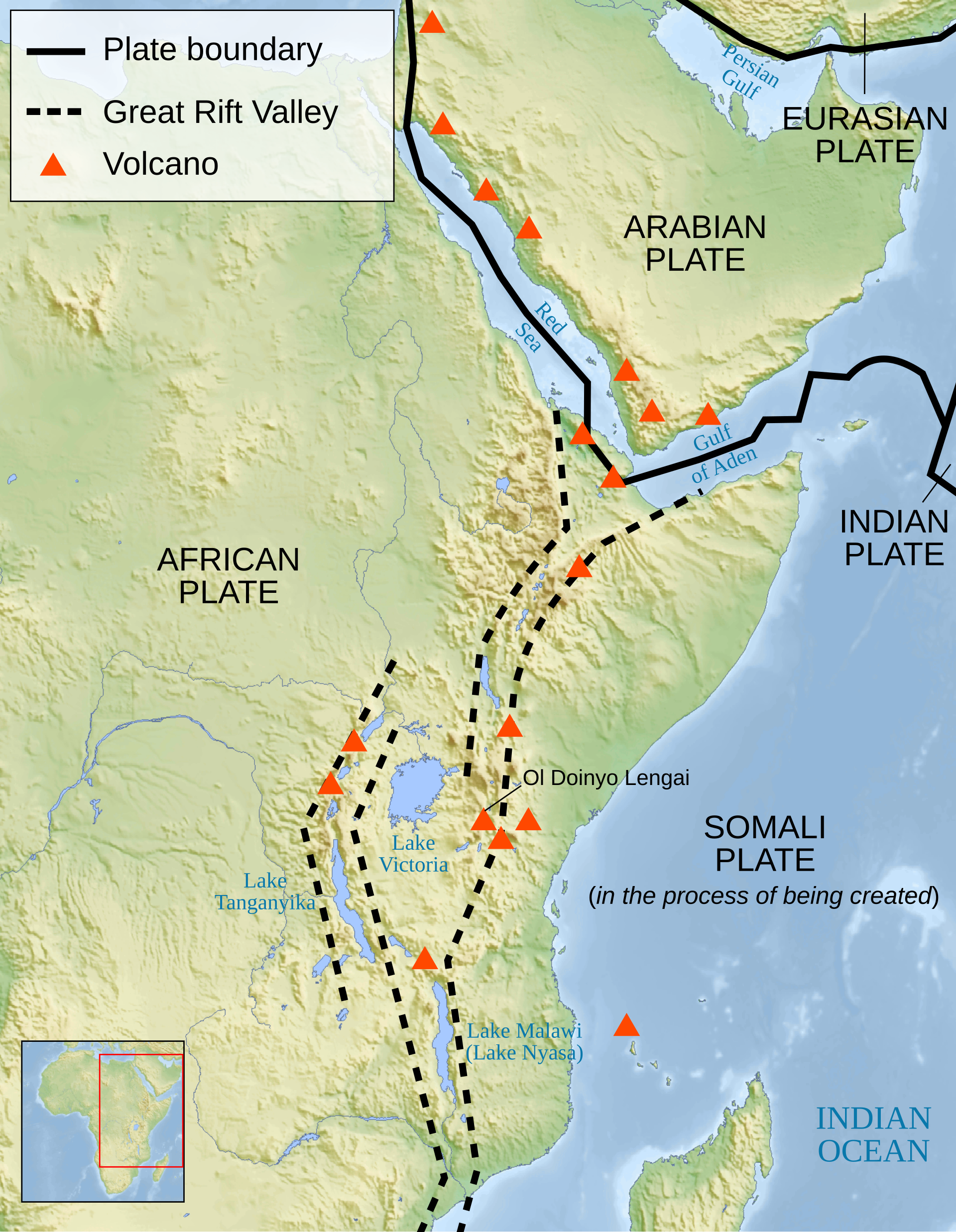
The East African Rift is slowly splitting which plate into two?
The Arabian Plate
The Indian Plate
The African Plate (Nubian and Somali plates)
The Eurasian Plate
The Somali Plate is the smaller piece on the east.
Image: Sémhur, CC BY-SA 4.0, via Wikimedia Commons.
Which scientist proposed continental drift in 1912?
Harry Hess
Charles Darwin
Charles Richter
Alfred Wegener
Wegener lacked a mechanism, so the idea was rejected until seafloor spreading was discovered.
Which statement about oceanic crust is true?
It is thicker than continental crust
It is older than continental crust
It is much younger than continental crust, because subduction recycles it
It is never recycled
The oldest oceanic crust is only about 180 million years old.
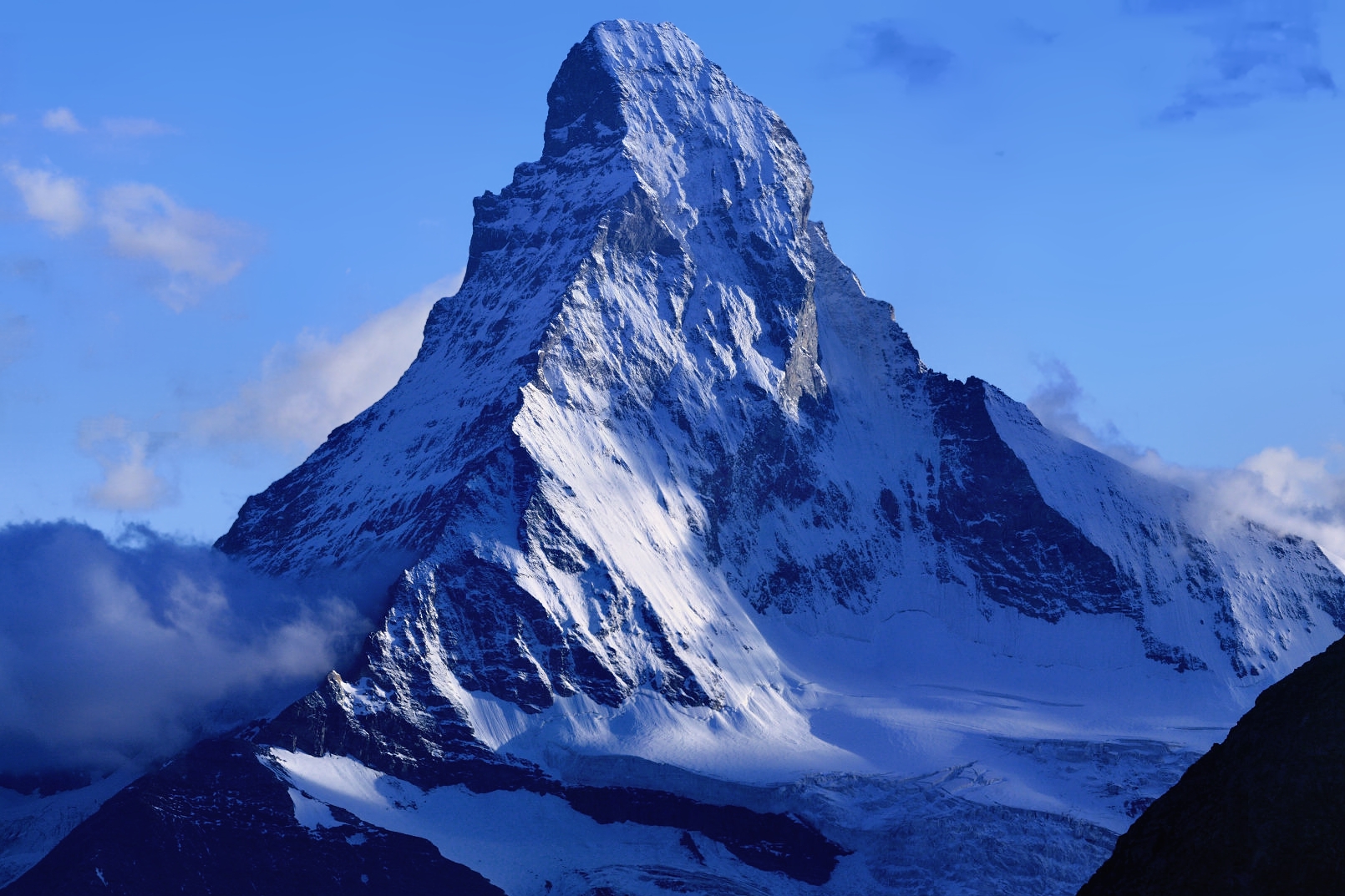
This pyramid-shaped peak on the Swiss-Italian border was carved mostly by:
River erosion
Volcanic eruption
Glacial erosion
Wind erosion
Glaciers cutting back into several sides left a sharp horn.
Image: chil (Camptocamp.org) and Zacharie Grossen, CC BY-SA 3.0, via Wikimedia Commons.
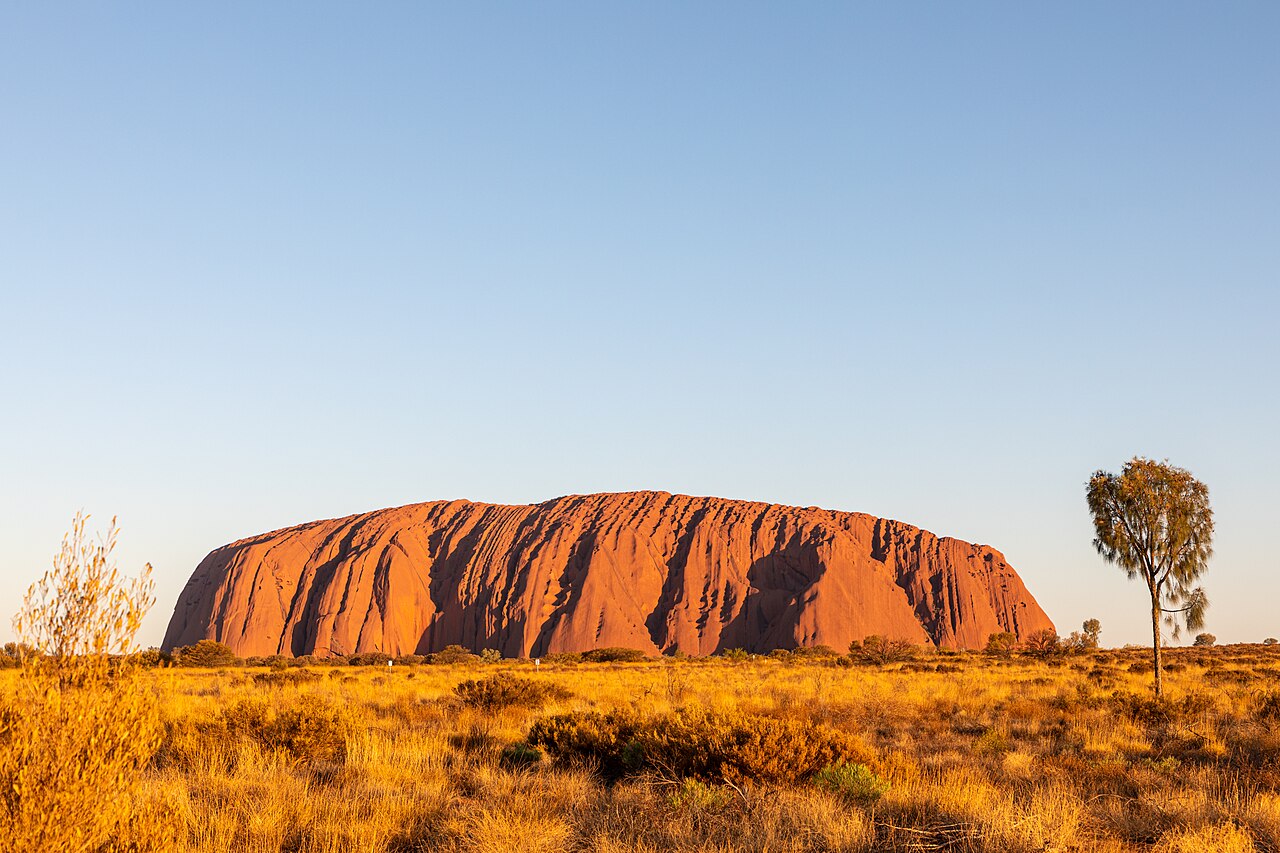
Uluru, rising from a flat plain in central Australia, is best described as a(n):
Volcanic cone
Moraine
Fjord
Inselberg
It is a resistant sandstone remnant; its red colour comes from oxidised iron.
Image: Dietmar Rabich, CC BY-SA 4.0, via Wikimedia Commons.
