Quiz · Easy
What to say in restaurants, stations, shops, at the doctor, on the phone and in emails, with formal vs informal choices.
Which opening is correct for an email to an unknown company?
Hallo Leute,
Lieber Herr,
Sehr geehrte Damen und Herren,
Hi,
Sehr geehrte Damen und Herren is the standard formal salutation to an unknown recipient.
You want to pay in a restaurant. What do you say?
Ich möchte bestellen.
Haben Sie reserviert?
Wir möchten zahlen, bitte.
Guten Appetit!
Zahlen, bitte or Wir möchten zahlen is how you ask for the bill. The other phrases are for ordering, a reservation question and 'enjoy your meal'.
The server asks 'Zusammen oder getrennt?' What is the question?
Together or separately?
Inside or outside?
Still or sparkling?
Cash or card?
It means: Do you want to pay together or each person separately? Splitting the bill is normal in Germany.
What does 'Stimmt so.' mean when you pay?
That's correct.
I disagree.
The bill is wrong.
Keep the change.
Stimmt so tells the server to keep the change as a tip. Literally 'it's right like this'.
Which phrase asks the way to the train station politely?
Wo ist Bahnhof?
Wie komme ich zum Bahnhof?
Gibt es Bahnhof?
Ich bin Bahnhof.
Wie komme ich zum Bahnhof? is the standard polite question. Zum = zu dem.
What does 'Der Zug fällt aus.' mean?
The train is late.
The train is canceled.
The train is full.
The train falls.
Ausfallen = to be canceled. A delay is Verspätung.
At the pharmacy you want something for a headache. What do you say?
Ich habe Kopfschmerzen gegen.
Haben Sie Kopfschmerzen?
Ich möchte Kopfschmerzen.
Haben Sie etwas gegen Kopfschmerzen?
Etwas gegen ... = something for/against ...: Haben Sie etwas gegen Kopfschmerzen?
What number do you call for fire or an ambulance in Germany?
112
110
911
999
112 is the European emergency number (fire and ambulance); 110 is the German police.
Which closing is correct for a formal email?
Liebe Grüße
Tschüss
Mit freundlichen Grüßen
Bis dann
Mit freundlichen Grüßen is the standard formal closing. Liebe Grüße is for friends and family.
You answer the phone at work. What can you say?
Meyer am Apparat.
Meyer ist telefon.
Hier bin Meyer.
Ich bin am Telefon Meyer.
Meyer am Apparat or Hier spricht Meyer. Both identify you on the phone.
What is a polite way to say 'I would like 200 grams of cheese'?
Ich will 200 Gramm Käse.
Gib mir 200 Gramm Käse.
Ich brauche Käse jetzt.
Ich hätte gern 200 Gramm Käse.
Ich hätte gern (Konjunktiv II) sounds polite. Ich will and Gib mir are too direct.
Which phrase means 'On the one hand ..., on the other hand ...'?
Erstens ..., zweitens ...
Einerseits ..., andererseits ...
Zum Beispiel ...
Trotzdem ...
Einerseits ... andererseits ... contrasts two sides. Erstens ... zweitens ... lists points.
What do you ask the waiter for to see the dishes on offer?
die Bestellung
die Speisekarte
die Rechnung
das Trinkgeld
Die Speisekarte is the menu. Die Bestellung is the order, die Rechnung the bill and das Trinkgeld the tip.
You bump into someone. What do you say?
Guten Appetit!
Prost!
Herzlichen Glückwunsch!
Entschuldigung!
Entschuldigung! = Excuse me/Sorry! It is also used to get someone's attention.
Which is the correct reply to 'Guten Appetit!'?
Danke, gleichfalls!
Gute Besserung!
Bitte schön!
Prost!
Danke, gleichfalls! (Thanks, same to you!) is the usual reply. Prost is used when drinking.
When do Germans say 'Guten Rutsch!'?
On someone's birthday
At Easter
Before New Year's Eve
When someone leaves for a trip
Guten Rutsch (ins neue Jahr)! wishes a good start to the New Year and is said before 1 January.
Which greeting is typical of northern Germany?
Grüß Gott!
Servus!
Moin!
Grüezi!
Moin (moin moin) is typical in the north, at any time of day. Grüß Gott and Servus are southern; Grüezi is Swiss.
You are at a Christmas market and want a mulled wine. What do you say?
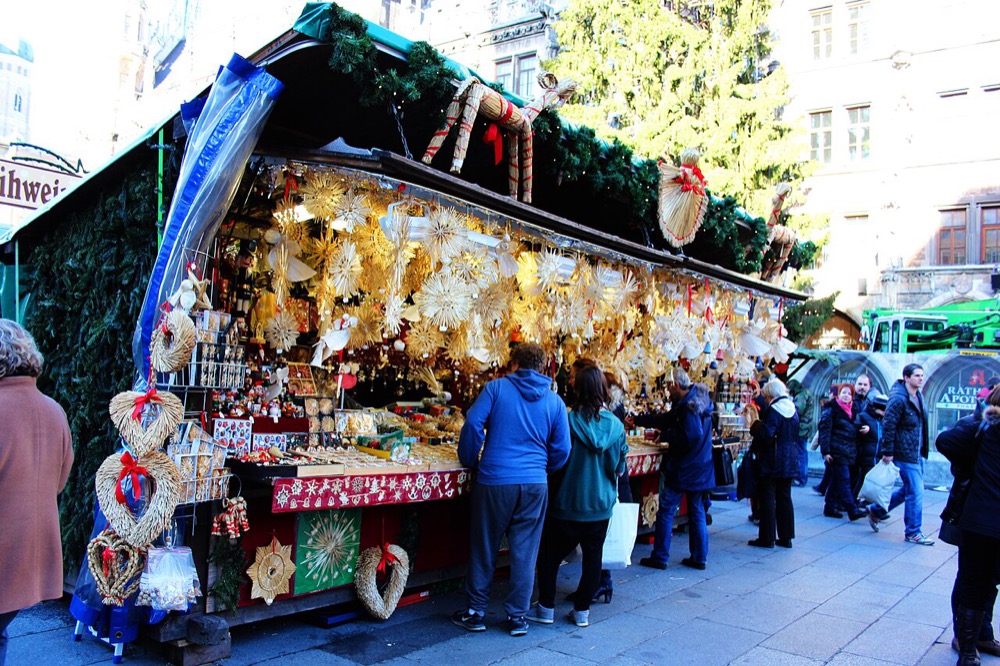
Einen Glühwein, bitte.
Wo ist der Bahnhof?
Haben Sie ein Zimmer frei?
Ich habe Fieber.
Einen Glühwein, bitte. Glühwein is hot spiced wine sold at German Christmas markets. Image: Usien, CC BY-SA 3.0, via Wikimedia Commons.
This train station is the Berlin Hauptbahnhof. Which phrase would you use here?
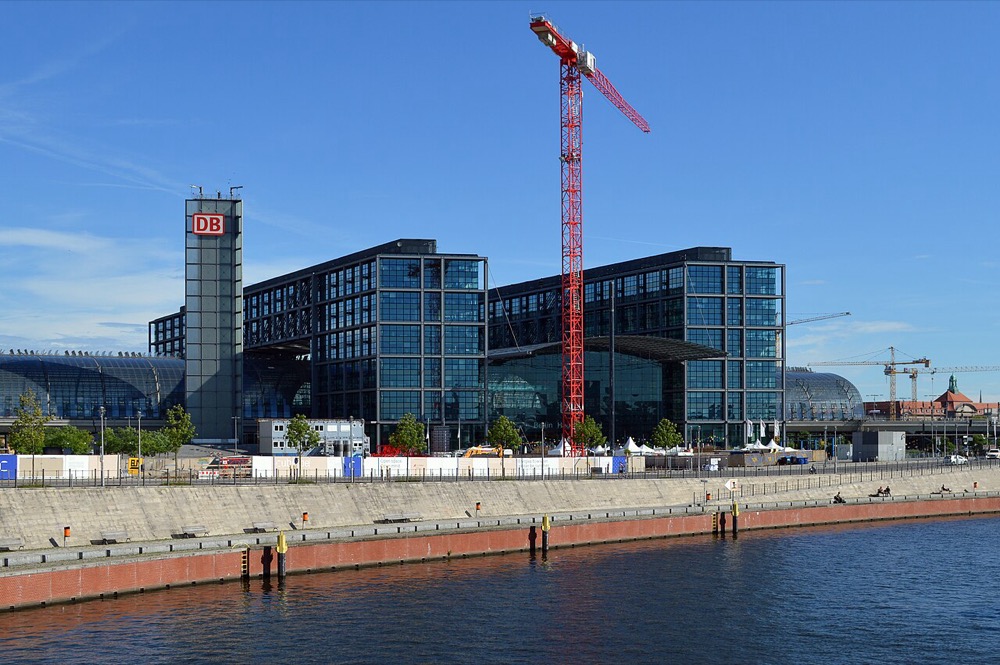
Wie viel kostet das Zimmer?
Die Rechnung, bitte.
Ich möchte einen Termin.
Von welchem Gleis fährt der Zug ab?
At a station, you ask which platform (Gleis) the train leaves from.
Which phrase is formal (Sie)?
Wie heißt du?
Wie heißen Sie?
Woher kommst du?
Was machst du?
Wie heißen Sie? uses the polite Sie. Du is for friends and family.
Which verb form follows formal 'Sie'?
du bist
Sie sind
Sie bist
ihr seid
Sie takes the 3rd person plural: Sie sind, Sie haben, Sie kommen.
What does 'Eigentlich' usually mean?
immediately
eventually
exactly
actually, really (as a softener)
Eigentlich means 'actually, in the first place' and softens questions. Eventually is schließlich; exactly is genau.
You don't understand something. What can you say?
Wie bitte?
Gute Nacht!
Stimmt so.
Prost!
Wie bitte? = Pardon? Also: Ich habe das nicht verstanden.
