Quiz · Medium
A foundation quiz on air pollutants, smog, acid rain, ozone, eutrophication, oil spills, plastics, wastewater, landfills and hazardous waste law, with satellite images, diagrams and photos.
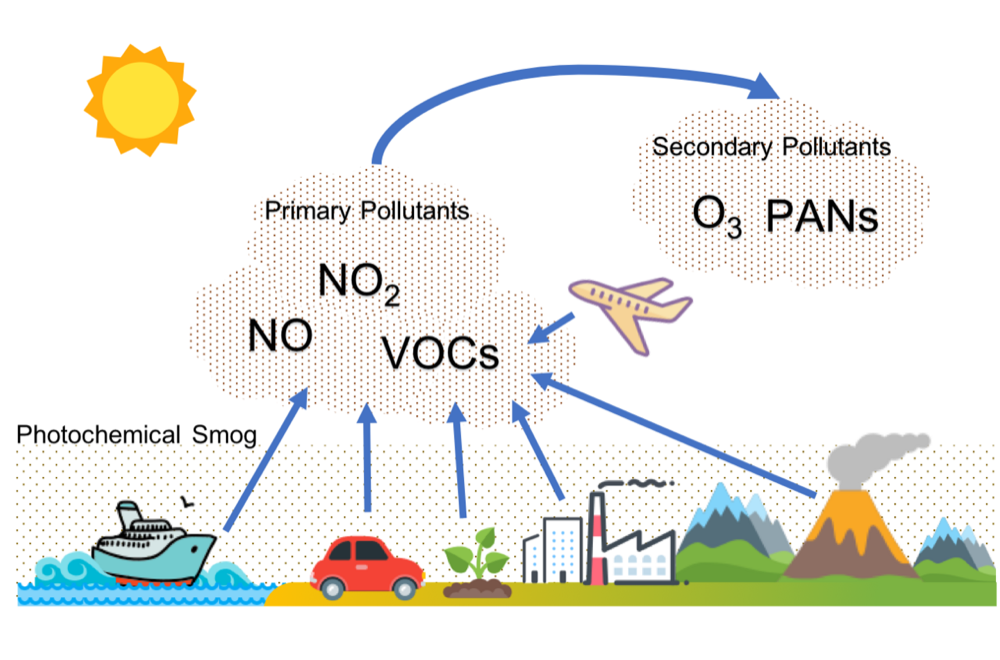
Which of these is a secondary air pollutant?
Carbon monoxide
Lead
Ground-level ozone
Sulfur dioxide emitted from a smokestack
Ozone is not emitted directly; it forms when NOx and VOCs react in sunlight. CO, lead and SO2 are emitted directly (primary).
Image: Liweichao.vivian, CC BY-SA 4.0, via Wikimedia Commons.
Which condition most often causes smog to be trapped over a basin city?
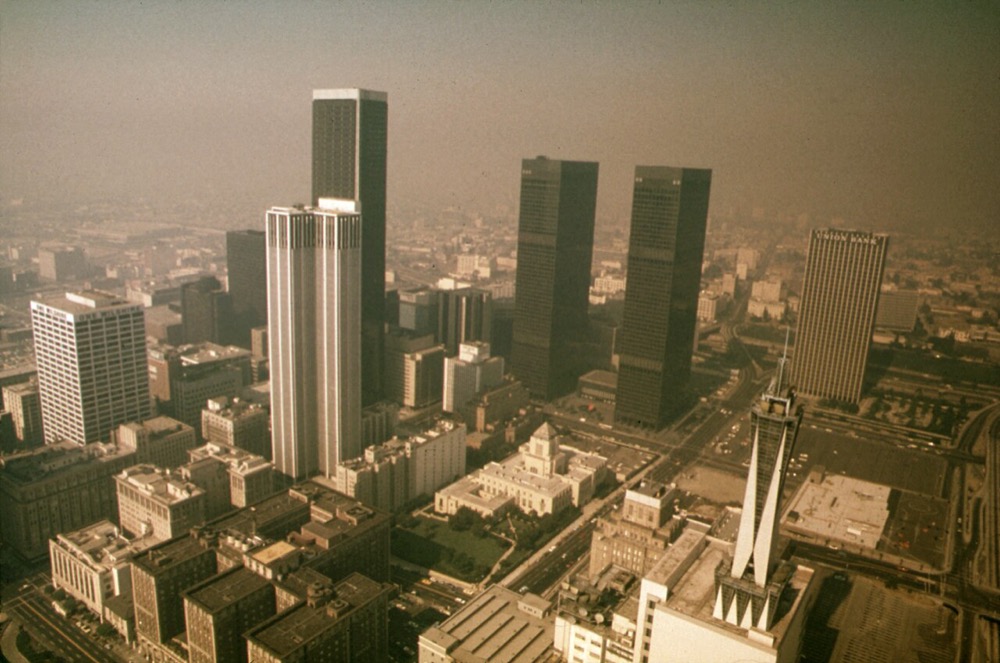
A thermal inversion
A strong cold front with high winds
A heavy rainstorm
A tropical cyclone
In an inversion, warm air above cooler air acts as a lid, so pollutants cannot rise and disperse. Wind and rain clear pollutants.
Carbon monoxide is dangerous because it
forms acid rain
depletes the ozone layer
damages the nervous system by accumulating in fat
binds to hemoglobin and blocks oxygen transport
CO binds to hemoglobin about 200 times more strongly than O2, reducing the oxygen carried by blood. It does not cause acid rain or ozone depletion.
Which pollutant is a main cause of acid rain?
Carbon dioxide only
Sulfur dioxide from burning coal
Chlorofluorocarbons
Methane from landfills
SO2 and NOx form sulfuric and nitric acids. CO2 makes natural rain slightly acidic (pH 5.6) but is not the main cause of acid rain. CFCs deplete ozone, and methane is a greenhouse gas.
Lake A (pH 6) is compared with Lake B (pH 4). How much more acidic is Lake B?
2 times
100 times
10 times
1,000 times
The pH scale is logarithmic: a 2-unit difference means times more hydrogen ions. Two times would be a linear mistake.
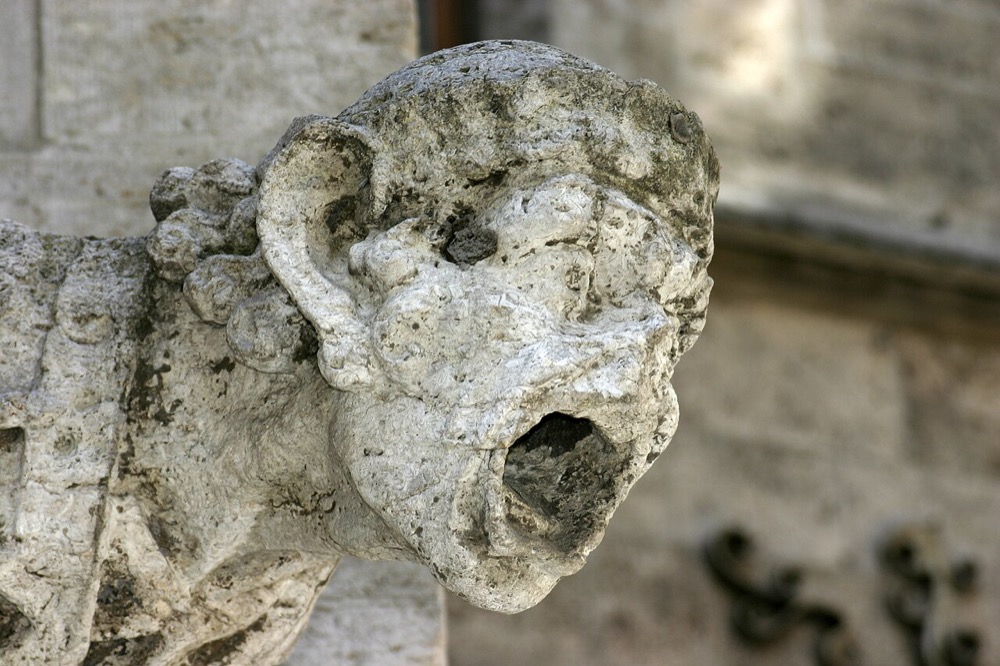
Which building material is most vulnerable to acid deposition?
Granite
Glass
Brick-lined steel
Limestone
Calcium carbonate reacts with acids to form soluble salts. Granite and glass are much more resistant.
Image: User:Nino Barbieri, CC BY 2.5, via Wikimedia Commons.
The Antarctic ozone hole forms mainly because
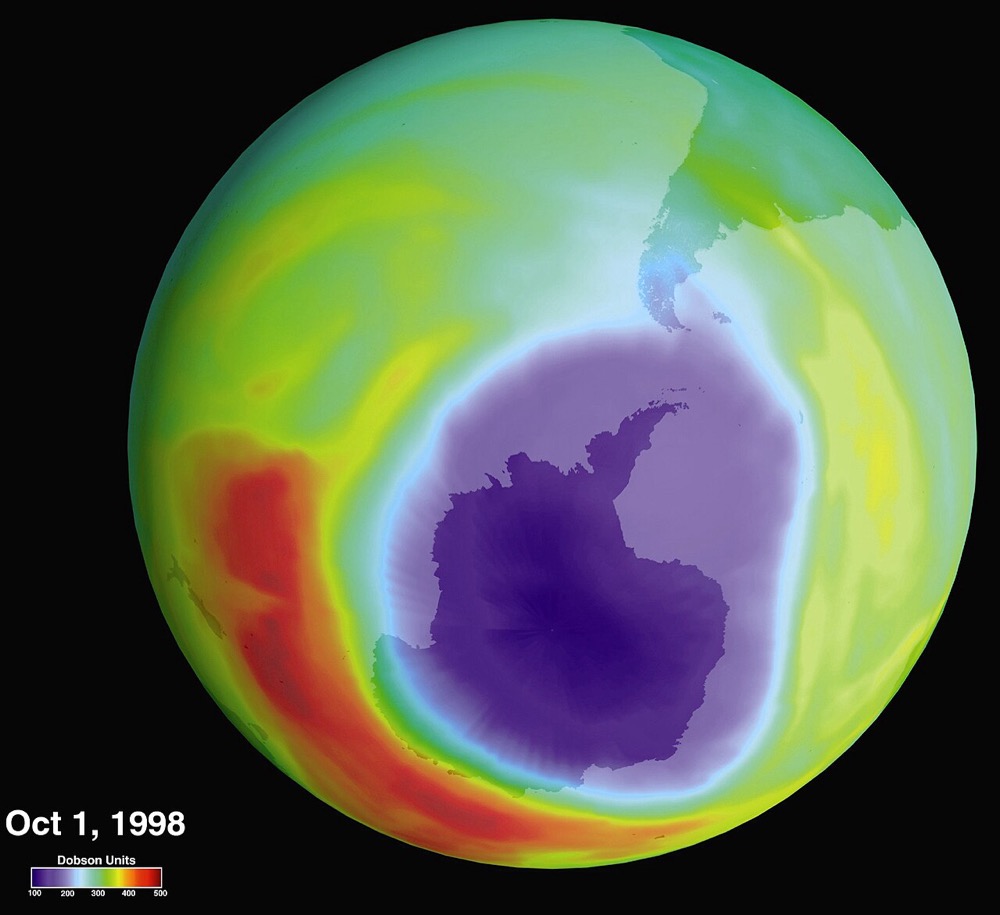
chlorine from CFCs destroys ozone in the polar stratosphere in spring
carbon dioxide absorbs ultraviolet light
ground-level ozone rises into space
volcanic dust blocks sunlight
CFC-derived chlorine, activated on polar stratospheric clouds, catalytically destroys ozone, causing the hole each September to October. The Montreal Protocol phased out CFCs.
Which device removes SO2 from power plant exhaust?
An electrostatic precipitator
A baghouse filter
A wet scrubber using limestone slurry
A catalytic converter
A scrubber reacts SO2 with a calcium-based slurry. Precipitators and baghouses remove particles, and catalytic converters treat vehicle exhaust (CO, hydrocarbons, NOx).
In cultural eutrophication, which nutrient is most often the limiting nutrient in freshwater lakes?
Oxygen
Carbon dioxide
Phosphorus
Calcium
Adding phosphorus from fertilizer, detergents and sewage triggers algal blooms in many lakes. Oxygen falls after the bloom as decomposers consume it; it is not a limiting nutrient for algae.
In the dead zone map, red and orange areas show
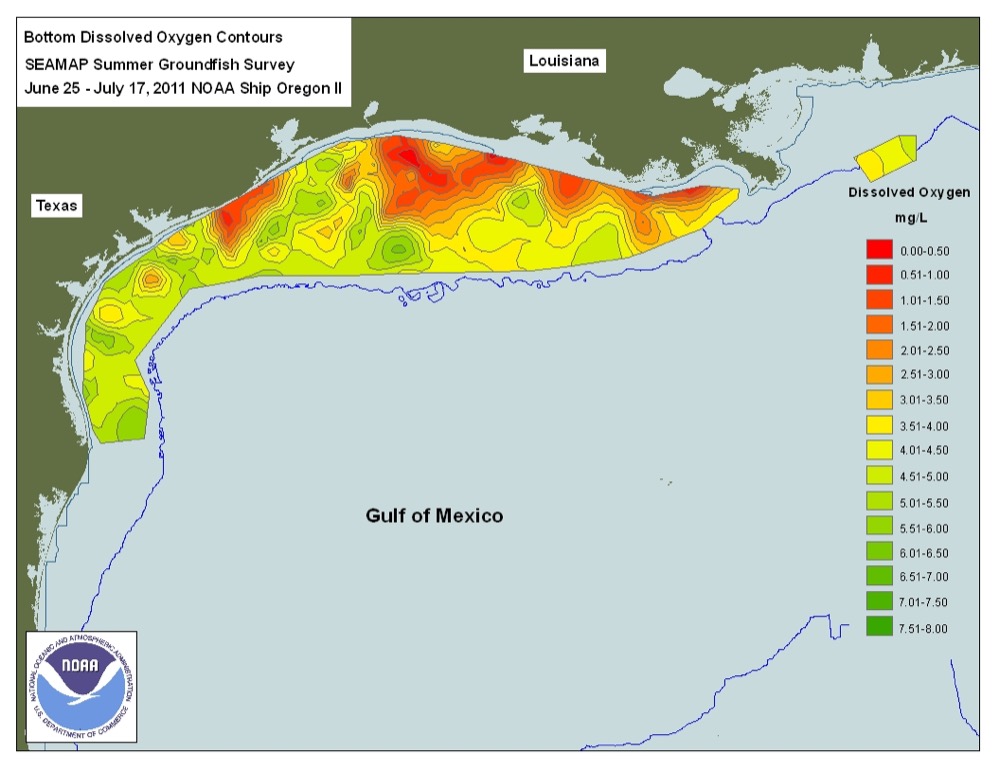
low bottom dissolved oxygen caused by decomposing algae
high salinity caused by evaporation
oil from natural seeps
regions of fastest currents
Hypoxic zones form when nutrient runoff causes algal blooms that die and decompose, using up oxygen. The map color scale shows dissolved oxygen in mg/L.
Which statement best describes biochemical oxygen demand (BOD)?
The oxygen that fish require to breathe
The amount of oxygen in the atmosphere above the water
The oxygen released by algae in daylight
The oxygen microbes consume while decomposing organic matter in water
High BOD means a lot of decomposable organic waste, which depletes dissolved oxygen. It is not the oxygen needed by fish (DO) or the oxygen produced by photosynthesis.
Which is an example of a nonpoint source of water pollution?
A discharge pipe from a paper mill
Runoff from a farm field after a storm
A sewage treatment plant outfall
A leaking underground storage tank at one gas station
Nonpoint sources are diffuse, with no single discharge point. Pipes and outfalls are point sources, and a specific leaking tank is also a point source.
Which sewage treatment stage uses aerobic microorganisms to remove dissolved organic matter?
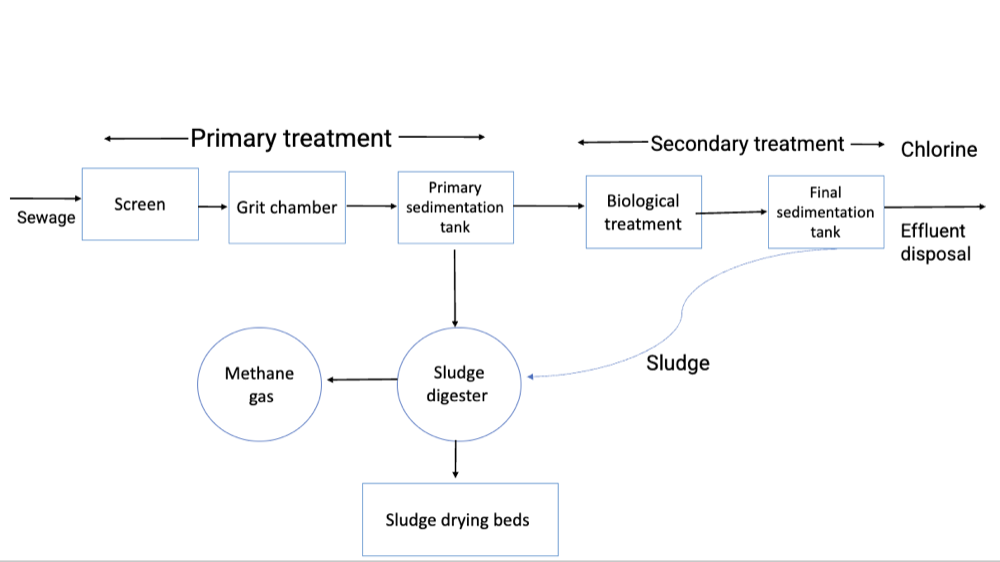
Primary treatment
Secondary treatment
Screening
Chlorination
Secondary treatment is biological: microbes consume organic waste and lower BOD. Primary treatment is physical settling, and chlorination disinfects.
What is produced in a sewage sludge digester?
Ozone
Chlorine
Carbon monoxide
Methane (biogas)
Anaerobic microbes in the digester produce methane, which can be burned for heat and power. Chlorine is added as a disinfectant, not produced.
The Exxon Valdez disaster led to which requirement?
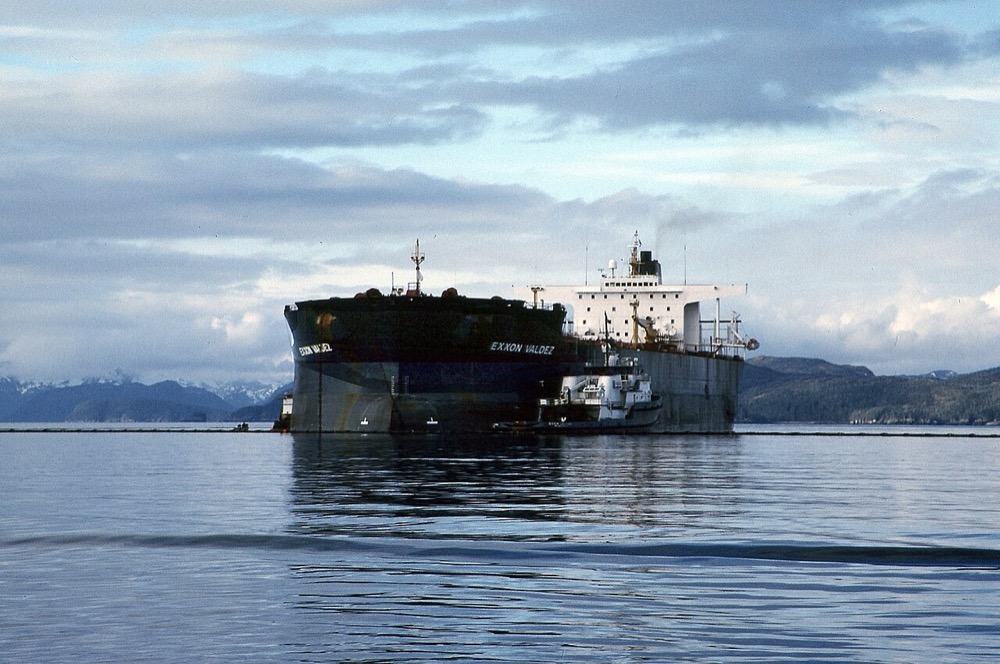
Double-hulled oil tankers in US waters
A ban on offshore drilling worldwide
A ban on all tanker traffic in Alaska
Mandatory use of chemical dispersants
The Oil Pollution Act of 1990 phased in double hulls, which reduce the chance of a spill after a collision or grounding.
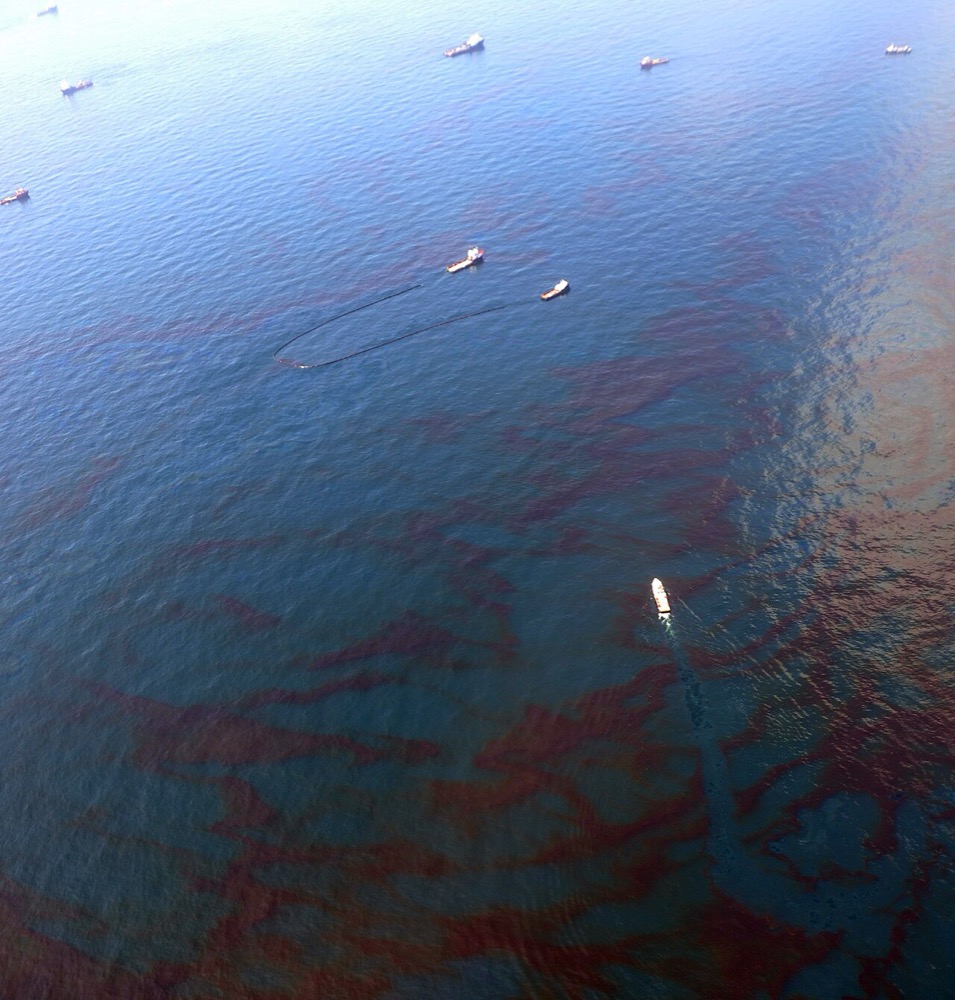
What is the main way oil harms birds and sea otters?
It prevents them from digesting their food.
It traps heat and makes them overheat.
It destroys the insulating ability of their feathers and fur, causing hypothermia.
It makes their eggs hatch too early.
Oil mats feathers and fur, so animals lose their insulation and die of cold; ingestion while preening also poisons them.
Image: DVIDSHUB, CC BY 2.0, via Wikimedia Commons.
Why do ocean gyres collect floating plastic?
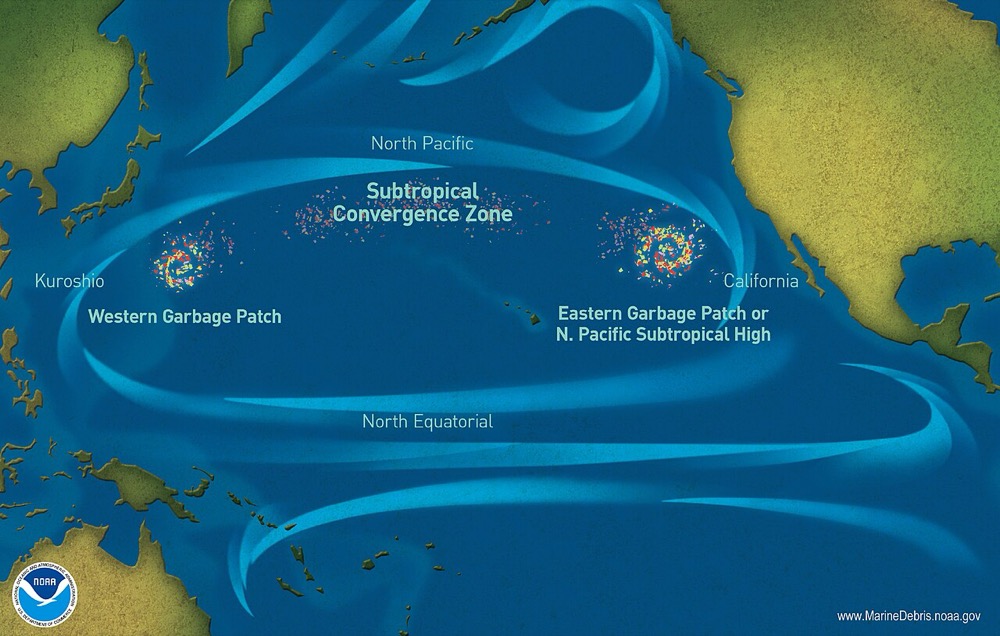
Plastic is heavier than water and sinks there.
Plastic is produced by ocean organisms there.
Circular current systems trap debris in their calm centers.
Wind blows plastic toward the poles.
The North Pacific subtropical gyre concentrates floating debris, mostly as fragments and microplastics rather than a solid island.
Which feature of a sanitary landfill prevents leachate from reaching groundwater?
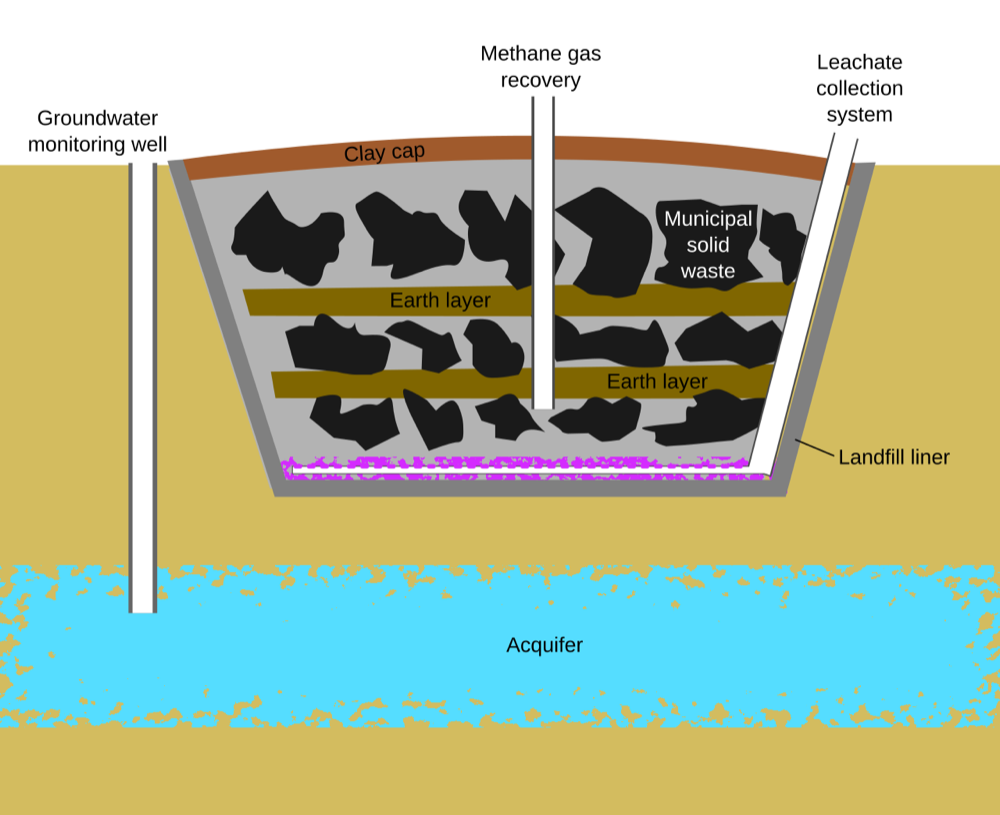
A compacted clay and plastic liner with a leachate collection system
A thick layer of loose gravel
A cap of loose topsoil
A well that pumps air in
Liners and collection pipes contain and remove leachate; monitoring wells check for leaks. Loose gravel or topsoil does not stop liquid.
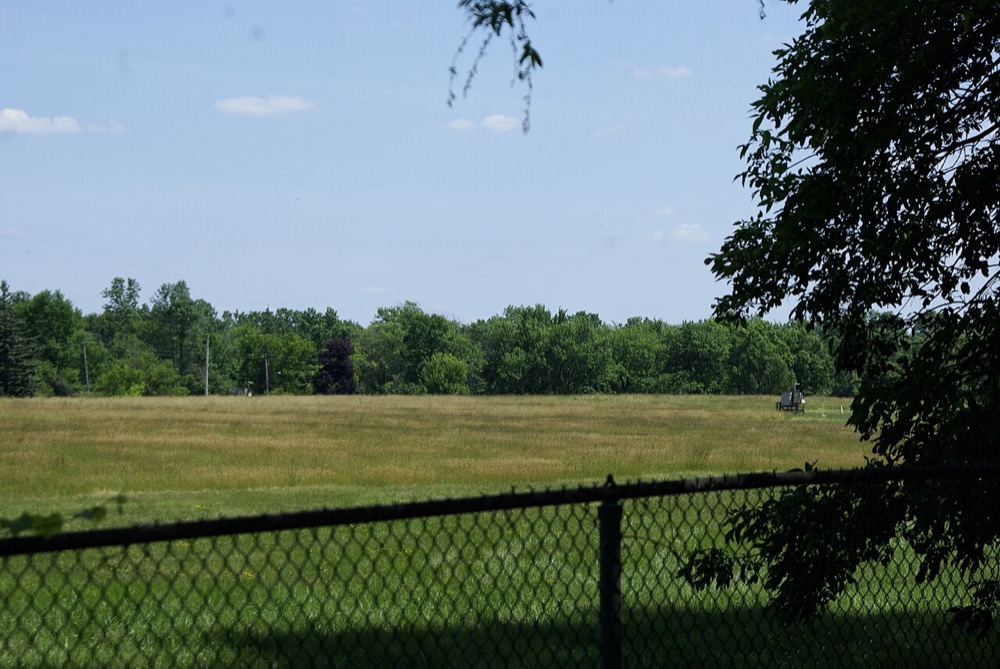
Image: Belbury, CC BY 4.0, via Wikimedia Commons.
Which law established the Superfund program for cleaning up abandoned hazardous waste sites?
Clean Air Act (1970)
Safe Drinking Water Act (1974)
Endangered Species Act (1973)
CERCLA (1980)
CERCLA made polluters liable for cleanup and created a trust fund; Love Canal was a major catalyst. RCRA regulates current hazardous waste.
A pesticide such as DDT builds up to the highest concentration in a bald eagle because it is
water-soluble and excreted quickly
persistent and fat-soluble, so it biomagnifies
broken down by sunlight
eaten only by decomposers
Fat-soluble, persistent chemicals accumulate in tissues and become more concentrated at each trophic level. The result was thin eggshells and population declines.
