Quiz · Easy
Twenty questions on the basics: sun letters, gender, agreement, idafa, possessives, question words, simple negation and prepositions.
What does أَمَامَ mean?
in front of
next to
behind
between
أَمَامَ is 'in front of'; the opposite is خَلْفَ (behind).
How do you say 'The boy is big'?
الْوَلَدُ كَبِيرٌ
وَلَدٌ الْكَبِيرُ
الْوَلَدُ الْكَبِيرُ
الْوَلَدُ هُوَ الْكَبِيرُ
Definite subject + indefinite predicate makes a sentence: الْوَلَدُ كَبِيرٌ. الْوَلَدُ الْكَبِيرُ is only the phrase 'the big boy'.
How is اَلشَّمْس pronounced?
an-shams
as-shams
al-shams
ash-shams
ش is a sun letter, so the ل of الْ assimilates to it and ش is doubled: ash-shams.
Which of these is a moon letter (the ل of الْ is pronounced)?
ت
ن
ر
ق
ق is a moon letter: الْقَمَر (al-qamar). ت, ن and ر are sun letters.
Which word is feminine?
قَلَم
شَمْس
كِتَاب
بَاب
شَمْس (sun) is feminine even though it has no ة. قَلَم, كِتَاب and بَاب are masculine.
Which is correct for 'a big house' (بَيْت is masculine)?
بَيْتٌ أَكْبَرُ
بَيْتَةٌ كَبِيرٌ
بَيْتٌ كَبِيرَةٌ
بَيْتٌ كَبِيرٌ
بَيْت is masculine, so the adjective is masculine: بَيْتٌ كَبِيرٌ. كَبِيرَة is feminine.
Which means 'my book'?
كِتَابُنَا
كِتَابُكَ
كِتَابِي
كِتَابُهُ
-ī is the suffix for 'my'. -ka is 'your (m.)', -hu 'his' and -nā 'our'.
Which is the correct 'this girl'?
ذَلِكَ الْبِنْتُ
هَؤُلَاءِ الْبِنْتُ
هَذَا الْبِنْتُ
هَذِهِ الْبِنْتُ
بِنْت is feminine singular, so use هَذِهِ. هَذَا is masculine.
Which word starts a yes/no question?
أَيْنَ
مَنْ
هَلْ
مَا
هَلْ introduces yes/no questions. مَا is 'what', مَنْ 'who', أَيْنَ 'where'.
Which is the most natural way to say 'I have a car'?
عِنْدِي سَيَّارَةٌ
سَيَّارَةٌ هُنَا
هَذِهِ سَيَّارَتِي
أَنَا سَيَّارَةٌ
عِنْدِي سَيَّارَةٌ ('at me a car') is the everyday way to say 'I have'.
Which preposition fits the picture: the ball is ... the box?
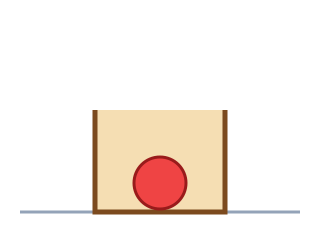
عَلَى
فِي
خَلْفَ
تَحْتَ
The ball is inside the box, so فِي (in).
Which preposition describes this picture (the ball is ... the table)?
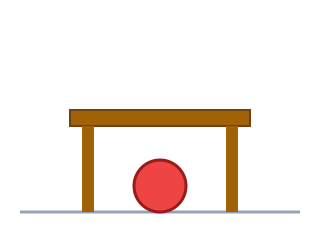
أَمَامَ
فَوْقَ
بَيْنَ
تَحْتَ
The ball is under the table: تَحْتَ.
What case does the noun after a preposition take?
genitive (-i)
accusative (-a)
nominative (-u)
none
A preposition governs the genitive: فِي الْبَيْتِ.
The plural of كِتَاب (book) is:
كِتَابَانِ
كِتَابَات
كِتَابُونَ
كُتُب
كُتُب is the broken plural. كِتَابَانِ is the dual (two books); -ūna and -āt are not used for this noun.
'Two students (female)' in the nominative is:
طَالِبَانِ
طَالِبَتَيْنِ
طَالِبَاتٌ
طَالِبَتَانِ
The dual of طَالِبَة is طَالِبَتَانِ (nominative). طَالِبَتَيْنِ is the accusative/genitive form.
Which sentence means 'This is the teacher's book'?
هَذَا الْكِتَابُ الْمُعَلِّمِ
هَذَا كِتَابُ الْمُعَلِّمُ
هَذَا كِتَابُ الْمُعَلِّمِ
هَذَا كِتَابٌ الْمُعَلِّمُ
An idafa has no الْ on the first noun and the second is genitive: كِتَابُ الْمُعَلِّمِ.
Which means 'Where is the school?'
كَيْفَ الْمَدْرَسَةُ؟
لِمَاذَا الْمَدْرَسَةُ؟
مَتَى الْمَدْرَسَةُ؟
أَيْنَ الْمَدْرَسَةُ؟
أَيْنَ = where, مَتَى = when, كَيْفَ = how, لِمَاذَا = why.
Which negates the present: 'I don't know'?
لَا أَعْرِفُ
لَنْ أَعْرِفُ
لَيْسَ أَعْرِفُ
لَمْ أَعْرِفُ
لَا + present verb negates the present. لَمْ is for the past, لَنْ for the future, لَيْسَ for nominal sentences.
True or False: Arabic uses a word for 'is' in 'The weather is nice' (present tense).
True
False
False. The present has no 'to be': الطَّقْسُ جَمِيلٌ.
How do you say 'three male students'?
ثَلَاثَةُ طُلَّابٍ
ثَلَاثَةُ طَالِبٌ
ثَلَاثُ طَالِبَاتٍ
ثَلَاثُ طُلَّابٍ
Numbers 3-10 take the opposite gender: students (m.) take the feminine-looking ثَلَاثَة. ثَلَاثُ is for feminine counted nouns.
